


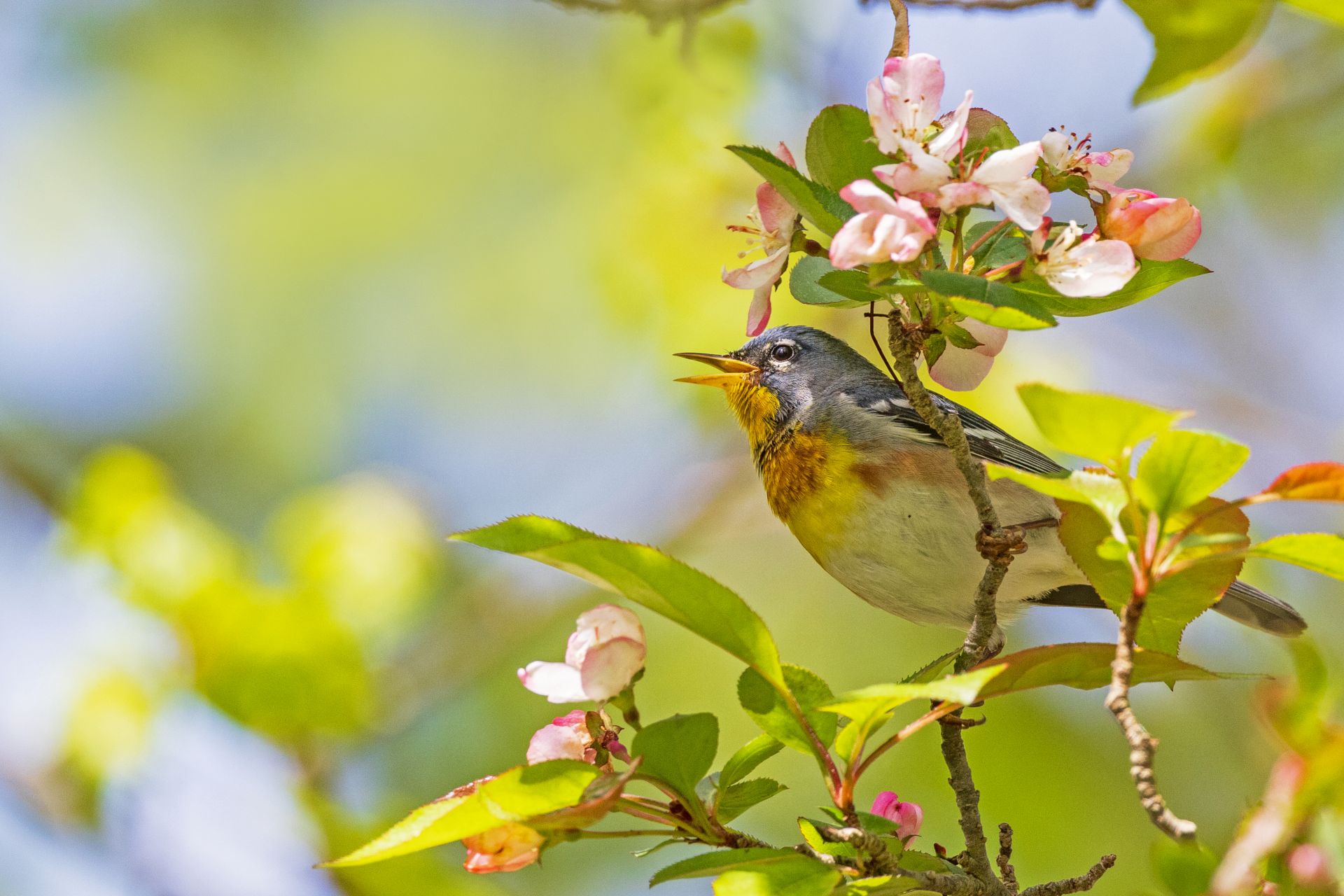
With spring’s arrival, Mass Audubon wildlife sanctuaries across Massachusetts become nature’s symphony. From amphibian mating calls to rushing waters, the trails are teeming with ways to enjoy the auditory treasures of the season.
Warbles and Whistles
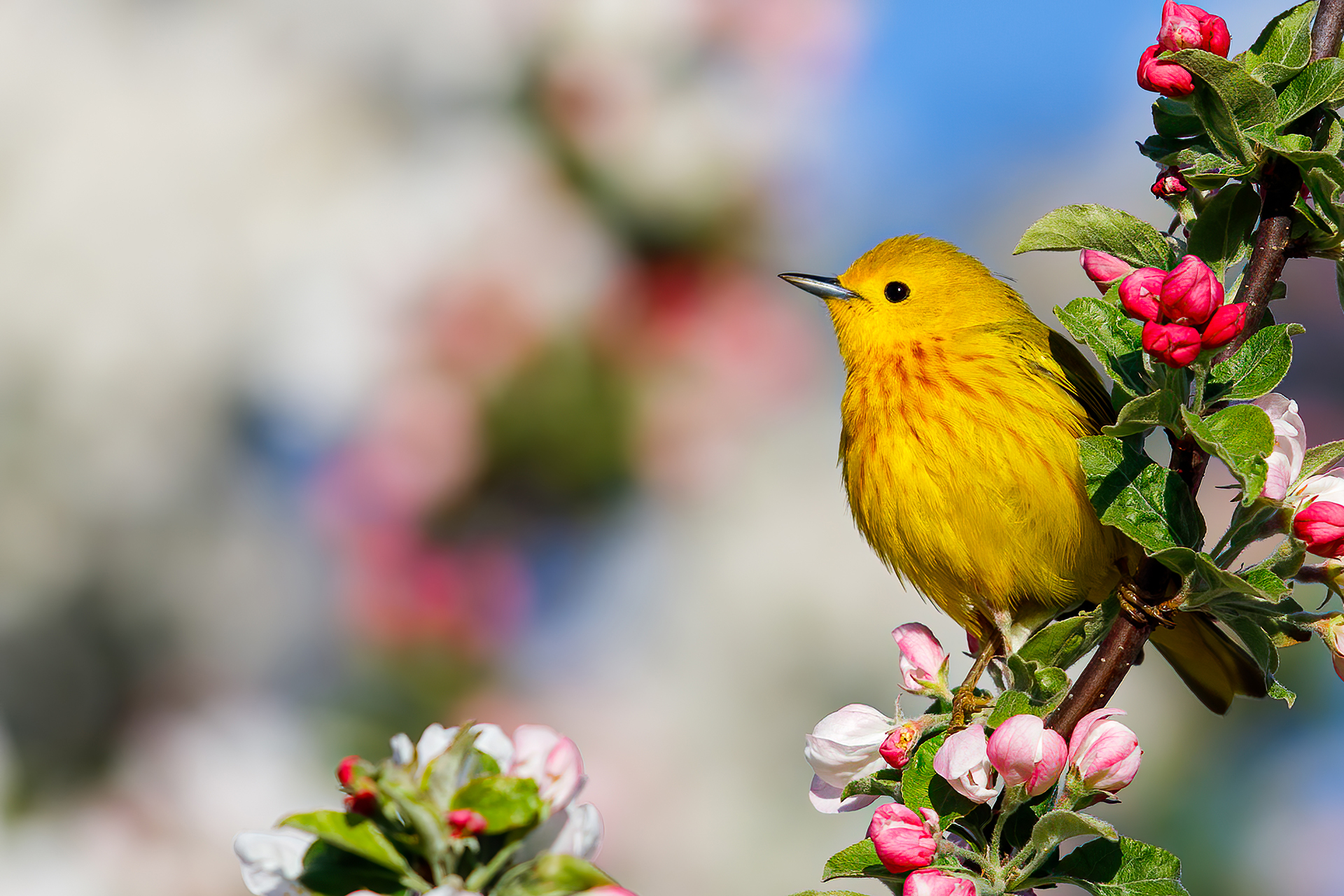
The return of small, colorful warblers from the wintering grounds delights birders each year. With approximately 25 species breeding in Massachusetts and another 8-10 species passing through the state, there are plenty of opportunities to hear their melodies carry through the trees.
To maximize your chances of spotting a warbler, head out first thing in the morning after warm southerly winds when these birds move northward. Most warblers travel at night, and as dawn approaches, they begin to disperse into woodlands, orchards, suburban areas, and field edges to rest and forage during daylight hours.
Keep your ears open—you will most often hear a warbler before seeing one. Two favorite songs to listen for are the Yellow Warbler’s "sweet, sweet, sweet, I’m so sweet” and the Common Yellowthroat’s “witchety-witchety-witchety".
Some fan favorite spring birding spots include:
Peeps From Vernal Pools
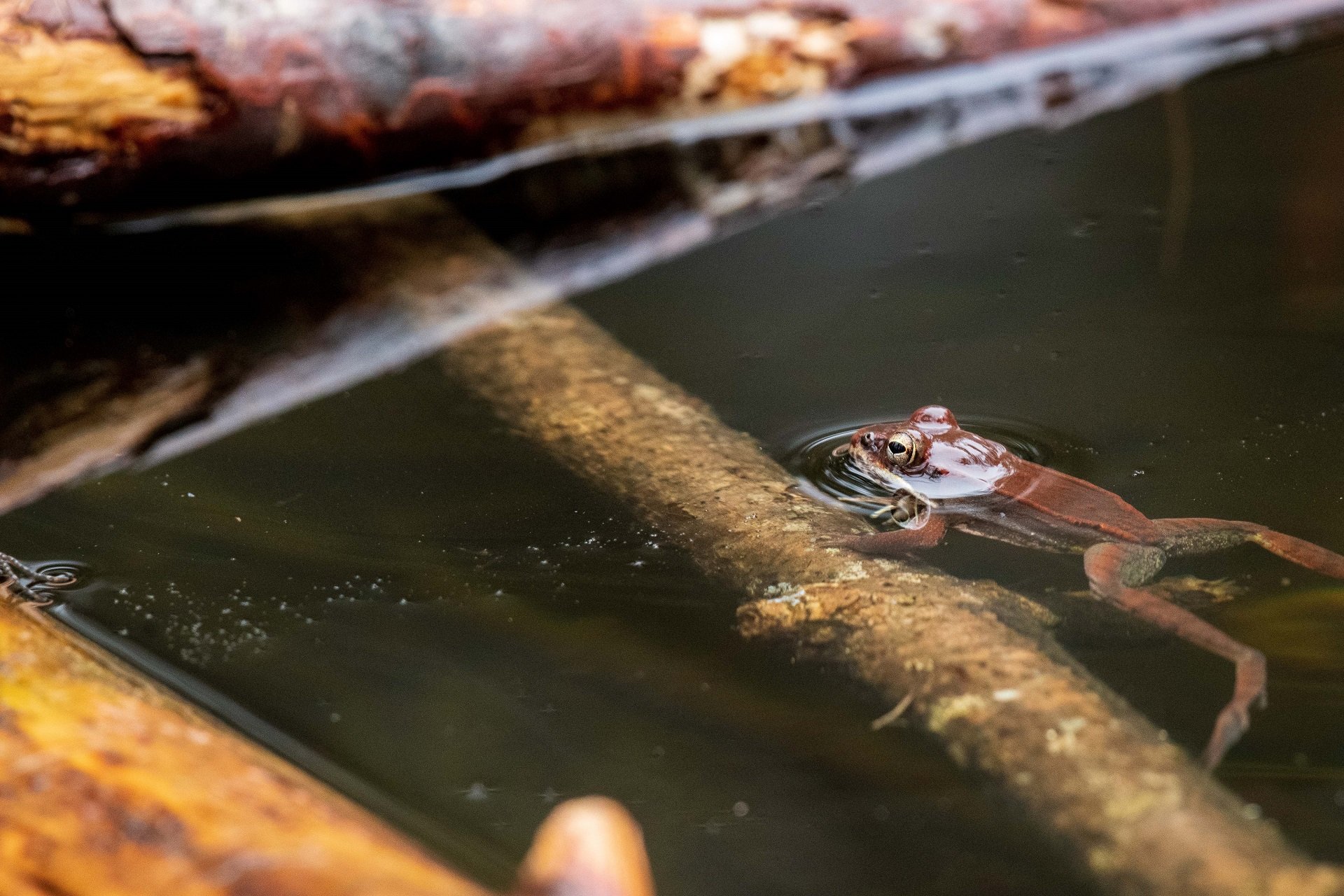
In spring, wood frogs head from their forest homes to vernal pools, temporary bodies of water that serve as unique breeding habitats for certain amphibians. Here, males vie for females’ attention with a loud, duck-like “quack” call; collectively, a large chorus can be heard several hundred feet away.
The frogs pair up, with females laying 1,000 eggs or more in a mass that swells with water to around the size of a baseball. Following breeding, adults return to the forest while their eggs develop, relatively safe from predation. Because vernal pools dry periodically, they remain fishless, so frog and salamander eggs and young are protected from becoming fish food.
Spring peepers, at around an inch long, blast a surprisingly powerful, piercing peeping call that can carry for more than a quarter-mile. Males go to vernal pools (and other wetlands), choose a patch of wetland about the size of a hula hoop, then peep to attract a female each spring. A full chorus up close can reach 80 to 90 decibels, similar to the noise of a police siren.
Head to these sanctuaries to look for vernal pools and listen for these noisy residents:
- Drumlin Farm, Lincoln
- Ipswich River, Topsfield
- Moose Hill, Sharon
- Arcadia, Easthampton/ Northampton
- Broad Meadow Brook, Worcester
TIP: It can help to sit quietly for a few minutes at a pool if your arrival disturbed a chorus in progress.
Rushing Waters
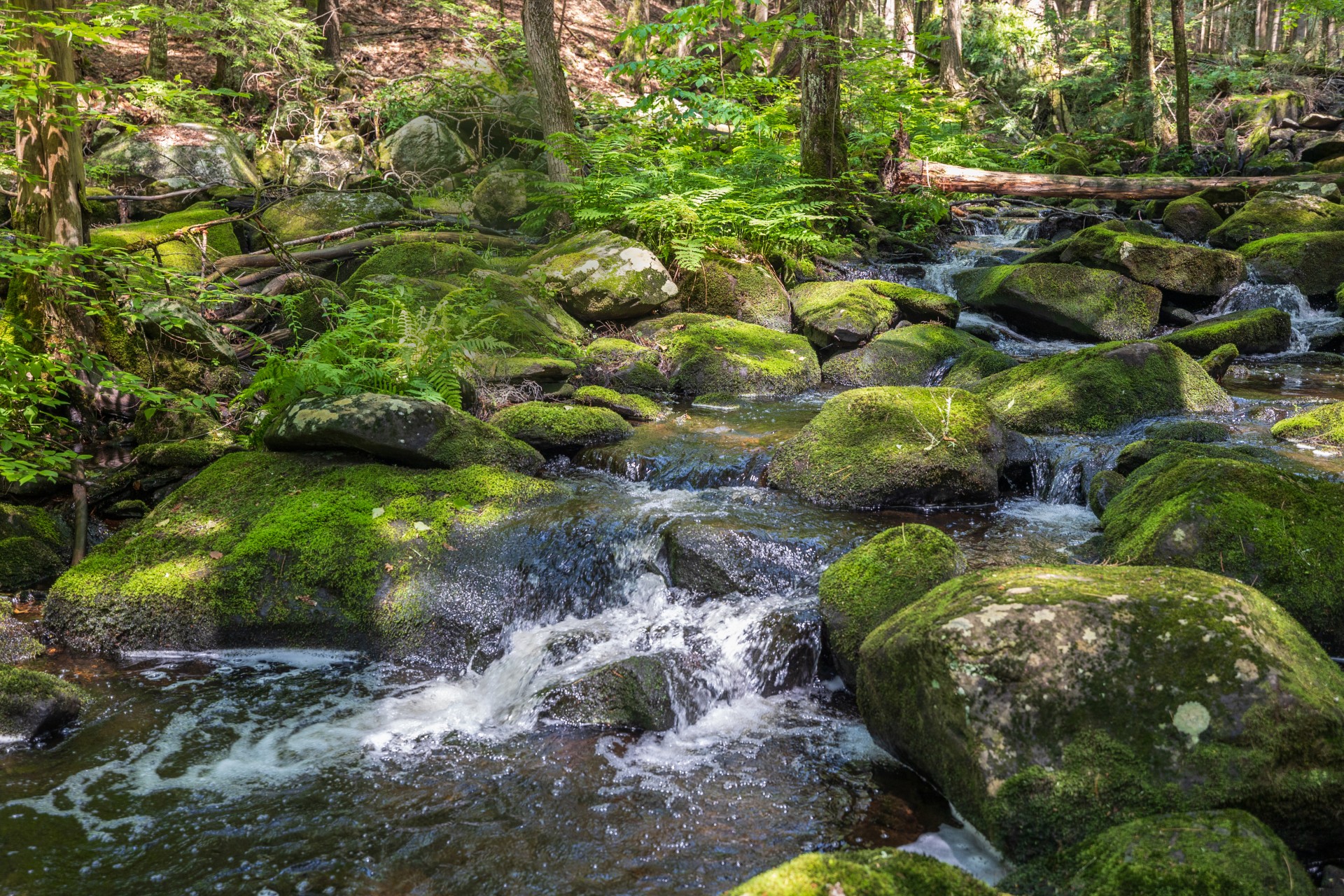
A walk along the trails becomes a sensory adventure when you hear a babbling brook, rumbling waterfall, or trickling stream nearby. When winter's snow melts and rainfall increases in the spring, natural water features come alive.
Water runs through many Mass Audubon wildlife sanctuaries in one way or another, and while water provides a vital resource to each ecosystem, it also has a soothing effect on sanctuary visitors hitting the trails.
At Rutland Brook in Petersham, the namesake brook cascades over moss-covered rocks alongside the fern-lined trails under towering white pines and hemlocks. The brook empties into Connors Pond, where peaceful expanses of blue waters host Wood Ducks, Painted Turtles, and more.
Check out more flowing waters at:
Ready to head out on your sensory adventure?
Check out these sanctuaries and beyond.
Get Mass Audubon's Birding Checklist to track your sightings.
Find out more about vernal pools and their protection.
Stay Connected
Don't miss a beat on all the ways you can get outdoors, celebrate nature, and get involved.