


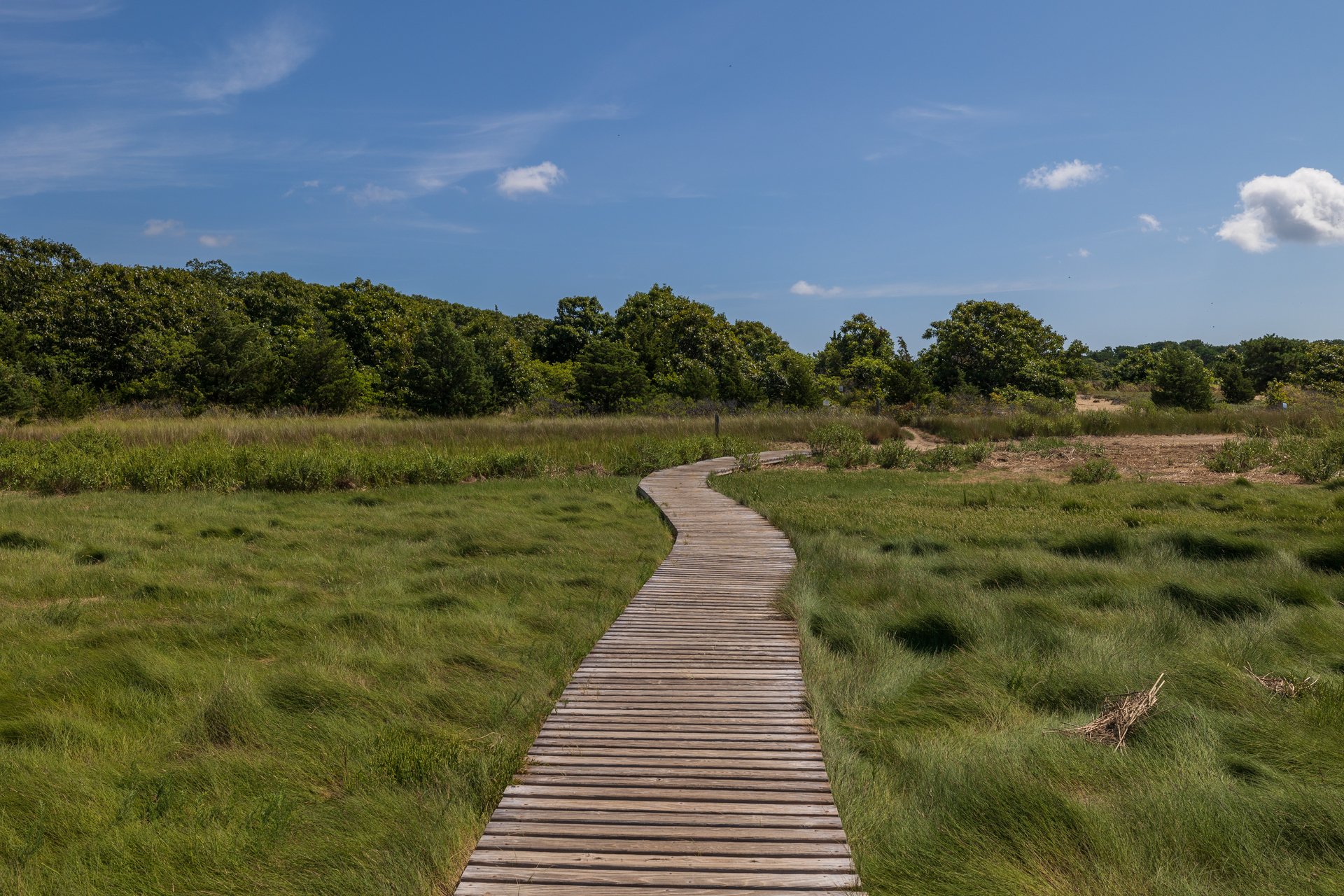
Each spring and fall, Wellfleet Bay’s bird banding station comes alive in the early morning hours as researchers capture, band, and monitor migrating birds, and 2026 brought an extraordinary discovery: the resighting of Rizzy, the oldest Pine Warbler ever recorded.
Small Bird, Extraordinary Journey
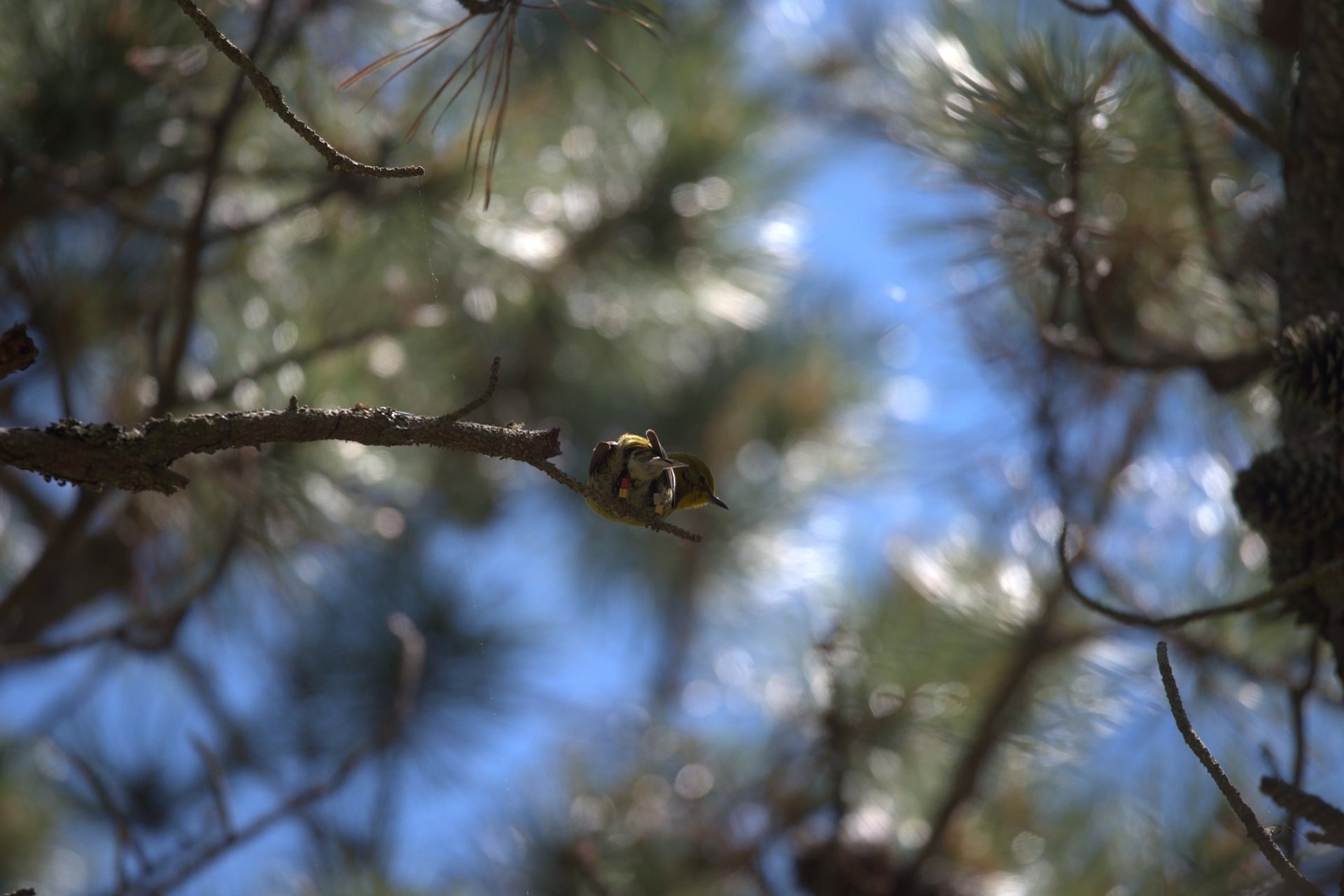
Every May, Pine Warblers return from their winter grounds in the southeastern United States in colorful breeding plumage, bringing a splash of color to pine forests and fields. During the breeding season, they often remain high in the canopy, where birders are more likely to hear their sweet, trilling song than spot them among the branches.
Rizzy’s Story
At 8 years old, Rizzy is the oldest documented Pine Warbler on the planet. Researchers can make this remarkable claim thanks to a shared bird banding database maintained by the United States and Canada. Because Pine Warblers breed only in the United States and a small portion of southern Canada, the database provides a comprehensive record of banded individuals across the species' breeding range, allowing scientists to confirm Rizzy's record-setting age.
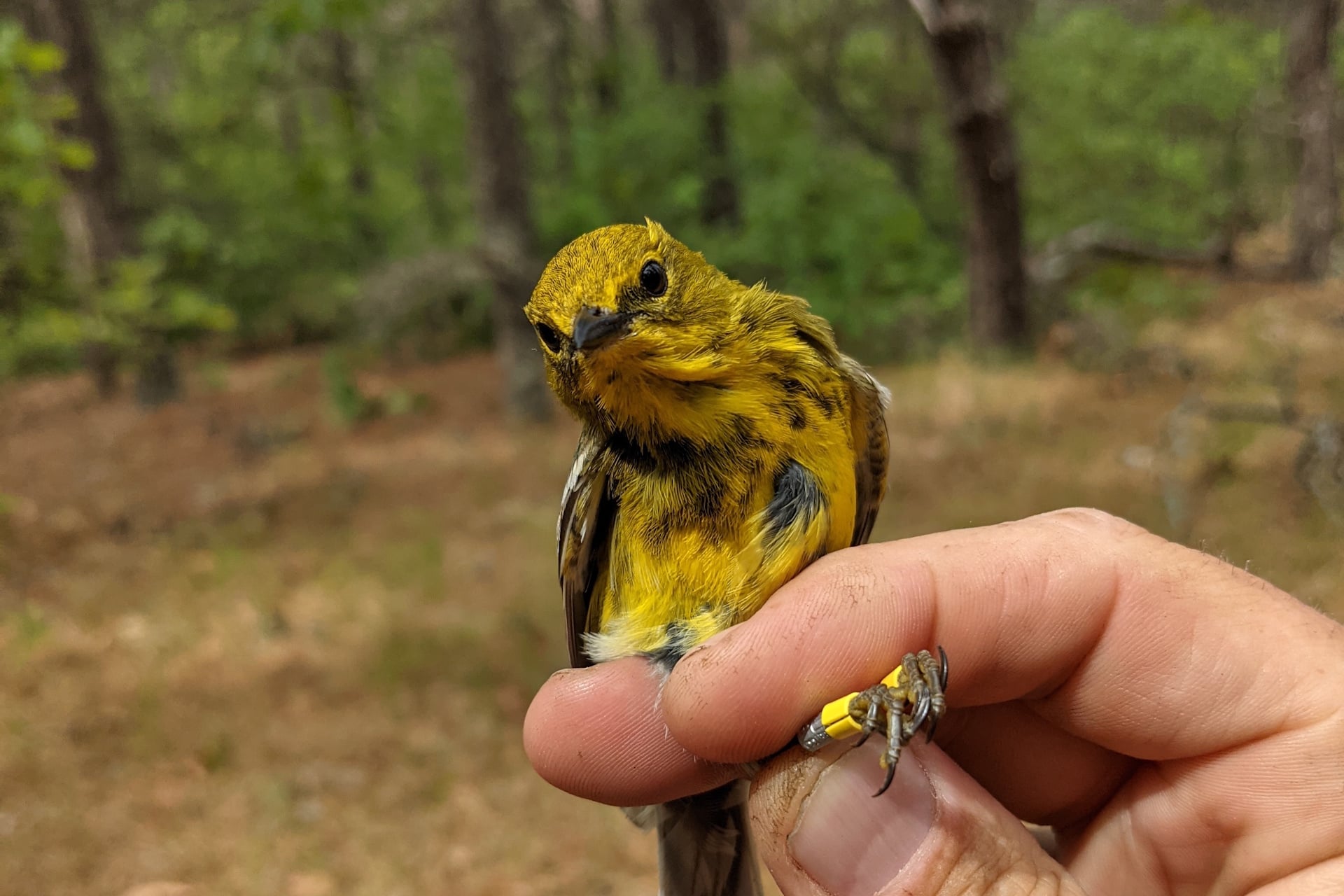
First banded on September 2, 2018, researchers fitted Rizzy with a lightweight federal metal band bearing a unique identification number. Placed above the ankle, these bands allow researchers to track individual birds throughout their lives without affecting their movement or behavior.
In spring 2021, the banding team was reacquainted with Rizzy and added a unique combination of colored leg bands: red and yellow on his left leg and silver and yellow on his right, earning him the nickname RYSY, or "Rizzy." These colorful markers allow researchers to identify individual birds from a distance, providing valuable data without the need for recapture.
Over the years, Rizzy has become a familiar resident of the sanctuary. Banders documented him three times in spring 2023, twice in spring 2024, three times in spring 2025, and three more times in spring 2026. His repeated appearances in the same area have revealed a strong fidelity to his breeding territory and provided researchers with a rare opportunity to follow the life of a single bird over many years.
Power of Persistence
Rizzy's record-breaking lifespan is more than a remarkable bird story—it’s also a powerful example of how long-term monitoring and bird banding can uncover extraordinary stories that would otherwise remain hidden in the canopy. And it demonstrates how much we still have to learn about the common birds in our local environs.
The banding legacy on this property stretches back nearly a century to 1929, when the Austin Ornithological Research Station pioneered bird banding techniques in North America. Today's banding station, led by Master Bander James Junda since 2014, continues that tradition each spring and fall.
By tracking birds over many years, researchers can better understand migration, habitat use, population trends, and the conservation needs of the species that depend on Wellfleet Bay's forests, heathlands, thickets, and shorelines. Rizzy's story is a powerful reminder that some of nature's most extraordinary discoveries come from patient observation over time.
Make an Impact Today
Your support makes vital conservation efforts like these possible. Make a donation today to help protect wildlife, restore habitats, and advance critical conservation research.
Upcoming Bird Banding Programs
More ProgramsBird Research in Action: Bird Banding at Wellfleet Bay
-
Wellfleet Bay Wildlife Sanctuary, South Wellfleet
-
Friday, October 16
8:30-9:30am
Adults & Families with children 8 - 17
Bird Research in Action: Bird Banding at Wellfleet Bay
-
Wellfleet Bay Wildlife Sanctuary, South Wellfleet
-
Friday, October 23
8:30-9:30am
Adults & Families with children 8 - 17
Bird Research in Action: Bird Banding at Wellfleet Bay
-
Wellfleet Bay Wildlife Sanctuary, South Wellfleet
-
Friday, October 30
8:30-9:30am
Adults & Families with children 8 - 17