


Conservation Projects at Allens Pond
Allens Pond Wildlife Sanctuary is actively involved with a variety of research projects that relate to wildlife monitoring, research, restoration, and conservation.
Salt Marsh Restoration
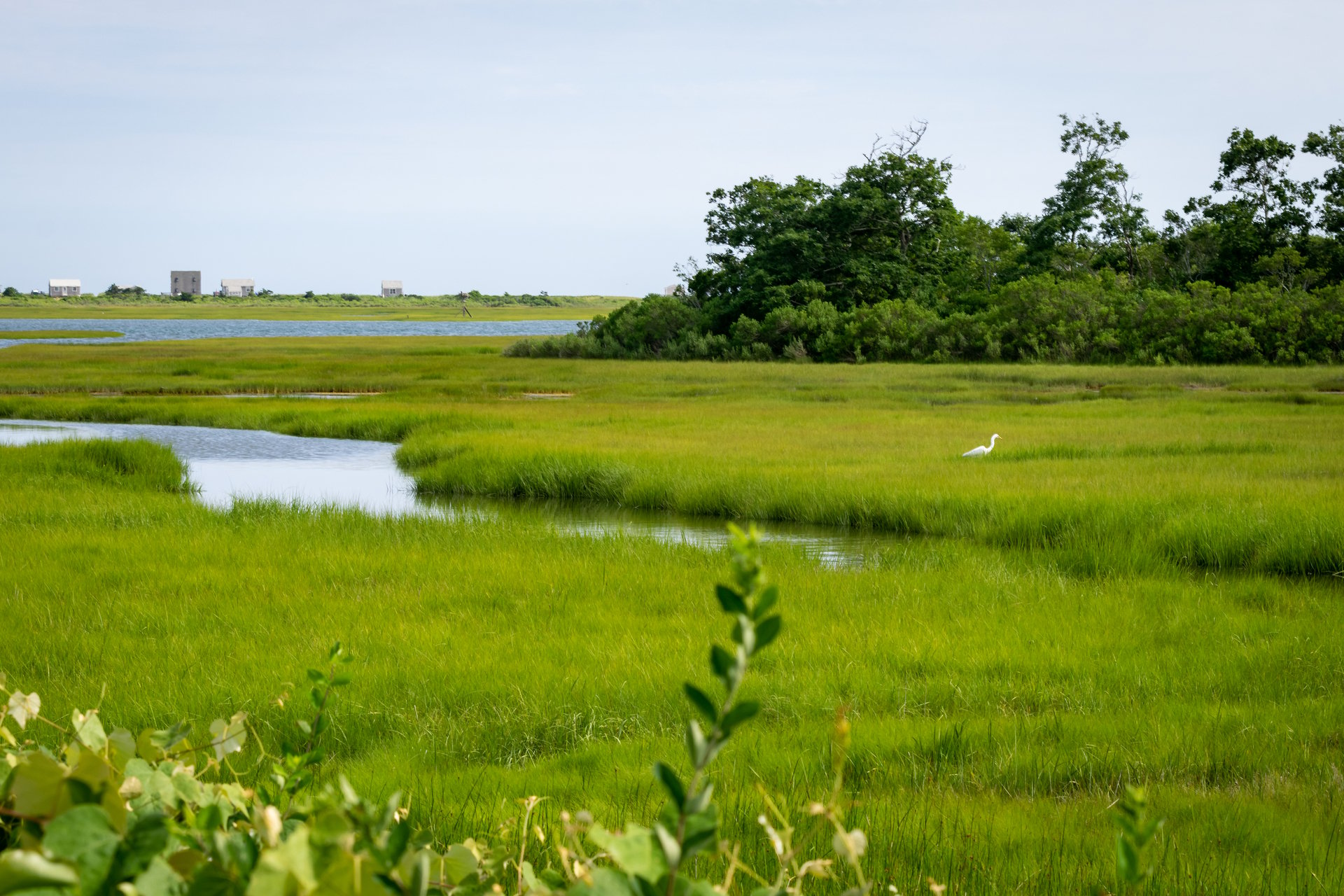
Mass Audubon fights the impacts of climate change by enhancing and protecting one of our most valuable natural resources: salt marshes. Allens Pond Wildlife Sanctuary and several project partners were selected to receive funding from the Environmental Protection Agency’s (EPA) Southeast New England Program (SNEP) and President Biden’s Bipartisan Infrastructure Law. SNEP works in partnership with stakeholders including Mass Audubon to promote resilient ecosystems of clean water, healthy diverse habitats, and sustainable communities in Southeast New England. Our accomplishments include
- Restoring tidal hydrology by removing tidal restrictions, debris and invasive plant barriers, as well as facilitating native revegetation along the upland saltmarsh boundary.
- 40 acres of marsh surface has been restored, and we will expand restoration efforts to an additional 90 acres.
- Removing invasive species and planting native species at the Darthmouth Natural Resources Trust’s Ocean View Farm Reserve (neighboring Allens Pond Wildlife Sanctuary) in effort to help facilitate wildlife and habitat movement landward as a response to sea level rise and act as a wetland buffer (an area with plants that helps protect the wetland and all its climate services).
- Implementing salt marsh climate adaptation techniques that will help alleviate ponding stress and promote vegetation growth on the marsh at Allens Pond in partnership with Save the Bay and Bristol County Mosquito Control.
Learn more about this project by exploring our StoryMap
Monitoring Saltmarsh Sparrows
Mass Audubon scientists have begun to monitor Saltmarsh Sparrows, banding 345 individuals and monitoring 170 nesting attempts at Allens Pond. There are four species of birds that are dependent on tidal marsh habitat to breed in New England: Saltmarsh Sparrow, Seaside Sparrow, Willet and Clapper Rail. Finding these species at a single location is exceptionally rare in Massachusetts and suggests that Allens Pond has become a globally important habitat for salt marsh-dependent birds.