


Guide to Ballot Measures
What is an “Initiative” Ballot Measure?
An initiative ballot measure is a law that is proposed by voters and then also decided directly by voters, rather than by elected officials.
It’s placed on the ballot during an election, and citizens vote "yes" (to approve) or "no" (to reject). In short: instead of your state legislators making the call, you and your fellow voters get to propose a law and then make the decision directly.
What is the process for a Ballot Measure?
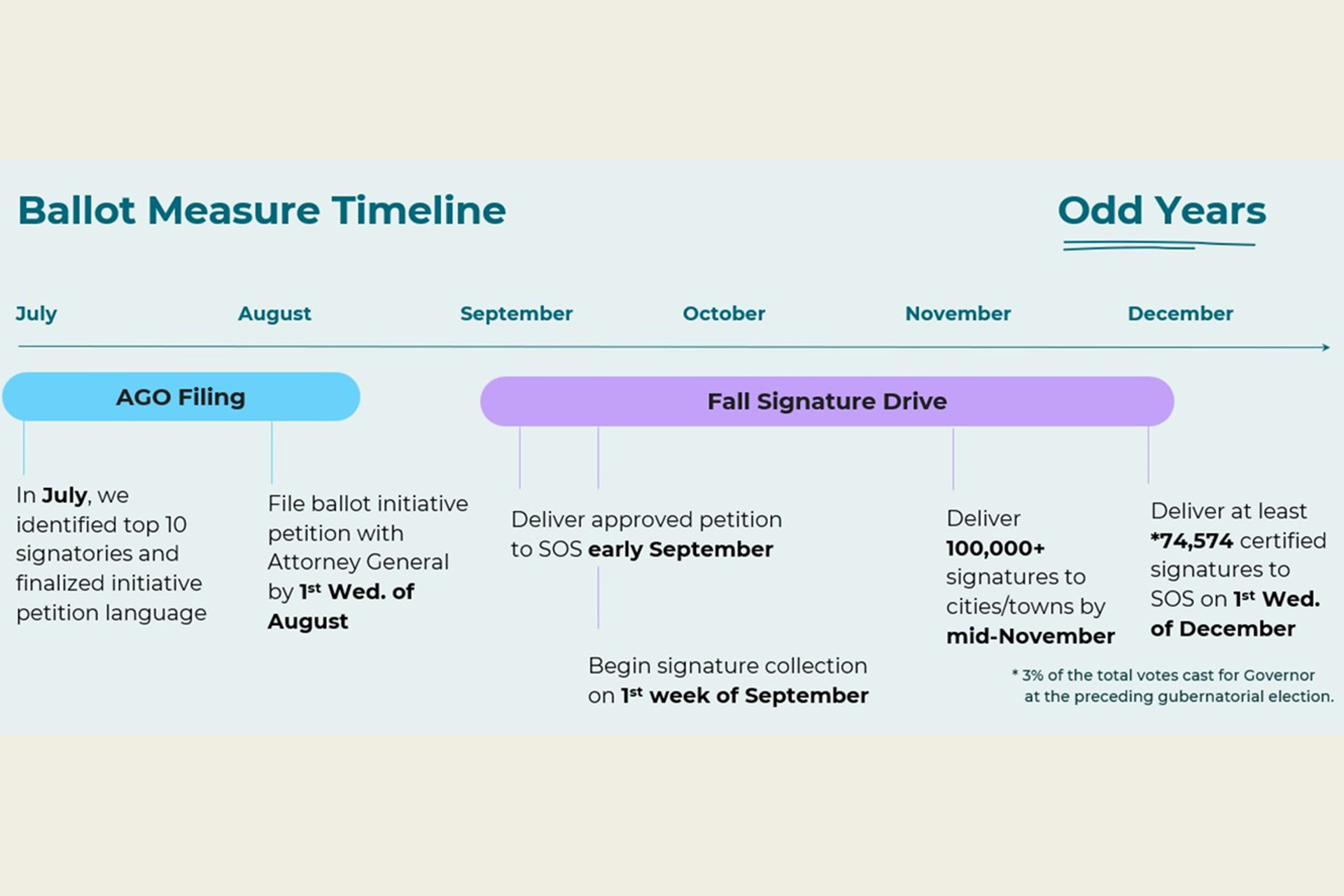
- Filing and Attorney General Review: First, a ballot measure petition is filed with the Attorney General by the first Wednesday in August of an odd-numbered year. The Attorney General reviews the petition for legal sufficiency. If approved by early September, it's certified and sent to the Secretary of State who then creates a form for signature collection.
- Signatures Collection: In early September through mid-November of an odd-numbered year, advocates gather voter signatures on the form created by the Secretary of State. Approximately 125,000 signatures need to be gathered collectively by all coalition organizations to ensure that enough signatures can be certified by town clerks as registered voters.
- Signature Certification: By mid-November these signature forms are submitted to town clerks to be certified as registered voters.
- Signature Submission: The first Wednesday in December, ~74,574 certified signatures (or 3% of the total votes cast for Governor at the preceding gubernatorial election) to the Secretary of State.
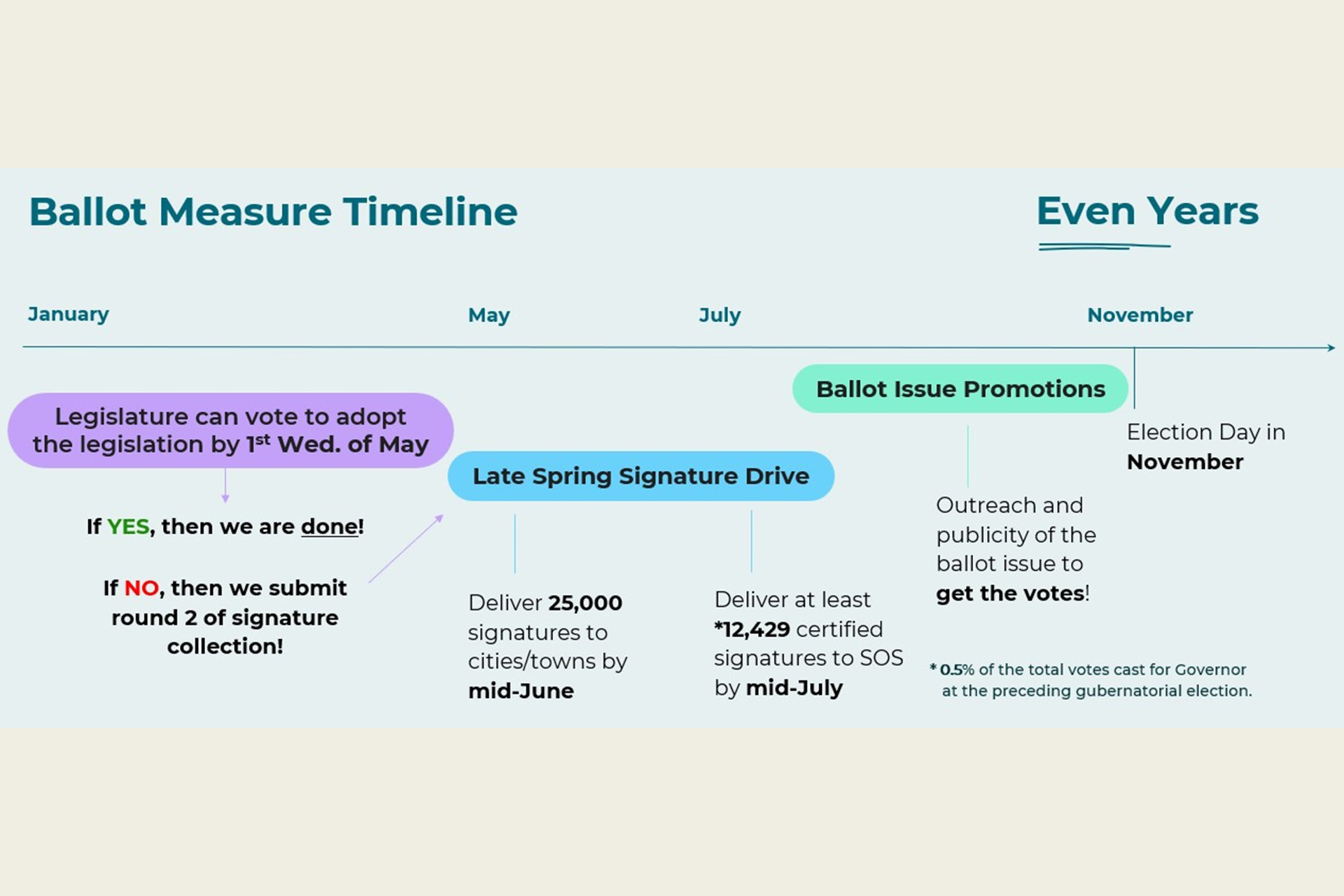
- Legislative Review: In January of an even-numbered year, the ballot measure petition goes to the legislature. If not enacted by the first Wednesday in May:
- Supporters can propose “perfecting amendments” (minor edits) by early June; these also must be certified by the Attorney General.
- A second round of ~12,429 certified signatures (or 0.5% of the total votes cast for Governor at the preceding gubernatorial election) is required, filed by mid-July.
- Ballot Placement: Once the second signature threshold is met, the measure qualifies for the next statewide general election ballot—typically in November of even-numbered years. More details at Mass.gov.
Why would advocates propose a ballot measure?
The strategic reasons for advocates to propose a ballot measure are:
- Pursuing all available pathways to success: Legislative advocates sometimes pursue the ballot as a potential alternative to legislation. If a measure is popular with voters, the ballot is an option in the event a legislative campaign falls short.
- Public attention: The ballot process starts a public conversation and can help build a movement around the issue, and signal to legislators and other policymakers that there is support for an issue.
- Flexibility to adjust: After the Legislature declines or ignores it, the “perfecting amendment” stage allows advocates to refine the language before it goes to voters.
Advocates use ballot measures because it’s the only citizen-led path to making or changing state laws in Massachusetts, and it offers two shots at success—first with lawmakers, and then with voters if lawmakers refuse.
Stay Connected
Don't miss a beat on all the ways you can get outdoors, celebrate nature, and get involved.