


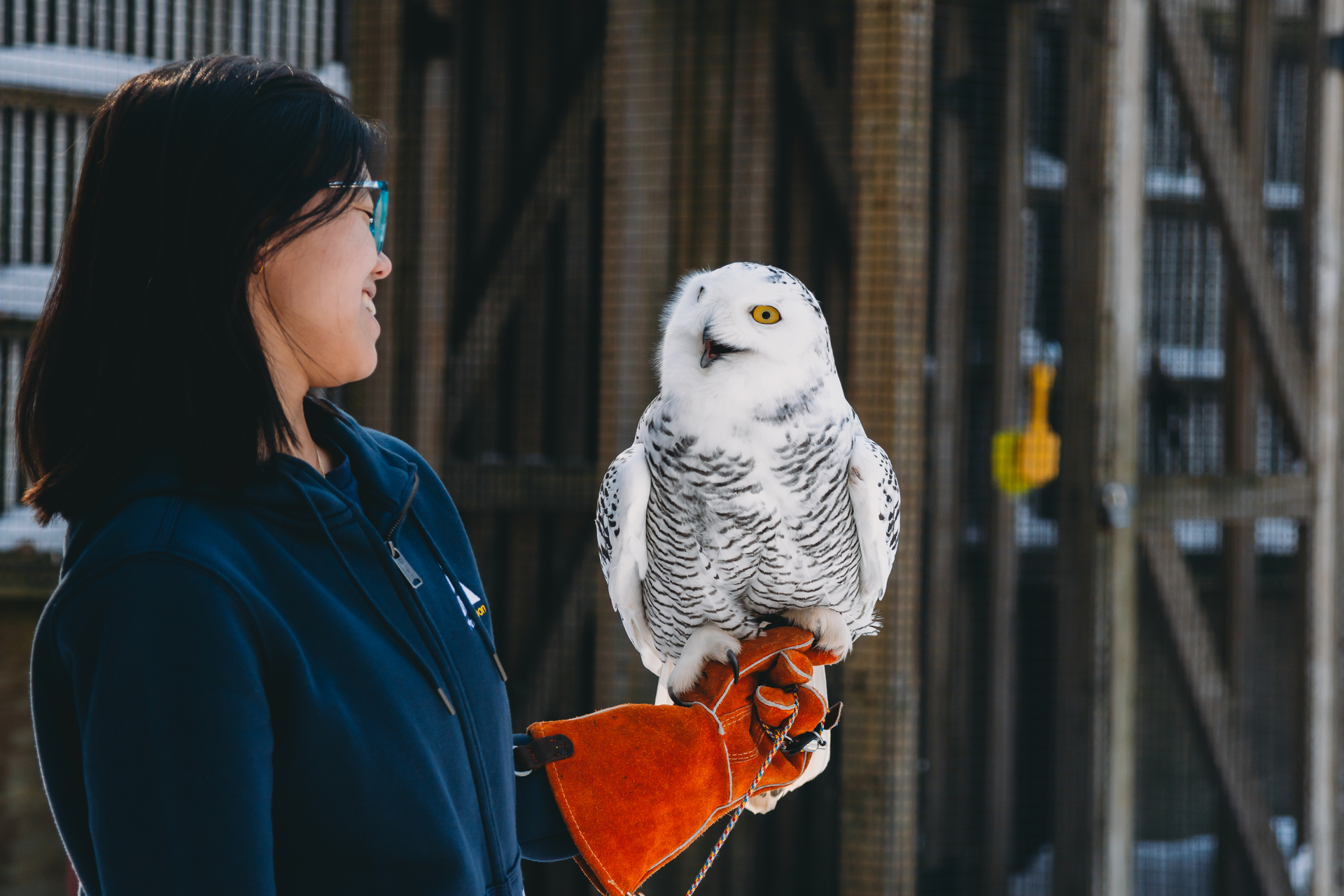
The newest additions to Mass Audubon’s Wildlife Ambassador team come with soft white down, bright yellow eyes, and all the charisma of one of the world’s most iconic raptors. Beloved by birders and wildlife enthusiasts alike, Snowy Owls face increasing pressures in the wild and are currently listed as vulnerable by the International Union for Conservation of Nature (IUCN).
With the arrival of these two chicks, Mass Audubon embraces a rare opportunity to inspire deeper care for a species whose future depends on informed public stewardship.
A New Chapter for Snowy Owl Education
At Blue Hills Trailside Museum, our resident male and female Snowy Owls have long been part of our educational work—but we’ve historically prevented egg development to ensure that our management practices remain aligned with the highest standards of animal welfare and conservation. When this clutch appeared, staff carefully weighed the decision to allow two eggs to hatch, recognizing both the species’ vulnerable status and the extraordinary impact these young birds could have as future educators and conservation champions.
Because they were hatched under human care, the chicks cannot learn the full suite of skills needed for life in the Arctic. Instead, they will grow up as Wildlife Ambassadors, playing a vital role in connecting thousands of people each year to the world of Snowy Owls and the challenges they face.
What Is a Wildlife Ambassador?
Wildlife Ambassadors represent their species in educational programs and visitation experiences, helping people build meaningful connections with wildlife and the natural world. It’s one thing to read about the 270-degree head turn an owl can make—but it’s something else entirely to see them track an object around the room without moving their body!
These special close-up experiences, often challenging to find in the wild, turn nature lessons into life-changing experiences that can inspire young kids and mature adults to care for the wildlife we share our world with.
While they cannot live independently in the wild (due to injury, imprinting, or other factors), what defines them is the role they play: inspiring curiosity, deepening understanding, and motivating people of all ages to protect habitats.
Our two new Snowy Owls will take on this important work as they settle into their future homes.
Meet Boo & Bo
The chicks—Boo and Bo—take their names from Bubo scandiacus, the scientific name for Snowy Owls. Both owls remain under the watchful care of our Wildlife Care Team, Bo at Blue Hills Trailside Museum and Boo at Drumlin Farm Wildlife Sanctuary. While you can’t visit the owls, you may be able to see them as part of an upcoming education program.
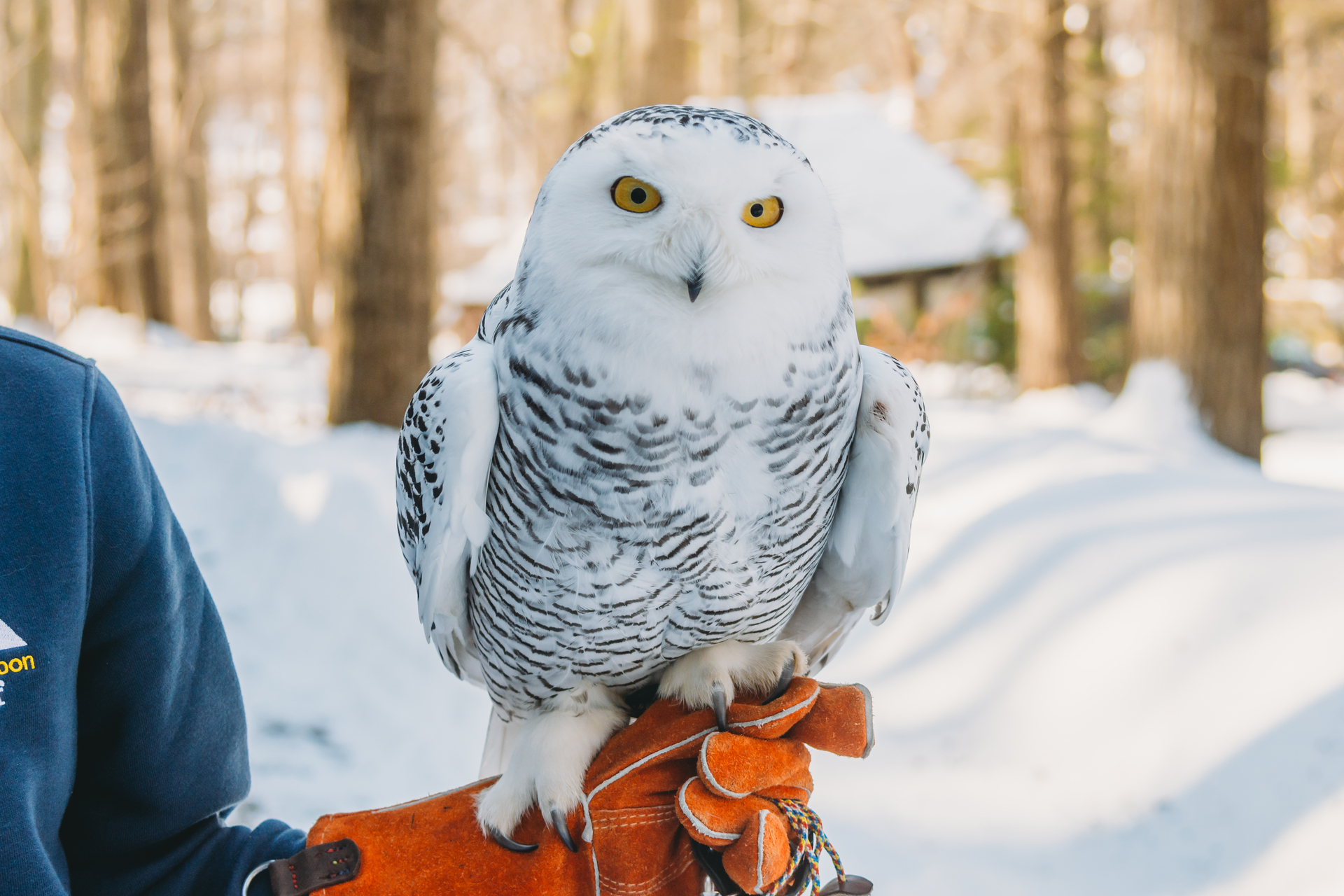
As they grow, their presence will offer powerful demonstrations of adaptation, camouflage, and survival, unique to Snowy Owls.
Why Snowy Owls Matter
Snowy Owls migrate to Massachusetts in late fall, spending the winter in open, tundra-like landscapes before returning north for the Arctic summer breeding season. While they are here, they play an important ecological role, hunting rodents, rabbits, waterfowl, and even other raptors—helping to maintain a balanced, functioning ecosystem.
But surviving winter in Massachusetts is no small feat. Most young owls we see are inexperienced, navigating threats like airplane and vehicle collisions, electrocution, rodenticide poisoning, illness, and human disturbance. Scientists are still studying the reasons behind global population declines, but the IUCN vulnerable status underscores how urgent their conservation needs have become.
Support Snowy Owls
Snowy Owls embody the resilience and wonder of winter—standing strong against wind and ice, nearly invisible against snow. Their stories remind us why wildlife conservation matters, especially in a changing climate.
Alongside Bo and Boo’s educational work, Mass Audubon’s Snowy Owl Project collects vital migration data and helps protect both the owls and the public near Logan Airport.
If these remarkable birds inspire you, we invite you to support efforts that safeguard their future.
Upcoming Owl Programs
See MoreOwl Prowl
-
Wellfleet Bay Wildlife Sanctuary, South Wellfleet
-
Friday, October 30
5:00-6:30pm
Adults & Families with children 10 - 17
Family Owl Prowl
-
Broadmoor Wildlife Sanctuary, Natick
-
Friday, October 30
5:30-7:00pm
Families with children 5 - 12 years
Family Night Hike and Owl Prowl
-
Drumlin Farm Wildlife Sanctuary, Lincoln
-
Friday, October 30
5:30-7:00pm
Families with children 5 - 12 years
You May Also Be Interested In
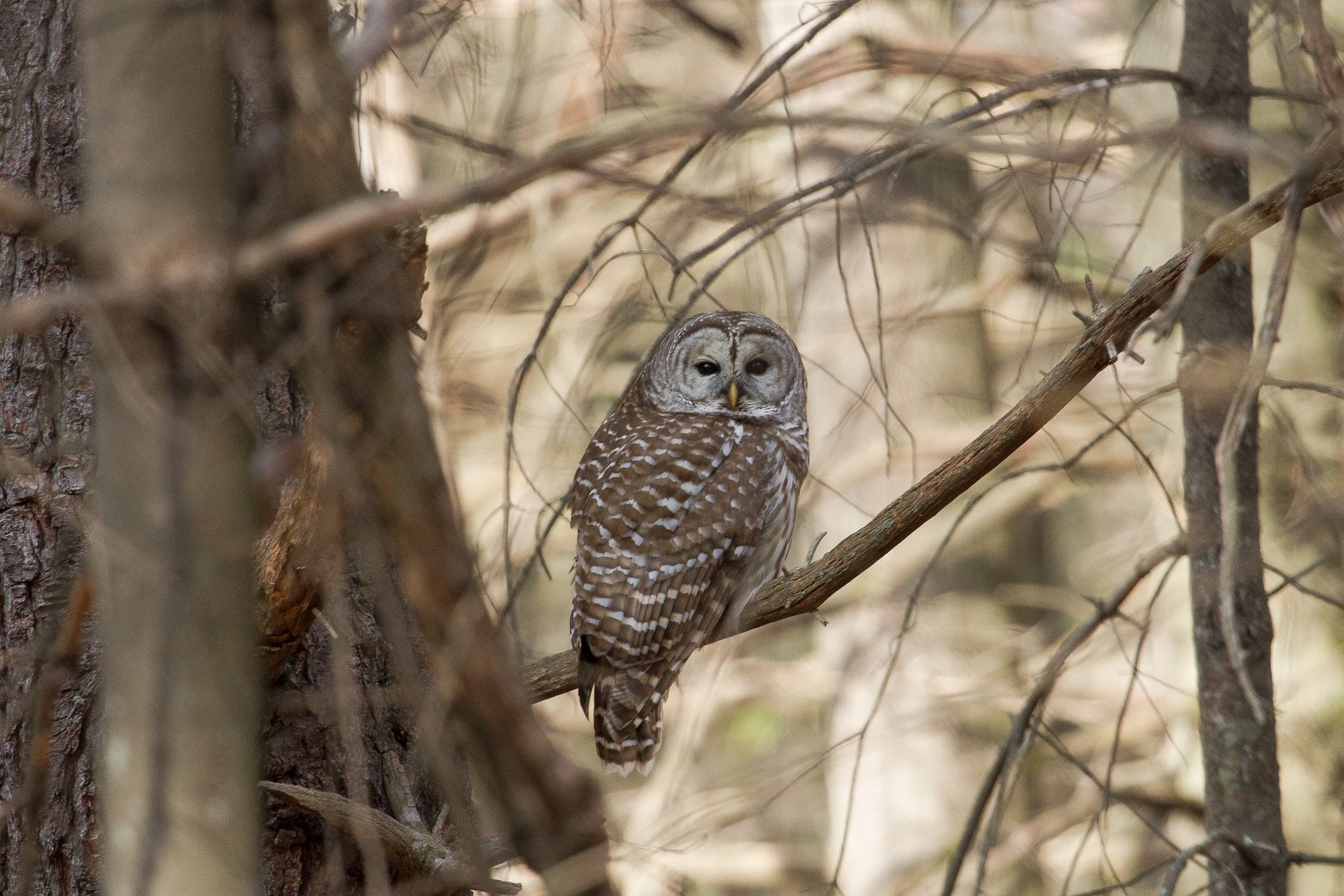
Owling 101: How to Spot an Owl
You may be surprised to learn that owls can be heard in most neighborhoods and backyards, even in Boston and the nearby suburbs. Learn how to find them with this helpful guide.
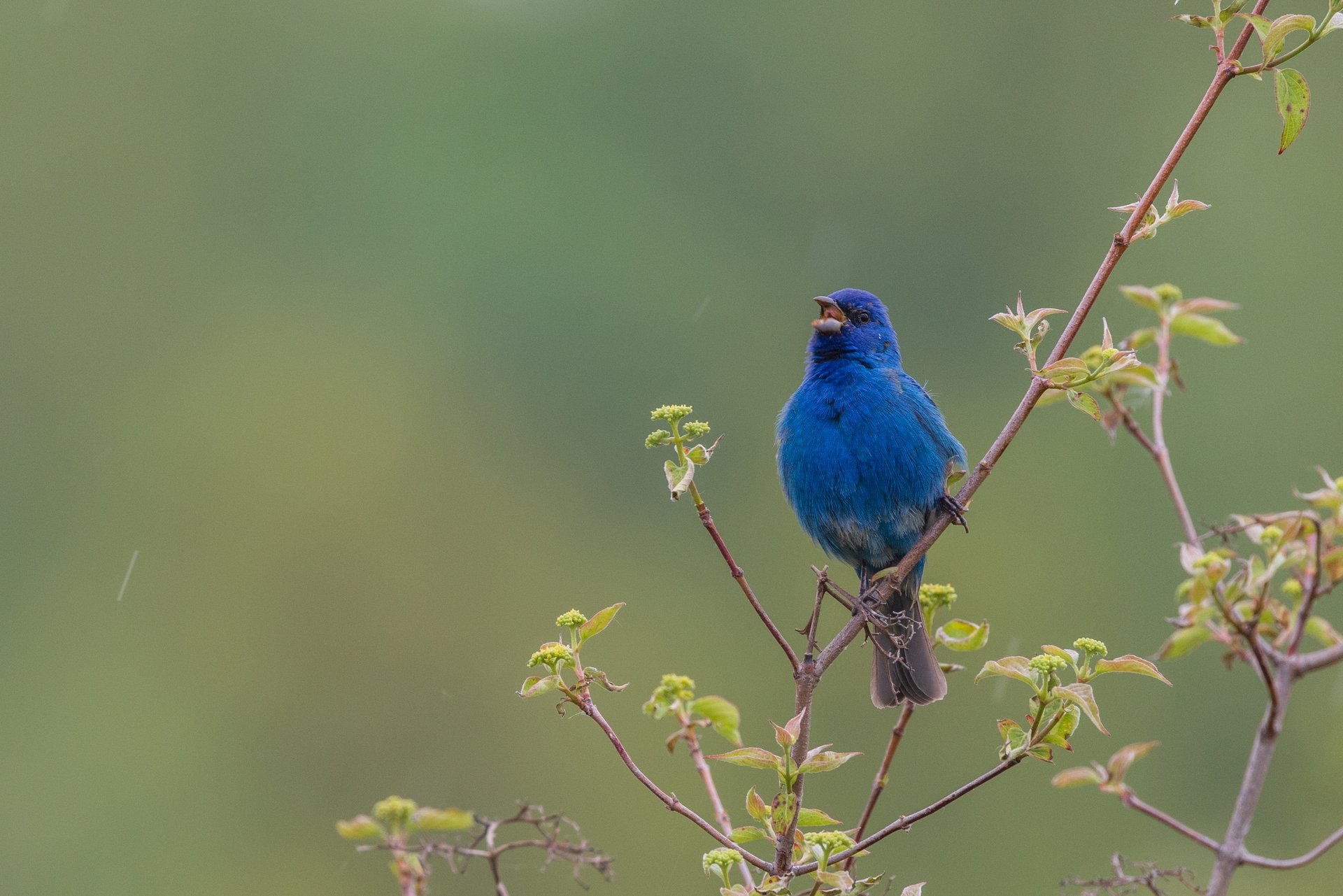
15 Exciting Birds You Can Find in Massachusetts
Spice up your birding wish list by seeking out the colorful, the rare, and the captivating. Here’s a look at 15 exceptional and unusual birds in Massachusetts—bound to make you say, “wow!”.
Fools for Love
For a few animals, like owls, skunks, and the American woodcock, mid to late winter is the perfect time for love.
Stay Connected
Don't miss a beat on all the ways you can get outdoors, celebrate nature, and get involved.