


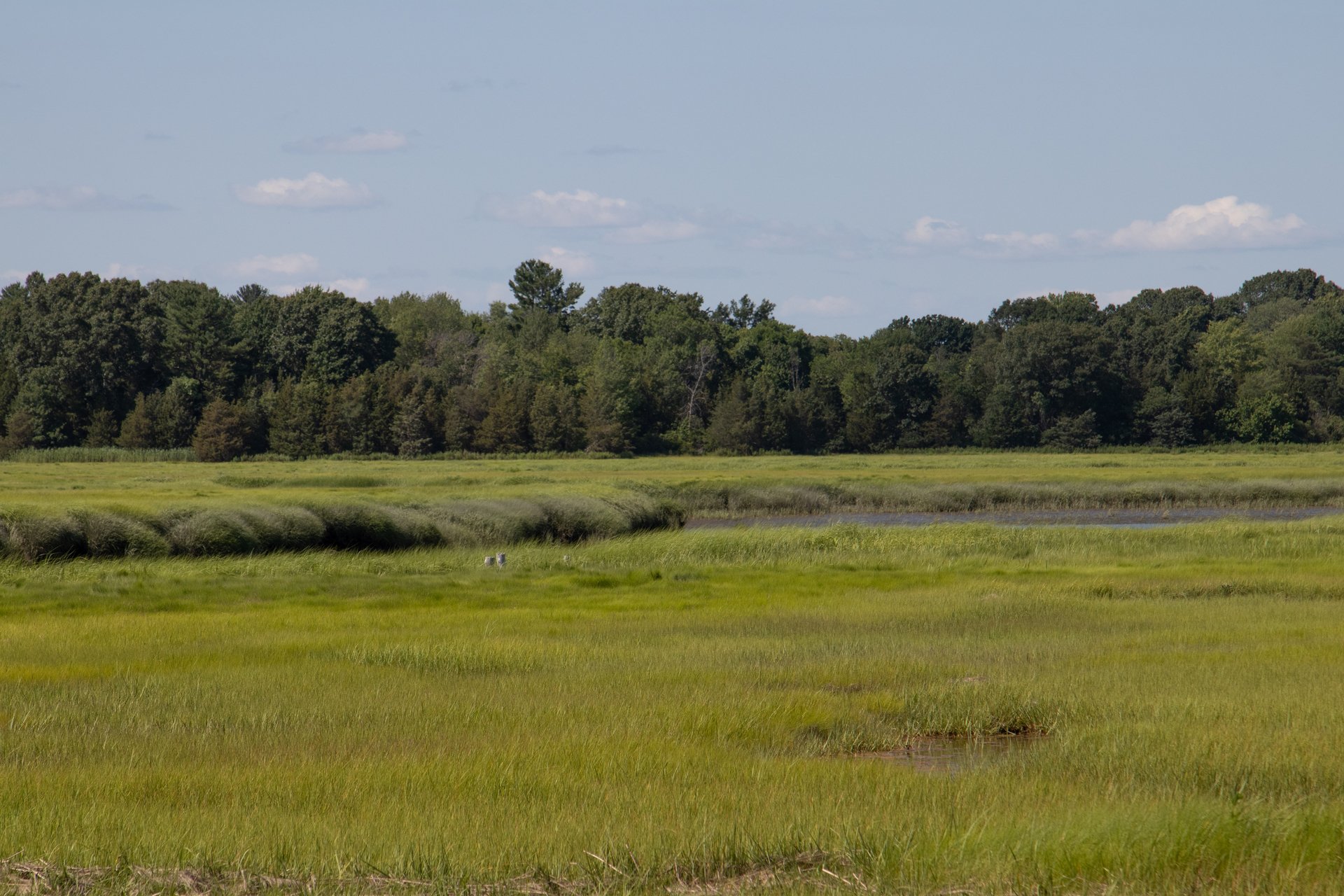
First installed in 2026, the bridge that spans the tidal channel on the Professor Chandler’s Long Walk Trail at Rough Meadows is designed to better preserve the fragile salt marsh around it.
As per the bridge permit, this is a seasonal structure and will be removed and reinstalled, and the tidal channel will not be passable between December and March. However, access to the lookout platform and the Kestrel Trail remain open all year.
Stewarding the Salt Marsh
Removing the bridge for the winter season is responsible stewardship: as ice moves with the tides, it will not form blockages and damage the marsh.
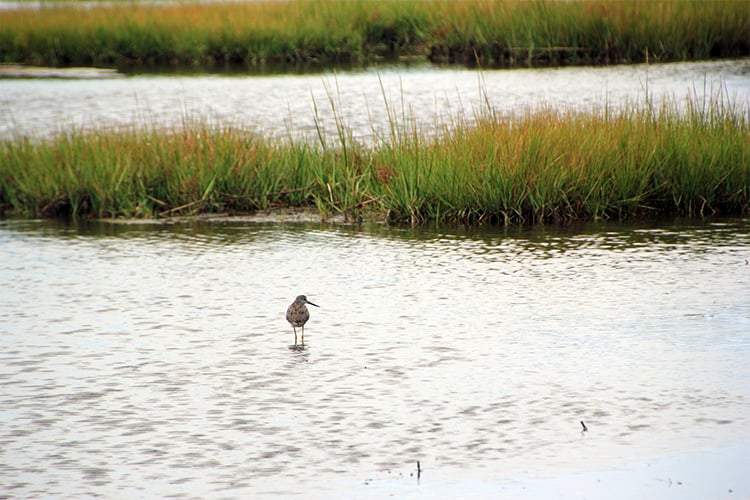
The bridge replaced an old culvert, which was built while Rough Meadows was farmland and removed in June 2026. Removing the culvert, too, has helped maintain these important wetlands. The culvert had slowed the water flow and caused it to pool, and this concentrated flow enlarged the channel and contributed to erosion of the channel banks. During high tides and storms, the culvert also caused flooding on the trail nearby.
Because Mass Audubon removed the old culvert and established a new, seasonal bridge, tidal waters can once again move more freely through the marsh, helping to restore natural hydrology and sediment processes. Improved water flow will reduce localized erosion, promote a more stable channel, and support the long-term health of the salt marsh ecosystem.
Salt marshes provide important habitat for fish, birds, and other wildlife, improve water quality, and help buffer coastal areas from storms and sea level rise. Restoring natural tidal exchange is an important step in maintaining these ecological functions and increasing the resilience of Rough Meadows in the face of changing coastal conditions.
Stay Connected
Don't miss a beat on all the ways you can get outdoors, celebrate nature, and get involved.