


8 New Pieces Added to Mass Audubon's Art Collection
February 09, 2026
The Museum of American Bird Art’s 2025 art acquisitions tell a story of observation, care for place, and the deep ties between artists and the natural world the museum has long championed. The additions range from contemporary pieces to historic prints, each one strengthening the collection while honoring the traditions and landscapes that shape the MABA’s mission.
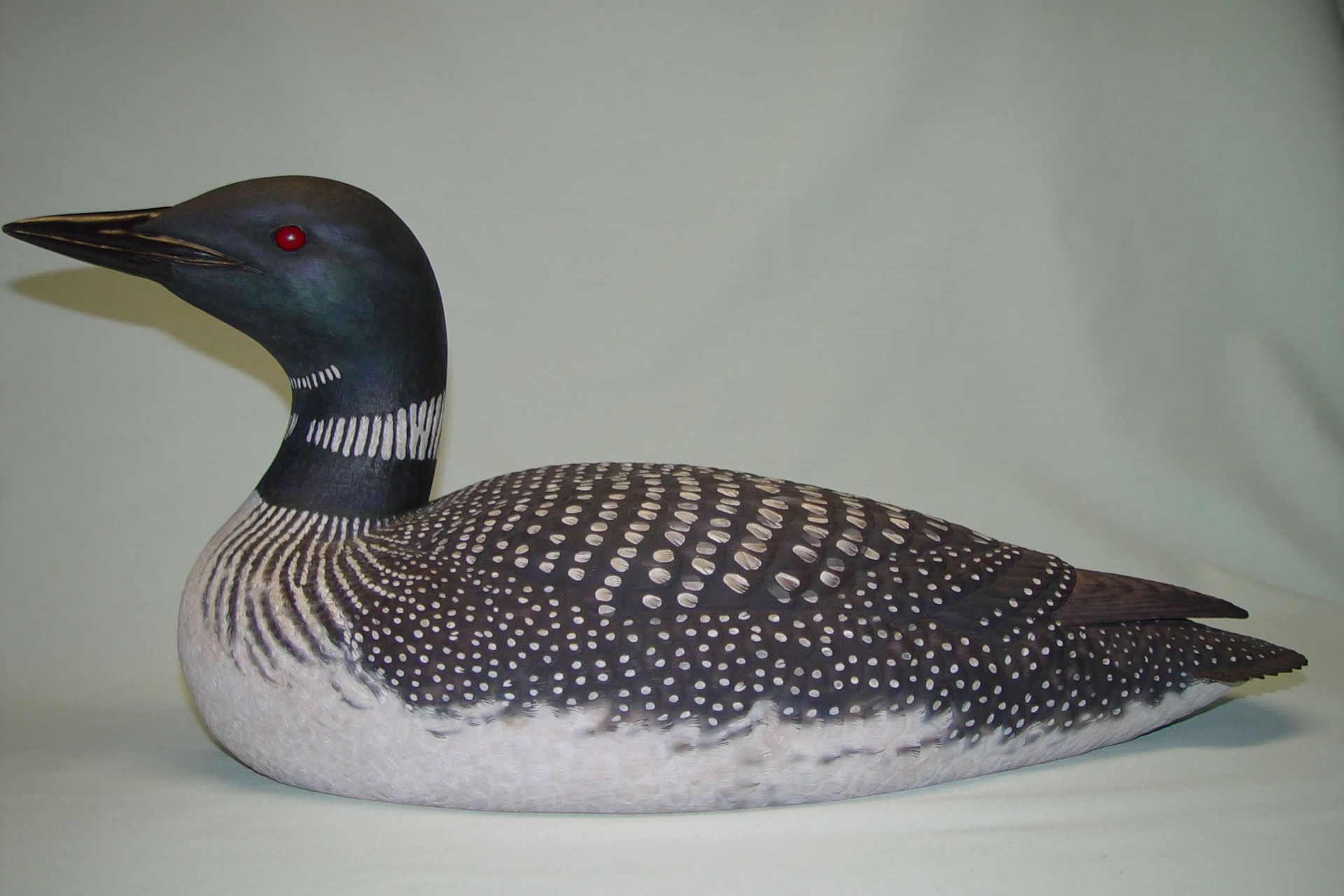
Carving of a Common Loon by Judith Snyder
Rendered with remarkable sensitivity and precision, the life-sized sculpture captures the bird’s quiet authority—its sleek body poised between water and sky.
Snyder’s work is widely respected for its technical excellence, and this carving stands as a powerful example of her artistry. With this acquisition, the museum proudly adds the work of a superb woman master carver to its collection.
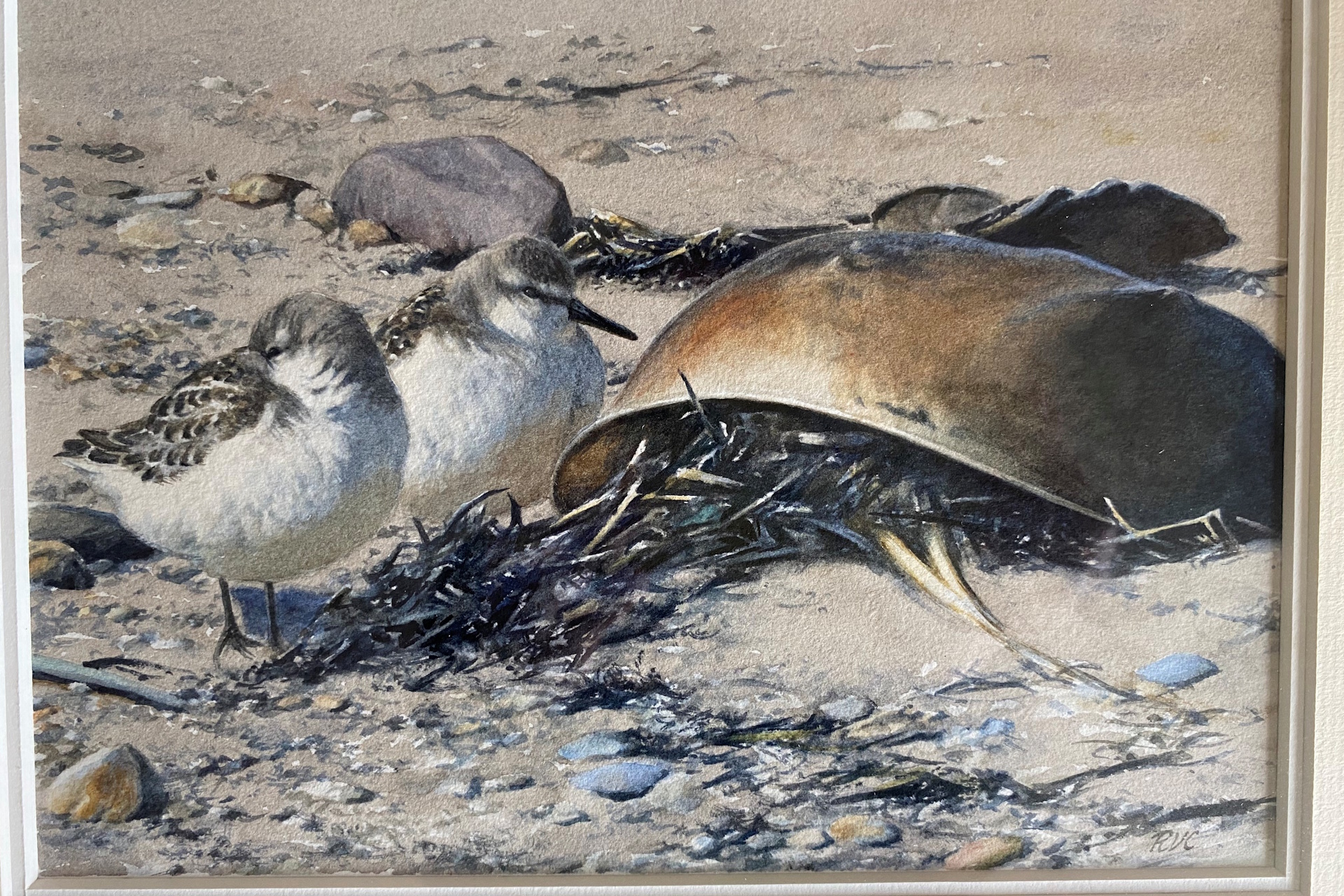
Watercolor of Semipalmated Sandpipers and Horseshoe Crab by Robert Verity Clem
Clem’s careful observation and luminous handling of paint lend the scene in this painting both intimacy and gravity. MABA is thrilled to add this painting to the 60 pieces by the artist already in the collection, and the museum is proud to be the steward of the largest collection of the artist’s work in the world.
In a further gift that deepens the relationship long valued by the museum, Mass Audubon also received a donation of four childhood paintings by Clem. These early works offer a rare and moving glimpse into the beginnings of an artist whose vision would later become so closely intertwined with MABA.
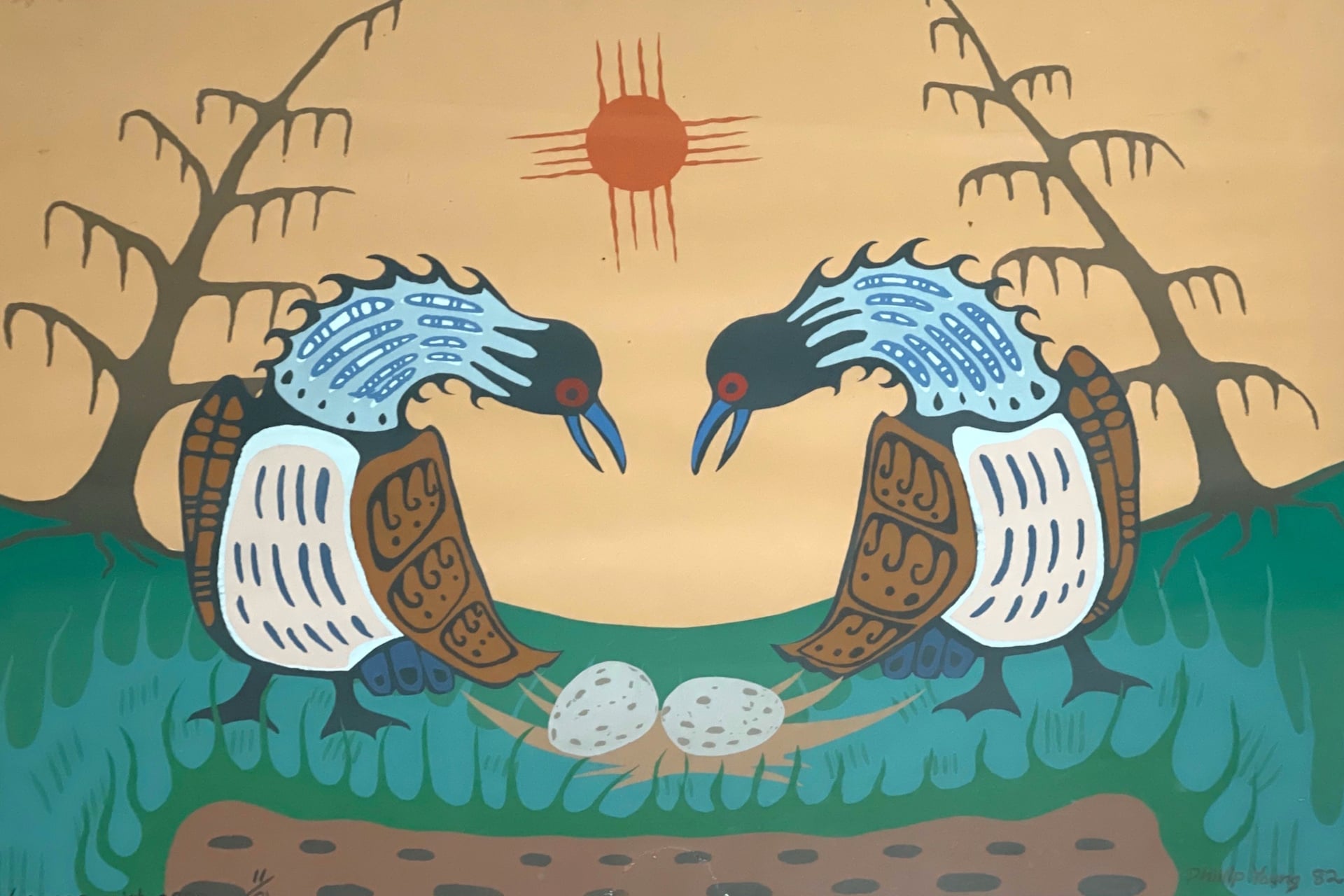
Loons with Eggs by Mi’kmaq artist Philip Young
An extraordinary painting by Mi’kmaq artist Philip Young depicts two Common Loons and their eggs. The colorful composition resonates with life and energy.
This work adds important depth to the museum’s growing collection of Indigenous art, underscoring a commitment to honoring underrepresented voices and artistic traditions that have long been connected to the land and its inhabitants.
Canada Goose Engraving by John James Audubon
Created between 1827 and 1838, Audubon’s dramatic presentation of this large bird—at once scientific and theatrical—serves as a reminder of the enduring influence of early natural history art on how we see and value wildlife today.
New Works, New Inspiration
Together, these acquisitions form more than a list of new objects. They represent a conversation across art history and culture—shared attention to birds and the fragile beauty of the natural world. In welcoming these works over the last year, the museum not only enriches its collection but also reaffirms its role as a steward of art, history, and the living landscapes that inspire them.
Stay Connected
Don't miss a beat on all the ways you can get outdoors, celebrate nature, and get involved.