

Bird-Friendly Maple Project
Enjoy maple syrup while supporting forest birds by purchasing bird-friendly maple syrup from producers who manage not only for sap, but also bird habitat!
Maple syrup is produced by collecting and boiling sap from a sugarbush, which is loosely defined as a group of maple trees. Many sugarbushes consist only of maple trees. A monoculture like this provides habitat for birds—but by managing the forest with birds in mind, it can be even better.
By growing other tree species, incorporating habitat features such a cavity trees and logs on the ground, and creating layers of vegetation, a maple producer can provide higher quality nesting and foraging opportunities for forest birds.
These actions also help to reduce maple insect pests and disease, encourage long term sap production, and make the sugarbush more resilient to climate change.
What is the Bird-Friendly Maple Project?
The Bird-friendly Maple Project was created by Audubon Vermont. The Massachusetts project is a partnership between Mass Audubon, the Massachusetts DCR's Forest Stewardship Program, the Massachusetts Woodlands Institute, and Massachusetts Maple Producers Association.
Currently present in 6 states and growing, this voluntary program recognizes maple producers who agree to manage their sugarbushes in a way that supports forest bird species and other wildlife while maintaining sap production. In turn, producers receive increased market exposure and materials such as signs and stickers for jugs or other containers.
Buying Bird-Friendly Maple Syrup
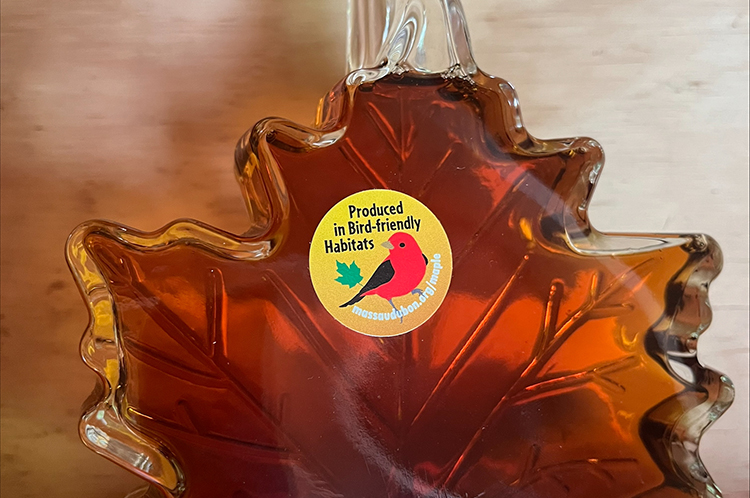
Keep an eye out for the bird-friendly maple syrup logo and meet the sugar makers by exploring the map below.
Meet Bird-Friendly Maple Sugarmakers
How to Become a Bird-friendly Recognized Maple Producer
If you're a maple producer in Massachusetts who is interested in making your maple syrup bird-friendly, please review the Guidelines for Sugarbushes and FAQ below.
1. Contact Jeff Ritterson at Mass Audubon to determine eligibility:
[email protected]
781-259-2179
2. If eligible, contact your MA licensed consulting forester to conduct a habitat assessment of your sugarbush and incorporate methods for maintaining or achieving habitat targets into a forest management plan (or update an existing plan).
3. Submit your forest management plan to Mass Audubon and DCR for review.
4. Mass Audubon and DCR will visit your sugarbush(es) to confirm plan details.
5. DCR will approve your forest management plan and Mass Audubon will prepare a Statement of Cooperation.
6. You agree to the Statement of Cooperation.
7. You receive promotional materials such as metal sign and stickers, and provide information to be added to Map and Directory of Bird Friendly Producers.
To become a bird friendly producer, a MA licensed forester needs to conduct a habitat assessment of your sugarbush and incorporate methods for maintaining or achieving habitat targets into a DCR approved forest management plan. This expense is between you and the forester. There may be cost-share funding through DCR’s Forest Stewardship Program for hiring a forester to write a forest stewardship plan, which can include an assessment of your sugarbush.
When a producer becomes recognized as bird friendly, they agree to make progress over a 5-year period on actions needed to maintain or achieve habitat targets. You may incur some expenses when undertaking recommended management, but actions are aligned with the long-term sustainability of sugarbushes. No expenses will be incurred through interactions with DCR or Mass Audubon.
No, these materials will be provided to you free of charge.
No, you do not need to own 100 or more acres of forest. That acreage can be comprised of many ownerships, including your neighbor’s property, state or land trust land, etc. This guideline is in place to support birds who breed more successfully in large blocks of forest.
No, up to 25% of your sap can come from sugarbushes or individual trees that are not part of a recognized bird friendly sugarbush. This allows producers to lease their neighbor’s land or tap the row of maple trees down their driveway, for example. It would be permissible to have your neighbor’s sugarbush recognized as bird friendly if it helps meet the 75% threshold of sap coming from bird friendly sugarbushes.
No, your sugarbush does not need to be enrolled in a current land use program.
Yes, your forest management plan can be amended to include a habitat assessment and recommended management practices.
Yes, the assessment portion can be considered complete. However, some additional details may need to be added to your management plan, such as non-sugar maple basal area %, snag and cavity tree counts, and management actions needed to maintain or achieve the program’s habitat targets, as outlined in the Management Guidelines document.
No, you may choose to only address the habitat in your sugarbush. However, a whole property perspective is encouraged considering birds will also utilize the surrounding habitat.
No, it is ok if some habitat targets or guidelines do not currently meet the program’s criteria. The Statement of Cooperation will outline which criteria are deficient and need to be addressed over a 5-year period, and recommended management actions will be given in your forest management plan.
Contact Us
For more information about this project, please reach out to our team by email.
Stay Connected
Don't miss a beat on all the ways you can get outdoors, celebrate nature, and get involved.