


Mass Audubon State of the Birds
Find a Bird
State of the Birds
Mallard
|
|

Tracking This Bird In Massachusetts
Climate Vulnerability Score
Least Vulnerable


Mass Audubon Mean likelihood of occurrence (current)
0.52
Mass Audubon Mean likelihood of occurrence (2050)
0.50
Mass Audubon Absolute change in likelihood of occurrence
-0.02
U.S. Forest Service Climate Change Bird Atlas (Hadly Hi emissions scenario)a
-9.00
National Audubon Societyb
Climate Endangered
a USFS model data for Massachusetts by 2100
b National Audubon Society's Climate Change Atlas was completed on a continental scale.
Mass Audubon indicates least vulnerable to climate change. USFS and National Audubon both indicate decline.
Breeding Bird Atlas

Atlas I Blocks
531
Atlas II Blocks
881
Percent of state occupied - Atlas I
54
Percent of state occupied - Atlas II
84
Percent change
148
Breeding Bird Survey
Annual trend 1966-2010
3.1%
P-value
significant, increasing
Number of routes
24
Recent trend 2000-2010
3.7%
Christmas Bird Count

Trend (1963-2008)
5
Significantly different than zero
yes
Trend (1963-1979)
13
Significantly different than zero
yes
Trend (1979-2008)
2
Significantly different than zero
yes
Christmas Bird Count Sightings By Year
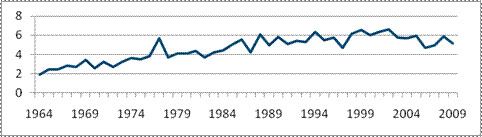
Data reflects sightings per person per hour in order to account for varying numbers of yearly volunteers.
Habitat Usage
Breeding
Forested Wetland, Open Freshwater Marsh, Rivers, Lakes, and Ponds, Urban and Suburban
Wintering
Coastal, Open Freshwater Marsh, Rivers, Lakes, and Ponds, Saltmarsh, Urban and Suburban