


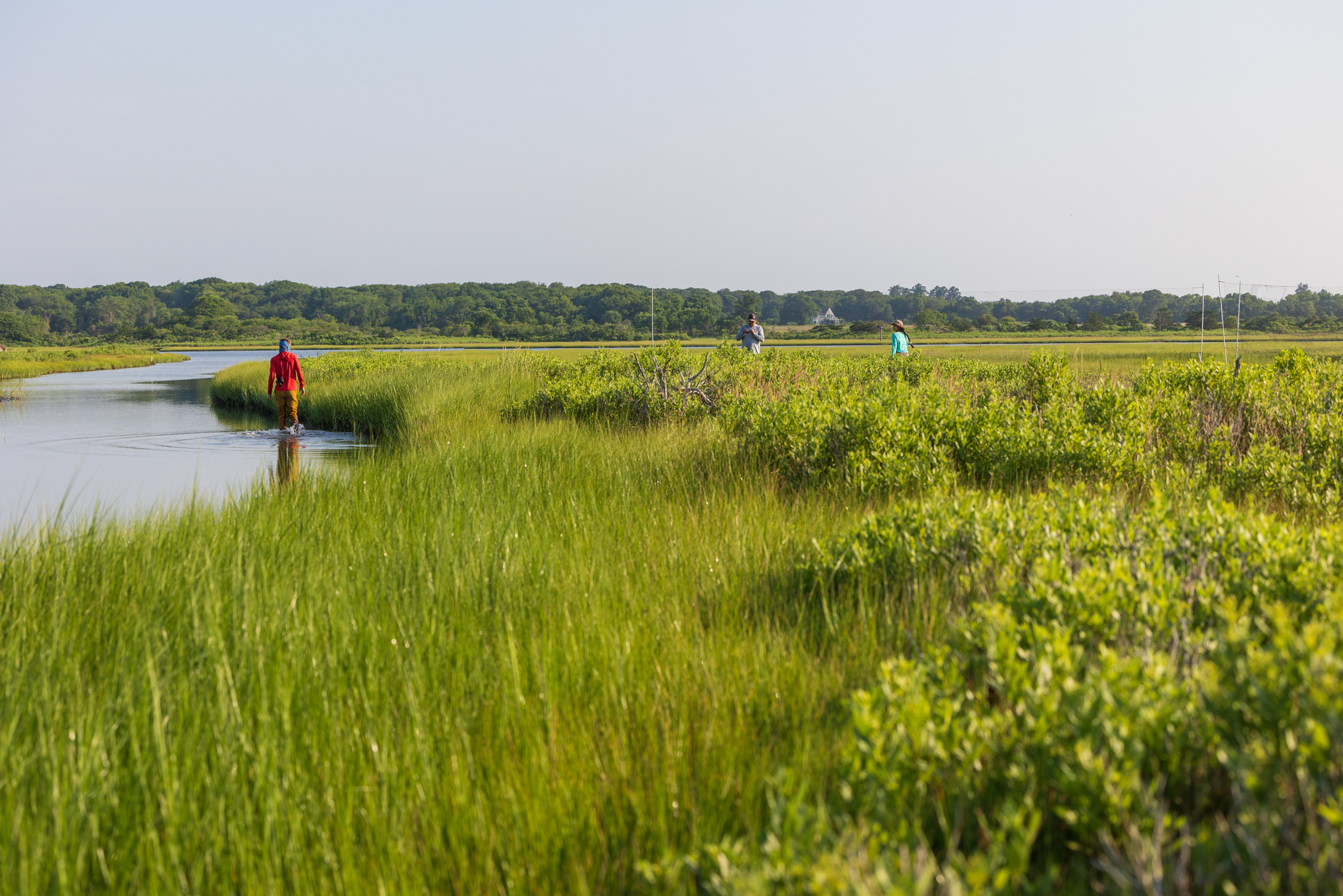
Mass Audubon applauds Chair Rodrigues and the Senate Ways & Means Committee for their work in moving forward the Mass Ready Act (also known as the Environmental Bond Bill).
The Mass Ready Act embraces Mass Audubon’s approach on streamlining permitting for wetlands restoration projects. In addition to authorizing state investments in clean water, clean air, land protection, biodiversity, and access to nature, the bill contains crucial permitting reforms that will support Mass Audubon’s efforts to scale up ecological restoration and nature-based solutions projects.
Wins for Wetlands
Chapter 91 (also known as the Public Waterfront Act) requires that projects in public waterways obtain a license to protect public use, access, and navigation. This license alone typically adds 12 months to the permitting process, despite the fact that most ecological restoration projects have no use, access, or navigation impacts. The redrafted bill contains a full exemption for salt marsh restoration projects that comply with the wetlands protection act.
There’s also a provision in state law that requires a full Environmental Impact Report (EIR)—typically reserved for projects with the highest level of negative environmental impacts—for any project within a certain radius of an environmental justice community. An EIR often takes a year to prepare and finalize. The redrafted bill contains an exemption from the geographic-only requirement for nature-based solutions projects.
And important refinements were included to the Wetlands Protection Act designed to speed up permitting across a wide variety of projects while retaining protection for these vital resources.
Taken together, the Senate Ways & Means Committee sent a message that it supports efforts to scale up ecological restoration.
The Bill Beyond Wetlands
The Mass Ready Act authorizes crucial state investments of $3.6 billion in the areas of:
- Land protection
- Climate resiliency
- Clean Air
- Biodiversity
- Municipal Vulnerability Preparedness (MVP)
Additional policy proposals include banning single-use plastic bags, supporting municipal efforts to acquire land, creating a funding stream for resiliency measures, and streamlining permitting for priority housing.
What's Next?
The Massachusetts Senate will vote on April 15. After it passes, it will move to the House of Representatives, which will vote on it before the session ends in July. In order to ensure that this critical investments and policy changes make it into the final bill, we will need our members and supporters to speak up. Become a Climate & Nature Champion to stay in the loop.
Stay Connected
Don't miss a beat on all the ways you can get outdoors, celebrate nature, and get involved.