


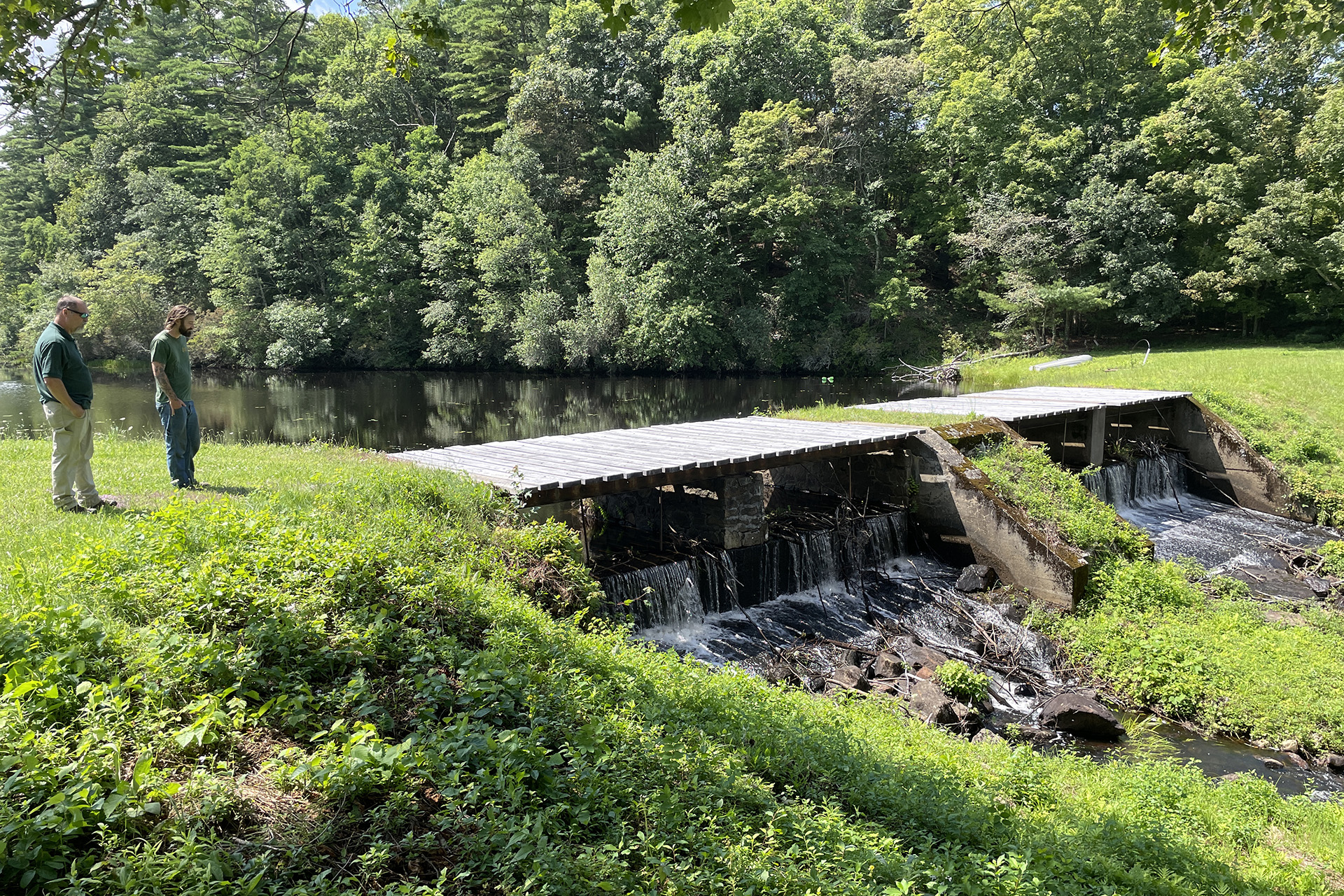
Mass Audubon and partners work together to restore the Vinica Brook Watershed in Wales.
In Wales, Mass., right on the Massachusetts-Connecticut border, the 3,000-acre Vinica Brook Watershed could be a local hotspot for biodiversity.
However, a number of structures have degraded streams and wetlands. Dams constructed on the site in the mid-20th century, as part of wildlife sanctuary development, were thought to benefit the ecosystem by creating wildlife ponds, feeding areas, and experimental gardens. Instead, they divided the landscape, disrupting the normal flow of water and eliminating natural processes and opportunities for wildlife such as Brook Trout to migrate and spawn.
Today, with our better understanding of stream ecology and dam impacts, these same structures are the target of restoration activities.
Mass Audubon has teamed up with the Norcross Wildlife Foundation, an environmental nonprofit in Central Massachusetts, to remove barriers, restore the watershed, and revitalize it from the damage caused by its historic use. Doing so has the potential to remove more barriers to fish and turtle migration than any other single project completed in Massachusetts to date.
Over the course of the project, dozens of dams and culverts will be removed, connecting more than 14 miles of streams and revitalizing more than 300 acres of wetlands in the next few years.
A Landscape Worth Protecting
The Vinica Brook Watershed sits within the Norcross Wildlife Sanctuary, a property managed by the Norcross Wildlife Foundation. As part of the Connecticut River Valley Watershed, it features unique geology with richly diverse forests, wetlands, rivers, and riparian habitats—land adjacent to rivers and streams.
More than eight miles of streams with native trout and other cold-water fish species wind through the landscape. The largely undeveloped and forested watershed and wetlands surrounding the property are home to both fascinating and valued plants including Rough-fringed Orchid, and animals including Eastern Newt.
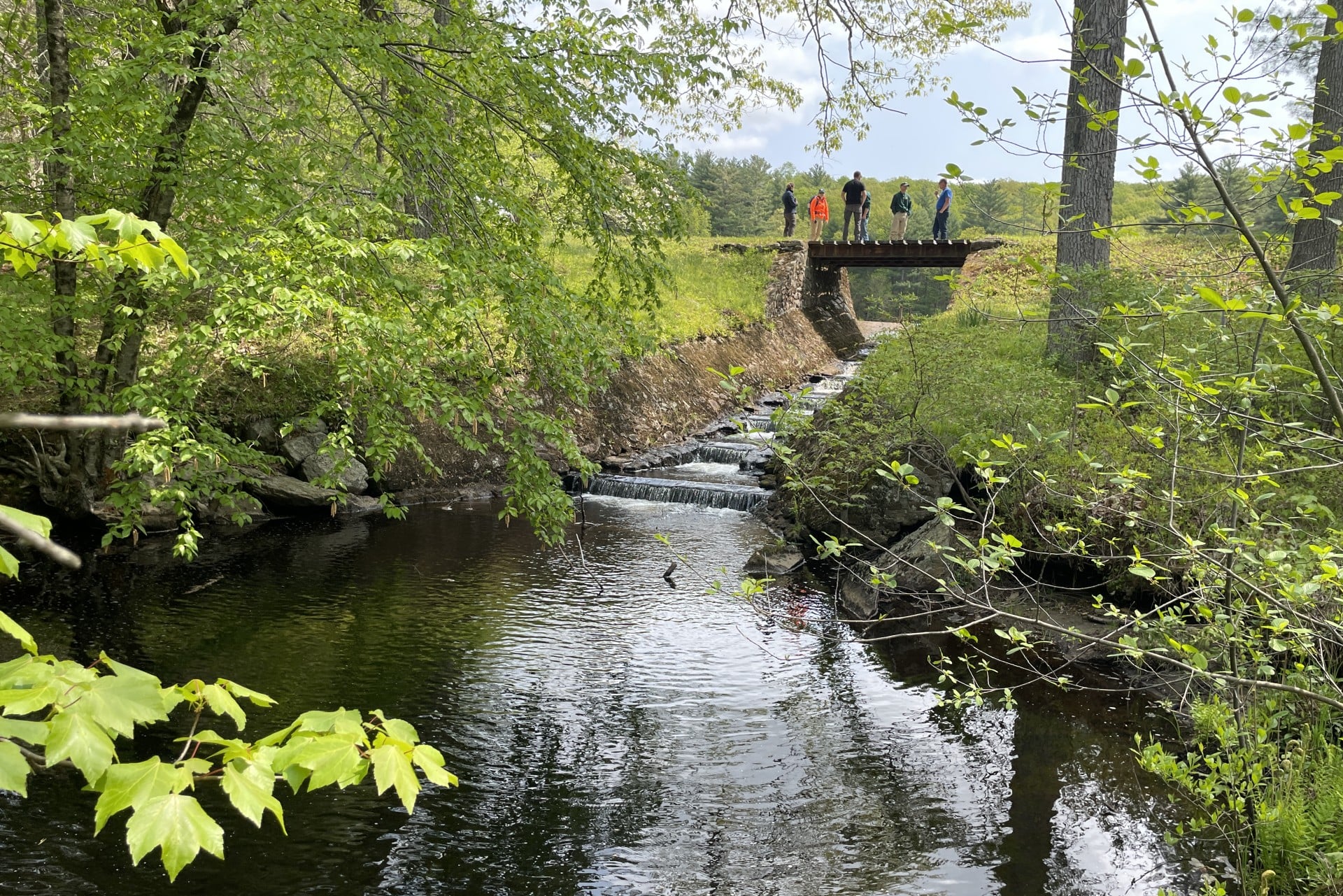
Its diversity led the MassWildlife’s Natural Heritage and Endangered Species Program to classify much of the area as Core Habitat (areas vital to long-term support of rare species, natural communities, and resilient ecosystems) and Critical Natural Landscape (large landscapes that buffer Core Habitats, enhancing connectivity and resilience), two designations that tell us this property has special habitat value and needs to be prioritized.
Reconnecting Waterways
Initial engineering studies informed a restoration design including abandoning much of the road network, breaching smaller road-stream crossings, and improving larger crossings to remain in accordance with state standards. However, the team identified that dams posed the biggest problem.
Prioritizing Dam Removal to Restore Rivers
Most dams today serve no active use, are well beyond their design lifespan, and are structurally defective.
A dam in a river fundamentally disrupts natural ecosystem processes: It blocks organisms from finding refuge during drought or spawning season, traps wood and sediment, and warms water, which causes it to hold less oxygen, affecting the flora and fauna that rely on the river.
Removing each dam breathes life back into the ecosystem. Once water can again flow freely, the habitat is expected to attract beavers, sustain wetlands, and allow fish and other aquatic organisms to pass through the watershed as channels and floodplains reform and the ecosystem recovers.
Visitors Reap the Rewards
The parcel currently includes an educational trail system that leads visitors through the sanctuary’s protected forests, fields, wetlands, and streams, where they can enjoy the beauty of Massachusetts. Through these planned efforts to mend the ecosystems, the team hopes visitors will spot more signs of beaver activity, encounter the special amphibians that call the area home, and witness the benefits of eliminating barriers to biodiversity.
Making Progress Through Partnerships
Over the past several years, the project has moved from an early vision to a detailed plan bolstered by partnerships.
In addition to the Norcross Wildlife Foundation and Mass Audubon, the team of partnering organizations now includes American Rivers, MassWildlife, and UMass Amherst, with more on the way. Mass Audubon’s Ecological Restoration staff provide project management services, help assess the site, oversee engineering contracts, and arrange funding. This work will complement ongoing improvements from the Town of Wales to construct ecologically friendly bridges on town roads in the watershed.
Monitoring and Research
A network of specialists monitors the property and tracks this project’s successes and future challenges.
In 2025, the Norcross Wildlife Foundation conducted a prescribed burn to encourage regrowth of native plant and tree species along Vinica Brook, with other landscape restoration planning and activities underway, including invasive plant control.
At the same time, biologists monitor populations of beavers, turtles, fish, and more to develop a habitat management plan for before, during, and after restoration. In addition, UMass is performing e-DNA analysis, a noninvasive water testing tool, to track what aquatic organisms use the waterway.
And to prepare engineering design plans that Mass Audubon and the Norcross Wildlife Foundation can use to initiate permitting with local, state, and federal agencies, Stantec Consulting Services stepped in.
Engaging Nipmuc(k) Stewards
To successfully protect and restore aquatic ecosystems, conservation partners must identify strategies to support Indigenous-led cultural revitalization.
The Vinica Brook Watershed lies on the unceded territory of the Nipmuc(k) Peoples. Nipmuc(k) translates to People of the Freshwater, describing a millennia-long relationship that revolves around the tending of and relationship with wetlands and aquatic ecosystems.
Today the Nipmuc(k) tribe includes descendants of tribes that were lost due to colonial violence. The Nipmuc(k) community retains rights to hunt, fish, forage, and engage in cultural practices on public lands and has built relationships with the Norcross Wildlife Foundation to exercise these rights in areas stewarded by the organization. In the region, Norcross has supported Nipmuc(k) cultural bearers, including by hosting educational workshops and a Mishoon Camp, an ancestral practice that involves the controlled burning and carving of a carefully selected white pine tree. Mass Audubon, Mount Grace, Opacum Land Trust, and the Norcross Wildlife Foundation also work to support No Loose Braids, Nipmuc Cultural Hunt and Fish, and Chágwas Cultural Resource Consultants in their efforts to restore Atlantic White Cedar Swamps with the Monson Conservation Commission in the watershed neighboring Vinica Brook Watershed.
Ecological Restoration at Mass Audubon
The Vinica Watershed Project represents just one of many projects Mass Audubon’s Ecological Restoration team is working on across the state, each attempting to combat the loss of biodiversity as climate change impacts the ecosystems around us.
You May Also Be Interested In
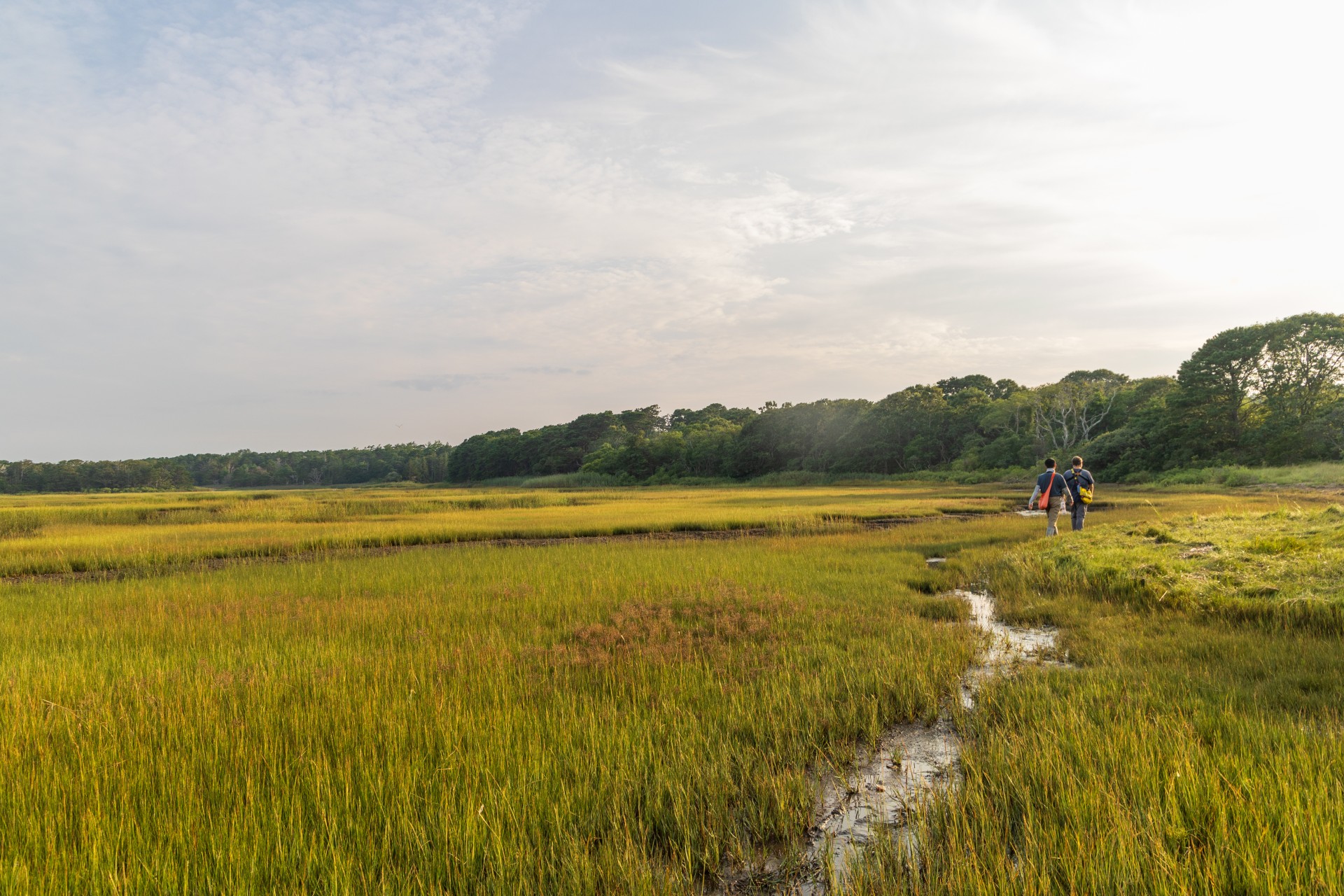
How We're Building a More Resilient Coast
Leveraging land conservation and restoration, species protection, and advocacy to support Massachusetts’s coast in a changing climate
Two New State Grants Fuel Conservation Work at Mass Audubon
Recently, the Healey-Driscoll administration awarded grants that will fund two conservation projects, one in Boston and the other on Cape Cod.
Introducing A New Program for Every Conservation Journey
Mass Audubon’s new Conservation in Action Certificate Program bridges the gap between passion and impact, equipping participants with the knowledge, tools, and practical experiences to tackle conservation challenges in their communities and beyond.
Stay Connected
Don't miss a beat on all the ways you can get outdoors, celebrate nature, and get involved.