


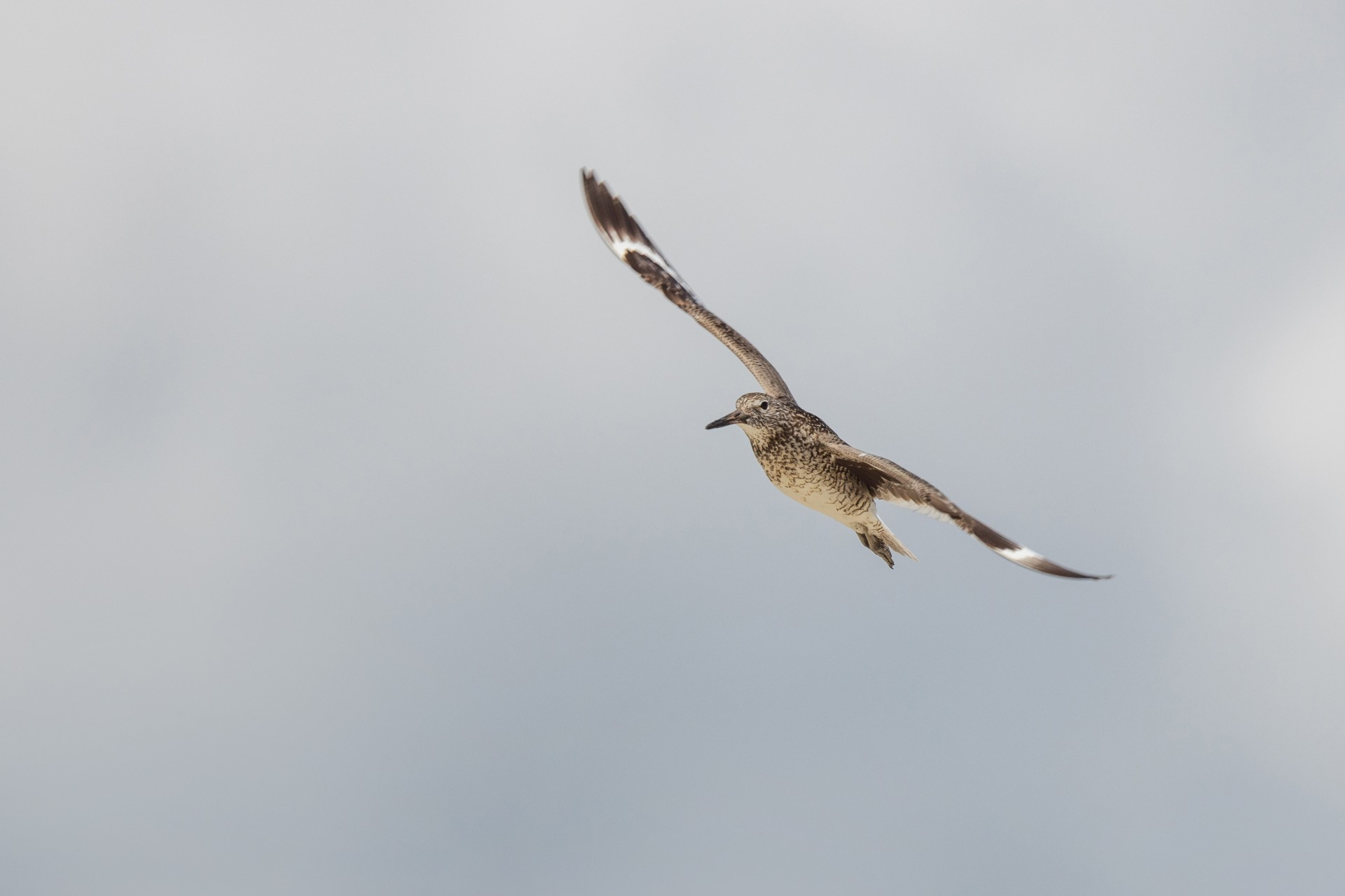
Understanding why one bird thrives while another declines
Willets and Hudsonian Whimbrels share many similarities: long legs, slender bodies, and slim bills, and both travel thousands of miles along the Atlantic Flyway from Brazil to Massachusetts and beyond, and back again.
However, their population trends could not be more different: Willets appear to be increasing, while Hudsonian Whimbrels have declined by nearly 80% over the past 40 years. Mass Audubon’s bird conservation team teamed up with Manomet Conservation Sciences and researchers at UMass Amherst led by Nate Senner, Mass Audubon’s Bertrand Chair of Natural History & Ornithology, to uncover the secrets behind why two such similar birds are experiencing dramatically different population trends.
Gathering data for the first time, we hope to confirm the Willet’s success story, find out why it is succeeding, and use this information to help the Hudsonian Whimbrel rebound before it’s too late.
Shared Threats, Key Differences
The Willet and Hudsonian Whimbrel face similar conservation threats, including land development and habitat loss, climate change, and sea level rise. Their migration patterns also look the same. They winter in Brazil, migrate along the Atlantic Flyway, and stop over in coastal Massachusetts on their southbound migration.
But key differences lie in where they breed. Hudsonian Whimbrels nest from Alaska to eastern Canada, while Willets breed in marshes from southern Canada down through the mid-Atlantic, including right here in Massachusetts.
Painting a Lifecycle Picture
This collaborative team is tracking the two species across continents using both technology and on-the-ground monitoring.
Tracking via GPS
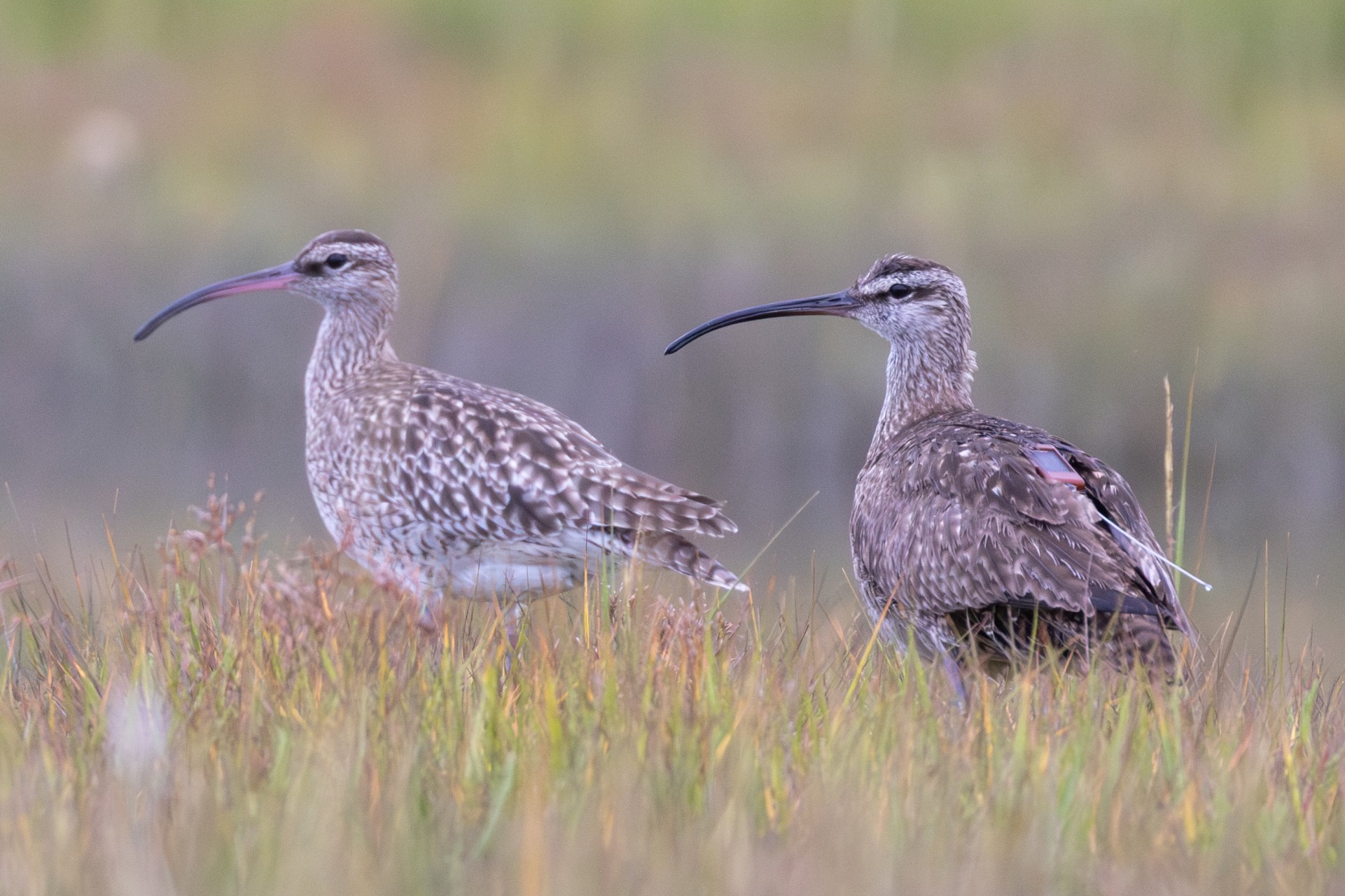
In summer 2025, Mass Audubon attached lightweight yet precise GPS devices to five Willets at Allens Pond Wildlife Sanctuary in Westport, a location to which Willets are known to return for breeding year after year. In 2026, the team will tag at least 20 more Willets at Allens Pond and other sites in Massachusetts. Similarly, so far in 2026 the team at Manomet Conservation Sciences has attached GPS monitors to 17 Hudsonian Whimbrels in Louisiana and Texas as the birds were en route to their breeding grounds in Alaska and Canada. This adds to the more than 200 transmitters deployed on Whimbrels by a collection of organizations in the Hudsonian Whimbrel Working Group, including Manomet.
For the next several years, the teams will watch the birds' migration paths as their GPS devices transmit data directly through cell networks to researchers along the way. This GPS data is gathered to gain a clearer picture of their migratory routes, then paired with other data to pinpoint where each species may encounter the greatest mortality risks.
Leg Flags Fill in the Gaps
GPS devices offer the most precise data, but at a high cost. Leg flags—larger leg bands with tabs that extend away from the leg—are a more affordable way to track larger numbers of birds. These markers, with text easily visible through binoculars and spotting scopes, allow birders and scientists alike to easily report sightings.
Mass Audubon, Manomet, and UMass Amherst work together with SAVE Brasil, an environmental nonprofit in Brazil, to lead efforts to flag and document sightings in Brazil to understand both Willet and Hudsonian Whimbrel winter survival rates. In November and December, team members will flag as many birds as they can. Throughout the winter, they will record how many times they resight these birds and through this data get an idea of how the population survives the winter.
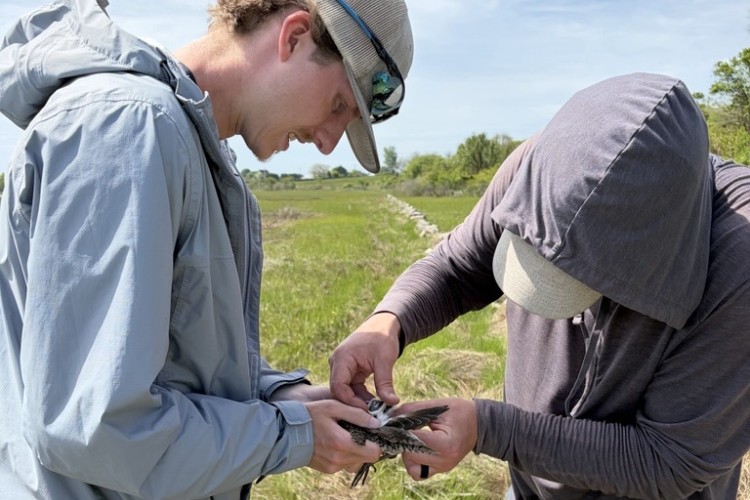
On the other side of their migration path, the Mass Audubon, Manomet, and UMass teams flag young Willets and Hudsonian Whimbrels on their migratory staging grounds on Cape Cod to monitor first-year migratory behavior. Recording sightings throughout the summer, they can get an idea of whether individuals live long enough to migrate and join the breeding population.
Weaving together data over the next few years from precise migratory GPS tracking, winter sightings, and breeding ground success, the team can get an idea of what is going on during the full annual cycle.
Broader Conservation Impact
Insights gained from Willets' apparent success could inform not only conservation strategies for Hudsonian Whimbrels but other coastal-dependent birds, including the rapidly declining Saltmarsh Sparrow.
By identifying which habitats are most critical and when birds are most vulnerable, scientists can guide habitat restoration, improve coastal management practices, and support conservation policies across North and South America.
Stay Connected
Don't miss a beat on all the ways you can get outdoors, celebrate nature, and get involved.