


In a time defined by climate crisis, biodiversity loss, and a growing disconnect from the natural world, the question of how humans can best inhabit the Earth is more urgent than ever.
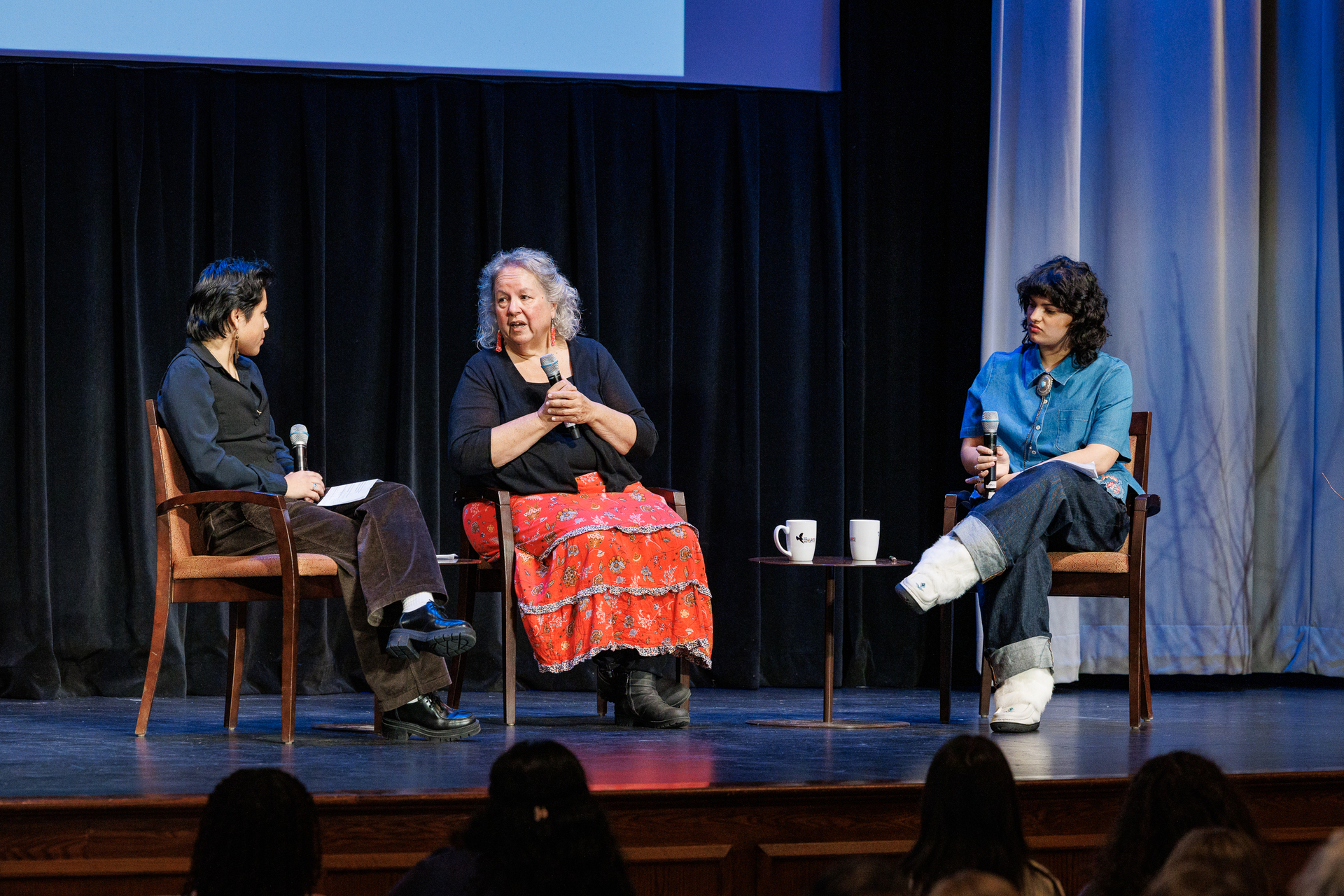
In a recent talk offered in collaboration between Mass Audubon and Wellesley College, Dr. Robin Wall Kimmerer offered an answer.
Dr. Kimmerer is the author of Braiding Sweetgrass and several other award-winning books, a decorated professor, and a registered member of the Citizen Potawatomi Nation. In her moving talk, “All Flourishing is Mutual,” she invited the audience to reconsider our relationship with the Earth and what it might mean to live as responsible participants within it.
Here are five key takeaways from Dr. Kimmerer’s talk.

1. Gratitude is the Doorway to Reciprocity
In a culture that emphasizes scarcity and accumulation, the Earth’s gifts—whether food and water or misty mornings and birdsong—are often taken for granted.
Kimmerer explained how slowing down and expressing gratitude for the abundance around us is the first step towards creating a relationship with the natural world that is rooted in reciprocity. She emphasized that gratitude is not only a passive appreciation; to truly acknowledge all that we have received from the Earth is to feel a sense of responsibility that compels us to give back in meaningful ways.
Giving back can look different for everyone. Each of us has skills or knowledge we can contribute, whether it be through creativity, education, labor, or advocacy. Using our own unique gifts, we can begin to forge a symbiotic partnership with the natural world.
2. Humans Are Part of the Natural World, Not Separate From It
Our modern economic systems position humans as separate from nature, reducing the natural world to a set of resources. This separation fosters an extractive mindset and permeates the ways in which we interact with the Earth, from mining and logging to consumerism. Kimmerer noted that even modern environmentalist terms like “sustainability” carry with them the notion that we must interact with the Earth in a way that allows us to continue to take from it.
Instead of “what can we take from the Earth,” Kimmerer encouraged us to reframe the question: “what does the Earth ask of us?” Kimmerer used the concept of the “Dish with One Spoon,” which has guided many agreements between Indigenous nations in the Great Lakes region and eastern North America. It imagines the Earth as a shared dish that must be kept clean and full, to the benefit of everyone. In the dish is one spoon that represents all individuals living on the land, fostering a sense of justice and cooperation.
When we recognize ourselves as partners with other people who live together as part of nature, not separate from it, we are called to collaborate towards a shared goal with mutual respect.
3. Multiple Ways of Knowing
Western science is often seen as at odds with Indigenous ways of knowing. Kimmerer challenged this notion, pointing out that different ways of understanding the world can in fact work together. She describes knowledge as a braid comprised of three strands: Indigenous knowledge, modern science, and the wisdom of the natural world itself.
In most of our institutions, we are taught to view the world through a single lens. Using the metaphor of “two-eye seeing,” Kimmerer encourages us to draw upon both modern science and Indigenous teachings simultaneously, without blending or homogenizing them. Solving environmental challenges requires a holistic approach that includes not just data gathering, but deep personal interaction, emotion, and input from Indigenous peoples.
4. Language Shapes Reality
Language plays a powerful role in shaping how we relate to the world, despite how invisible it may feel in our daily lives. Kimmerer explored how in English, we use the word “it” to refer to non-human beings. She explained how this simple word reduces other living things to objects outside of human ethical standards and reinforces a worldview of human exceptionalism.
By contrast, many of America’s Indigenous languages use a “grammar of animacy” in which animals, plants, and even mountains are addressed with the same linguistic personhood as our fellow humans. Kimmerer proposed new pronouns for non-human living beings, based on the Potawatomi language: the singular “Ki,” which comes from the word for beings of the earth, and the plural “Kin,” a nod to familial bonds. Changing how we speak can alter how we think and act, expanding our sense of respect towards nature and all those who live here.
5. It Matters Where You Stand
During the Q&A portion of her talk, Kimmerer recounted an anecdote about a former student who once told her that now is the best time to be alive. Confused, she asked how the student could possibly think so, given that the moment we live in is characterized by increasing political turmoil and ecological crises. The student recalled an image of the cartoon Wile E. Coyote at the end of an episode, usually balanced on some wobbly board half-dangling off the edge of a cliff, trying to figure out where to stand to keep from toppling over the edge.
This, she said, is why now is the best time to be alive, even as we teeter on the edge of disaster: “When everything is on the brink, it matters where I stand.” This poignant anecdote reminds us that every choice we make matters, and of the power and responsibility we hold to create a better future.
Watch Robin's Full Presentation
This event was made possible by the Jean and Henry Stone Memorial Lecture, Wendy J. Paulson, and the Chief Arvol Looking Horse and Class of 1956 Distinguished Speaker Series.
If you didn’t get the chance to attend the talk in person or virtually, a recording is available to view until April 11, 2026.
Stay Connected
Don't miss a beat on all the ways you can get outdoors, celebrate nature, and get involved.