


When Roseann Bongiovanni, founder of GreenRoots, a grassroots environmental-justice organization in Chelsea, first spoke with Mass Audubon president David O’Neill in fall 2022, her message was clear: “We need a partner to work with local organizations and residents to acquire the Forbes site.”
Fast-forward almost four years and Mass Audubon now owns and stewards 18 acres of land at the confluence of Chelsea and Mill Creeks in partnership with GreenRoots and affordable housing nonprofit The Neighborhood Developers (TND).
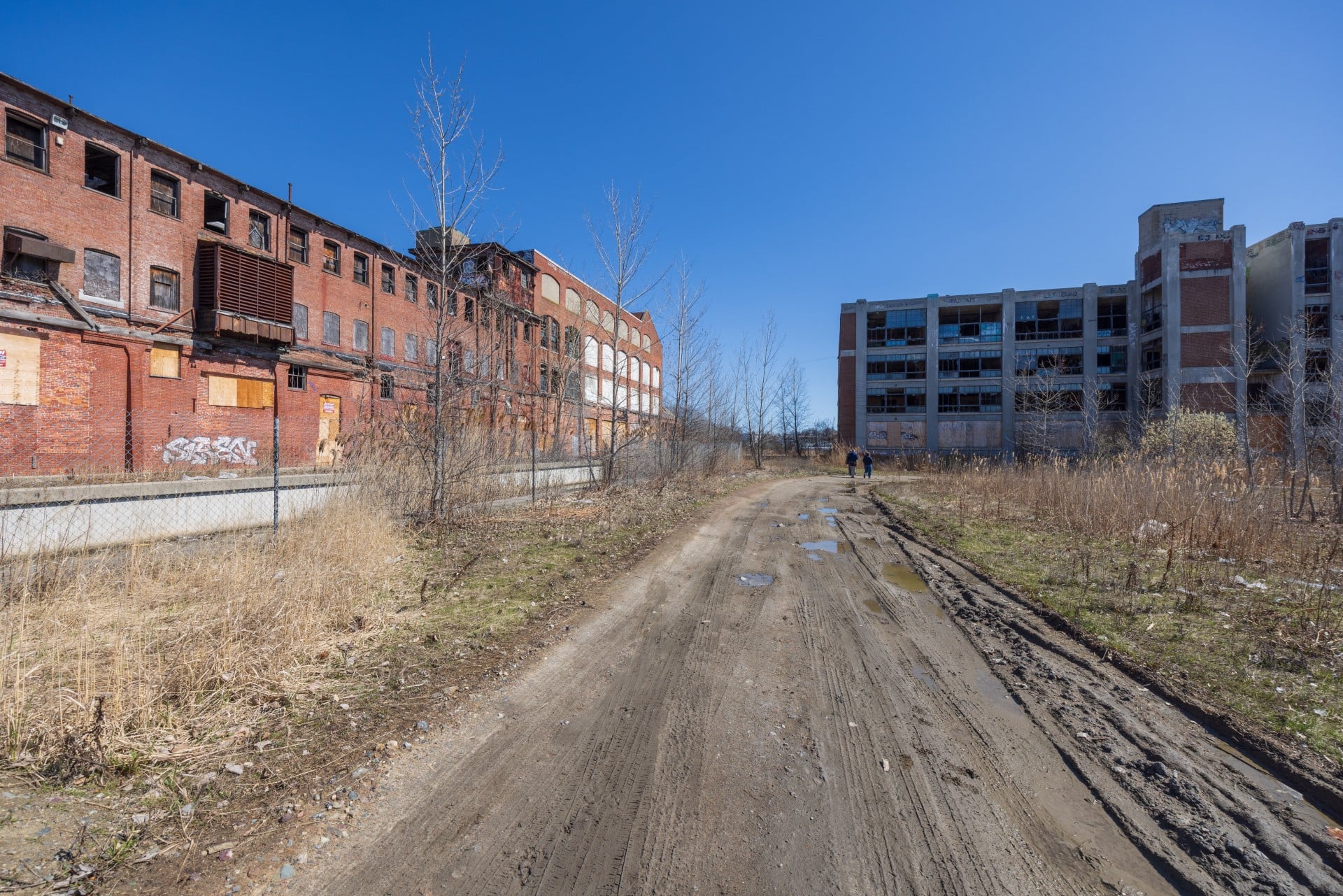
Once the home of the Forbes Lithograph Manufacturing Company, a major player in the commercial printing industry from 1883 to 1968, this former industrial site has been vacant and derelict for decades. Despite the dilapidated appearance, David immediately saw extraordinary potential on his first visit. “I could picture the property transformed and realized it was a once-in-a-lifetime opportunity to benefit the community of Chelsea for generations to come", he said.
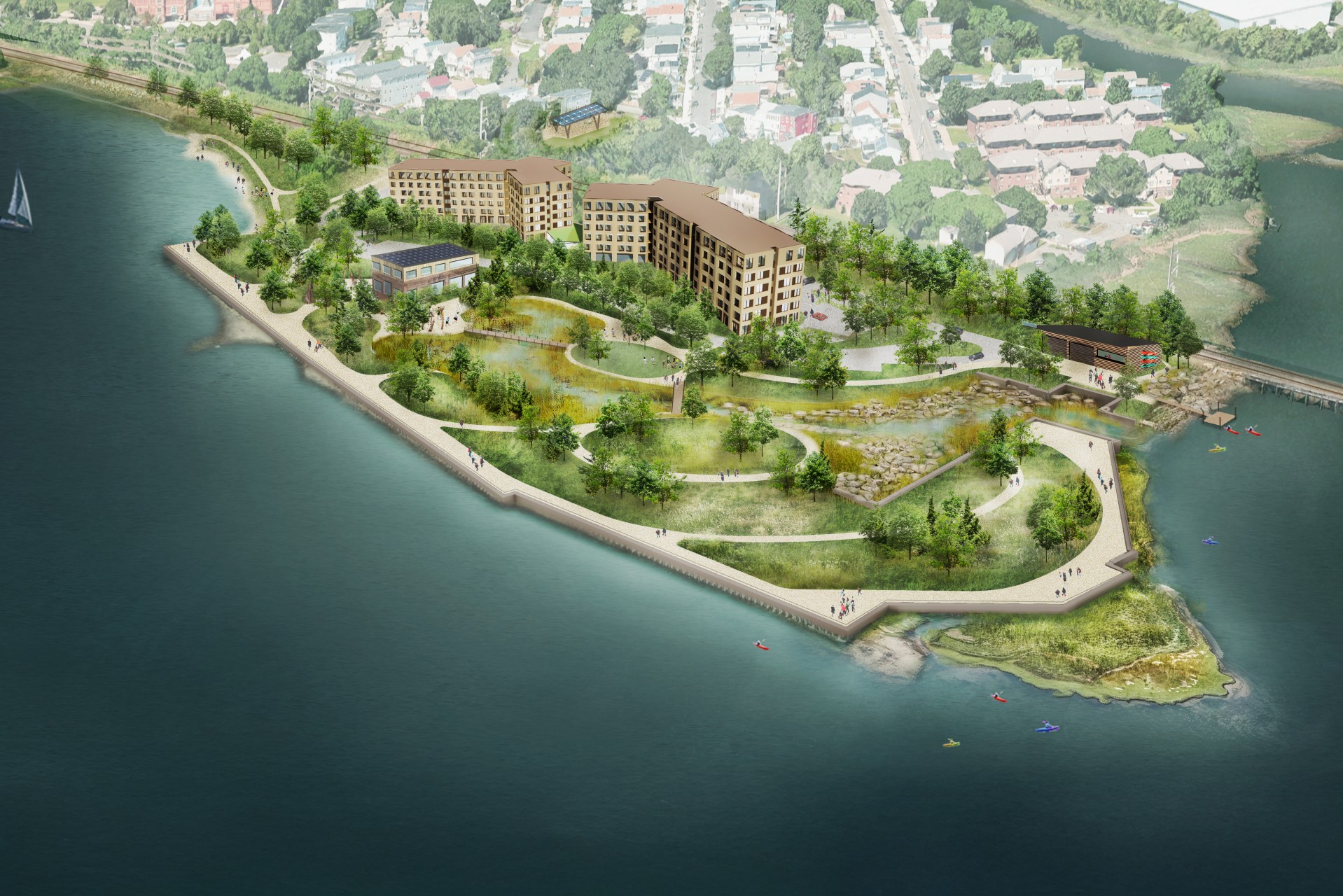
With a vision for the future, David, Rosie, and Rafael Mares, executive director of TND, started to bring to fruition Chelsea residents’ plan to create a community-centered, urban waterfront destination that provides much-needed green space, increases Chelsea’s climate resiliency, and helps meet the urgent demand for affordable housing.
The Need Is Clear
At just 1.8 square miles with 50,000 residents, Chelsea earns the distinction of being the state’s smallest and one of its most densely populated cities. Despite its small size, Chelsea and its waterfront are home to a disproportionate amount of industrial infrastructure that fuels the rest of the region, including vast piles of road salt, 80% of New England’s home heating oil, and 70% of the Commonwealth’s gasoline and diesel.
With bridges, tunnels, and highways crisscrossing the community and development leaving little to no green space, Chelsea’s air pollution is among the highest in the state, and the heat islands caused by the lack of tree canopy are detrimental to the health of residents.
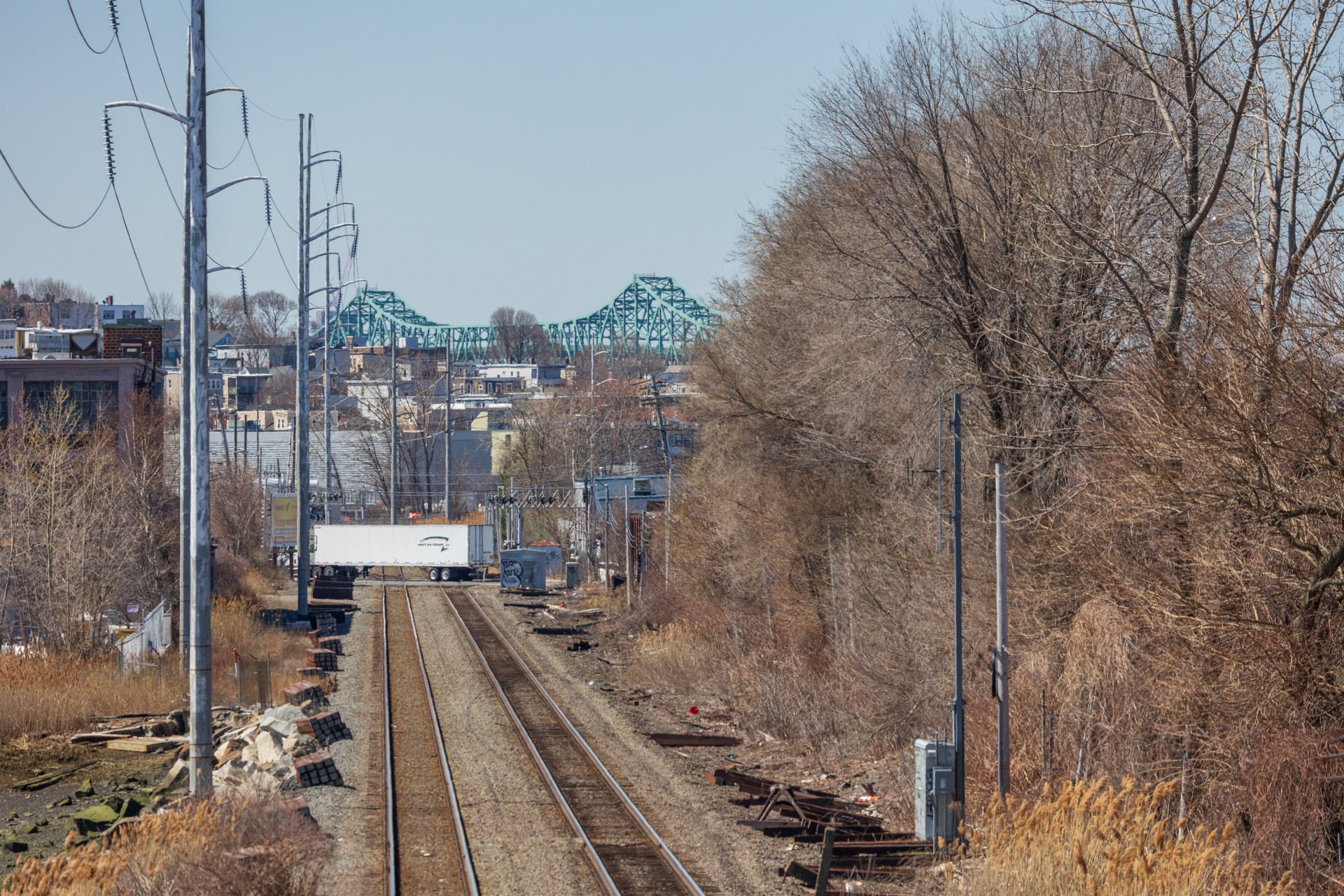
The Chelsea community was one of the hardest hit by the COVID-19 pandemic, and people’s ability to find respite was challenged by the lack of natural spaces for escape. With just 3% green space (compared with the 15% national median) and few parks and no wooded trails nearby, residents didn’t have the access to natural outdoor spaces one might find in more affluent communities.
But it’s not just people who suffer from a lack of green space in urban centers. Birds migrating long distances desperately need places to rest and refuel to successfully continue their journeys. This cleaned-up coastal property will be a refuge for people and wildlife alike.
Partnering for Success
The two prior attempts to develop this land were stymied by a combination of the global pandemic and economic woes. What makes this opportunity different is three local, motivated partners with a shared vision, each one bringing unique missions, motivations, and expertise to the table.
GreenRoots
For Roseann Bongiovanni (or Rosie, as most call her), this project is intensely personal.
Like many in Chelsea, Rosie’s great-grandparents came here as immigrants and settled in a house down the street from the Forbes site. In fact, her great-grandfather worked at the site, and her first introduction to Chelsea Creek was trespassing onto the private property to get close to the water’s edge.
“My father, brother, and I went fishing at the Forbes site when I was a little kid,” Rosie said. “Trespassing to access our waterfront should not be Chelsea residents’ reality. For decades, we have worked to make the Chelsea Creek waterfront accessible for all. The Forbes site represents a once-in-a-lifetime opportunity to create significant and meaningful waterfront access and ecological habitat.”
Projects like reclaiming the Forbes site for the community are at the heart of why she started GreenRoots in 2016. The community-based grassroots organization, which evolved from a community committee established in 1994 to advocate for much-needed green space, advances environmental justice and public health in Chelsea and East Boston.
The Neighborhood Developers
Based in Chelsea, The Neighborhood Developers (TND) builds affordable, safe, healthy, and high-quality housing for locals. Operating for the last 45 years under the belief that housing is a human right and all deserve a roof over their heads, TND has a mission to create strong neighborhoods and enable community members to secure stable homes, achieve economic mobility, and determine their own futures.
TND also helps ensure people can stay in the homes they have by providing services such as rental and employment assistance, one-on-one financial and career coaching, and assistance accessing food and medical care.
Rafael Mares and his team have brought hundreds of new affordable homes to people in Chelsea, Revere, and Everett. With this project, he’s hoping for TND to add up to 225 mixed-income homes on the highest point of the Forbes waterfront property, the most advantageous spot given sea-level rise.
For Rafael, the project reflects a broader vision for Chelsea’s future. He says,
"This is about creating a space where people can stay, grow, and feel connected to each other, to the waterfront, and to the future of their community. It’s about making sure the people who have been here, who have built this community, have a say and a place in what comes next."
Mass Audubon
Mass Audubon’s mission has always been to protect nature for people and wildlife, and although the Forbes site is only 18 acres, it plays a critical role in filling the nature-equity gap and providing a hotspot for migrating birds and other wildlife.
Together with our partners, we are embarking on an outreach and engagement process to learn what the community is most interested in seeing in this new green space. We envision bringing the site to life with nature-based programming, urban bird walks, community events, recreational opportunities like kayaking, and environmental education in partnership with the neighboring elementary school complex.
Mass Audubon has been ramping up its ecological restoration initiatives in recent years to help build climate resilience, improve biological diversity, protect water quality, and rejuvenate beautiful natural places for people to visit and enjoy. The integration of land conservation and habitat management practices helps us meet our Action Agenda goals and inches the state closer to its 30x30 climate goals. In an urban setting like Chelsea, this could involve tree planting to provide shade and urban heat reduction, and coastal restoration to mitigate against sea-level rise and the ensuing flooding associated with climate change.
“Our motivation with our partners is to create a national model for urban waterfront redevelopment that provides open spaces and waterfront access for residents, to create a resiliency model that could adapt to climate change, and to provide much-needed affordable housing,” David said. “We’ve got the experience, the determination, and now the partners to undertake this vital project and see it through with the people of Chelsea.”
What’s Next?
This is just the beginning of a long and complex process to reclaim this long-overlooked waterfront parcel for Chelsea residents.
Over the coming years, we will work with members of the community to shape the plans for the site. The partners will work hand in hand with the community to hear what’s most important to its members, from respecting the past and incorporating historical elements into future designs to considering new amenities and improvements.
In the near term, Mass Audubon hopes to start demolition of dilapidated buildings and begin to clean up the site, preparing for a future trail system when the property is ready to be opened to the public.
A project of this magnitude takes a considerable amount of political and financial support. We are grateful to the City of Chelsea, the Executive Office of Energy and Environmental Affairs, the Barr Foundation, Barbara and Amos Hostetter, the Cedar Tree Foundation, the Liberty Mutual Foundation, the Honorable Ayanna Pressley, and many other generous donors and supporters in helping us get to this point.
We need your support to keep the momentum going and to realize the transformative vision for the property. If you're interested in directly supporting the project, please contact David O’Neill at [email protected].
Stay Connected
Don't miss a beat on all the ways you can get outdoors, celebrate nature, and get involved.