


Massachusetts’ forests are changing.
While some changes are part of ongoing seasonal cycles, others are driven by invasive insects and diseases that weaken or kill native trees, alter wildlife habitat, and make forests less resilient to a changing climate.
Keeping forests healthy takes more than simply leaving trees alone. It means monitoring forests for emerging threats, protecting healthy habitat, restoring native biodiversity, and sometimes intervening when a pest or disease puts an entire forest community at risk.
To do your part in supporting healthy Massachusetts forests, first familiarize yourself with these five common tree pests.
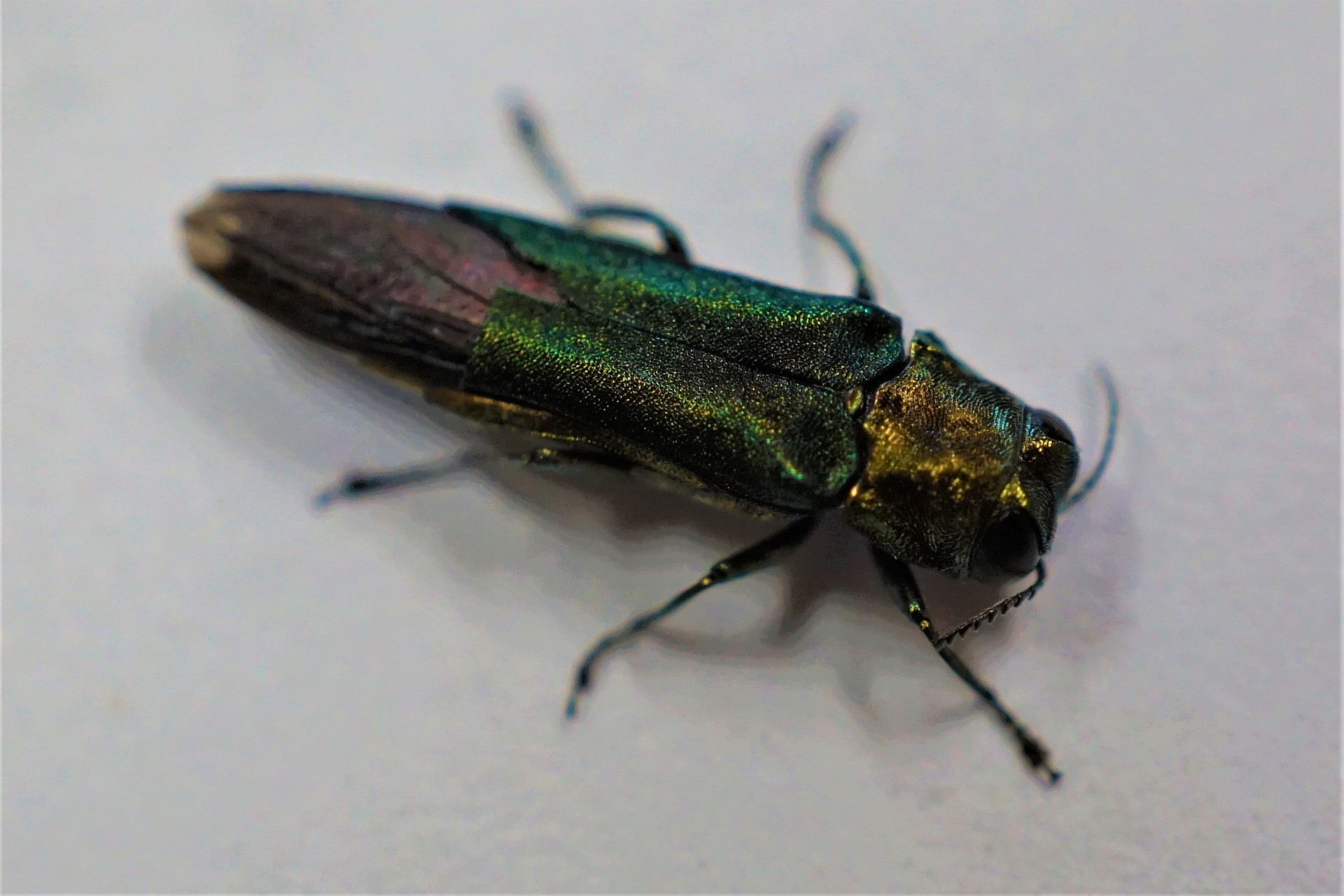
1. Emerald Ash Borer
The Emerald Ash Borer attacks every native ash species and has already caused widespread ash mortality across the Commonwealth. Ash is an important component of several forest types in the Northeast. As ash trees die, increased sunlight frequently stimulates the growth of invasive shrubs and vines, leading to a cascade of forest change.
How to Identify Emerald Ash Borer
- Thinning canopy and dying branches, often with fresh leaves sprouting along the trunk
- Woodpecker feeding activity, evident from “blond” (lighter) patches of bark
- Small, D-shaped exit holes in bark
What You Can Do
- Never move firewood from one region to another unless it’s been dried in a kiln
- Learn to recognize ash trees and signs of infestation
- Help diversify local forests by planting a variety of native tree species
- Report trees with potential resistance to the beetle
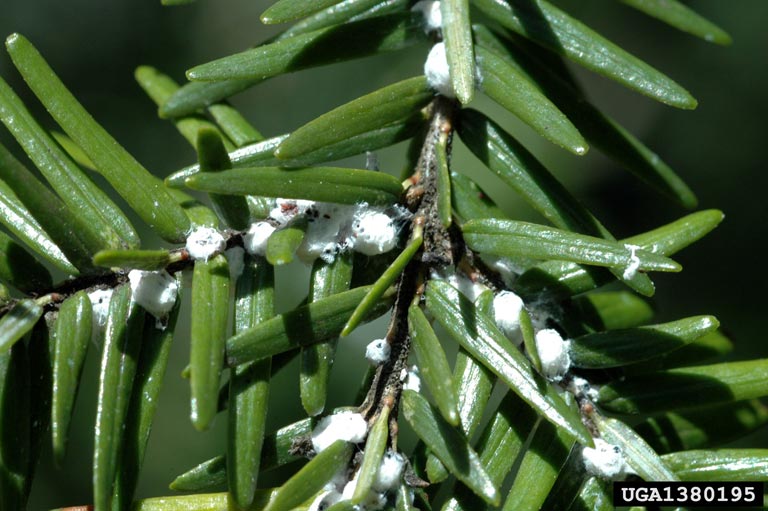
2. Hemlock Woolly Adelgid
Hemlock Woolly Adelgid is an invasive, aphid-like insect native to Asia that feeds on Eastern Hemlock, one of New England's foundational forest trees. As shade-providing hemlocks disappear, streams warm, wildlife habitat changes, and forests become more vulnerable to additional stressors.
Massachusetts is supporting biological control efforts alongside monitoring and forest management, including releases of biocontrol wasps at locations like Arcadia Wildlife Sanctuary.
How to Identify Hemlock Woolly Adelgid
- Tiny white, cotton-like masses at the base of hemlock needles
What You Can Do
- Learn to recognize infestations
- Avoid transporting infested plant material
- Support research and restoration efforts that help maintain healthy hemlock forests
- Report potentially resistant hemlock trees
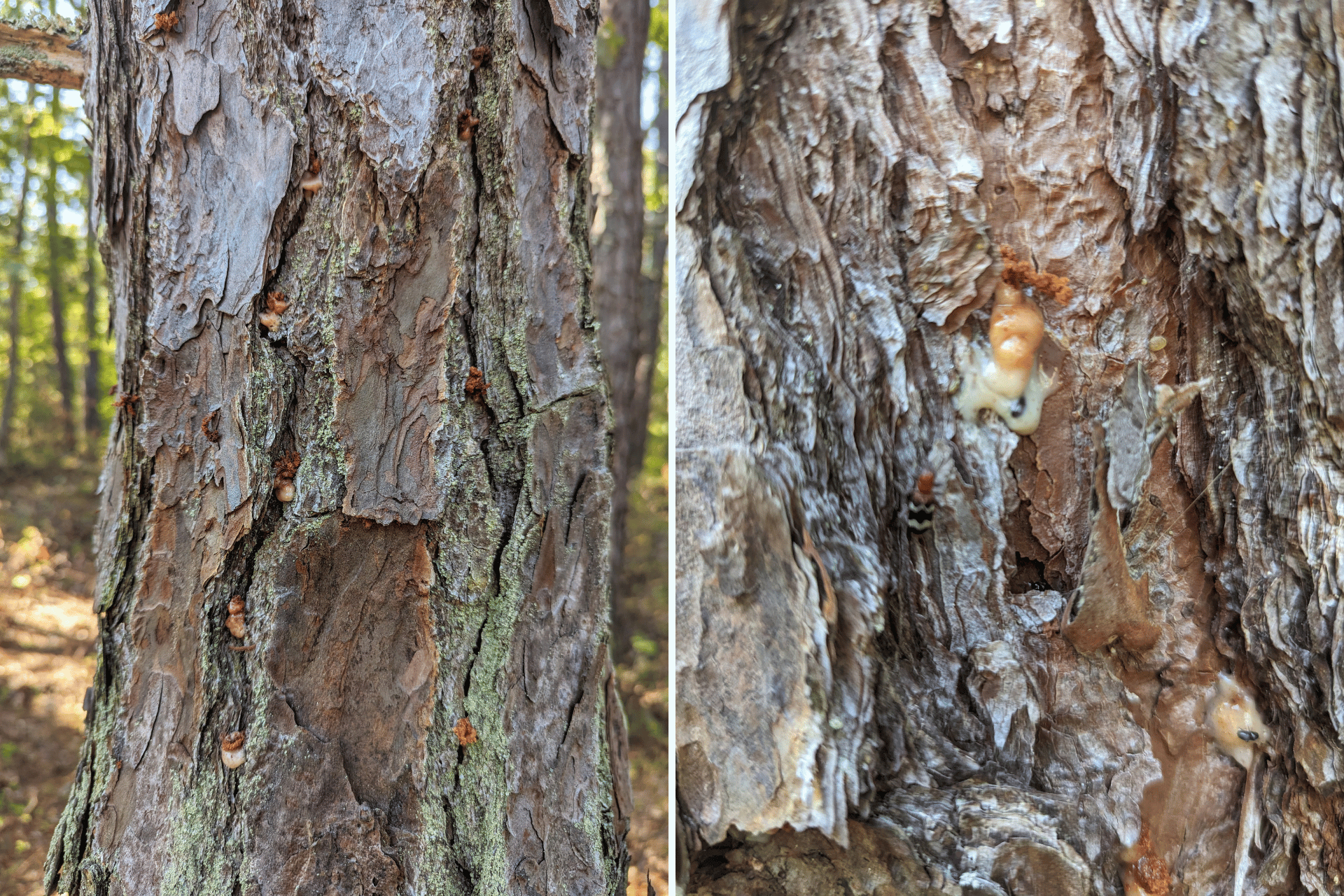
3. Southern Pine Beetle
Historically limited by cold winters, the Southern Pine Beetle is expanding northward as temperatures rise. These insects attack Pitch Pine and can quickly kill entire stands, threatening rare habitats and wildlife that depend on pine barrens and coastal forests.
On Martha's Vineyard and Nantucket, outbreaks near Felix Neck Wildlife Sanctuary and Lost Farm Wildlife Sanctuary prompted Mass Audubon ecologists to swiftly create a Forest Management Plan to reduce the density of the Pitch Pine stands on these sanctuaries. Increasing the space between trees—think of it as social distancing for trees—disrupts the ability of Southern Pine Beetle to rapidly disperse and communicate reducing the threat of infestation and continued spread of the beetle attacks. Learn more
How to Identify Southern Pine Beetles
- Popcorn-like resin "pitch tubes" on bark
- Needles fading from green to yellow and reddish-brown
What You Can Do
- Watch for unusual pine mortality
- Report suspected outbreaks
- Support proactive forest management that increases resilience before outbreaks occur
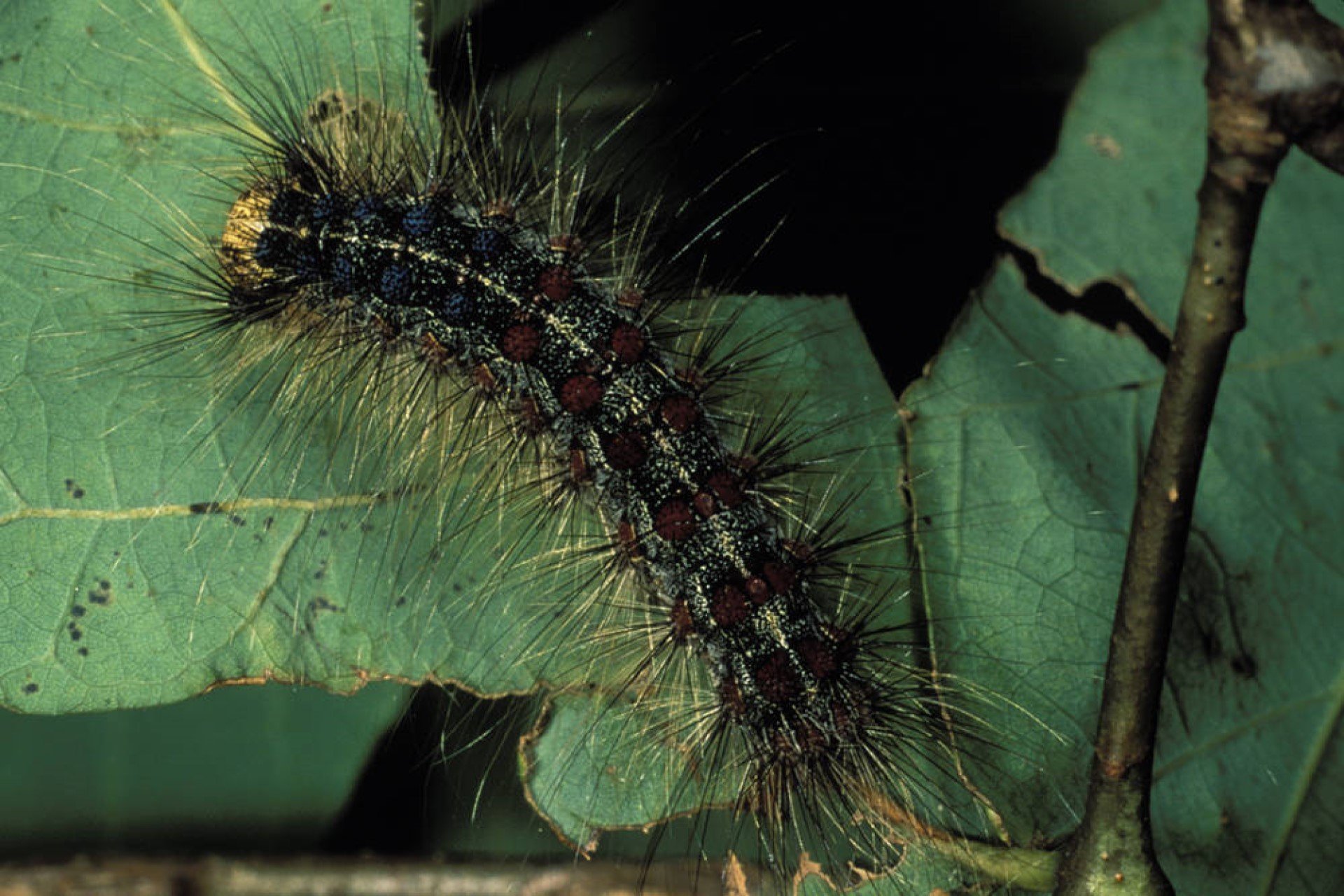
4. Spongy Moth
The Spongy Moth is a highly invasive moth native to Europe and Asia that defoliates hundreds of acres of forests across the country—including Massachusetts. During an outbreak, they can cause massive defoliation most likely in uniform stands of tree species, particularly oaks.
At Laughing Brook Wildlife Sanctuary, the effects of an outbreak from 2015-2017 have left a noticeable mark, showcasing how this invasive can drastically change a forest. The trees that were killed included white oak, red oak, black oak, and scarlet oak—in all, approximately one out of every three oak trees on the sanctuary were killed during the spongy moth outbreak. The most vigorous oaks had enough stored reserves to survive two or even three defoliations, but less vigorous oaks succumbed. Drought stress and secondary pests such as two-lined chestnut borer and the honey fungus also contributed to oak mortality.
New oaks naturally come in when the forest canopy opens, but the high deer population is consuming many of the oak seedlings, resulting in a shift to more Eastern White Pines, a species of conifer that is less palatable to deer. Learn more
How to Identify Spongy Moths
- Larvae begin to emerge in May, after their often-confused Eastern Tent caterpillars already spinning their shelters by mid-April
- Caterpillars have five pairs of bluish "warts" followed by six rows of red warts running down the length of the back.
- Mature females are larger, white and buff in color, and flightless. Males are smaller than females and darker overall with a pattern in shades of brown.
What You Can Do
- In the fall and winter, inspect your property (including woodpiles, stone walls, lawn furniture, and car) for egg masses. To kill them, scrape the eggs into a container and douse them with boiling water.
- If a tree is infested, seek advice from pest management firm or arborists. Learn more about treating trees.
5. Spotted Lanternfly
Spotted Lanternfly is an invasive insect that feeds on the sap of many plants, including grapes, fruit trees, maples, and the invasive tree-of-heaven. While it has received significant public attention, it currently poses a greater threat to vineyards, orchards, and other developed landscapes than to native forests in Massachusetts.
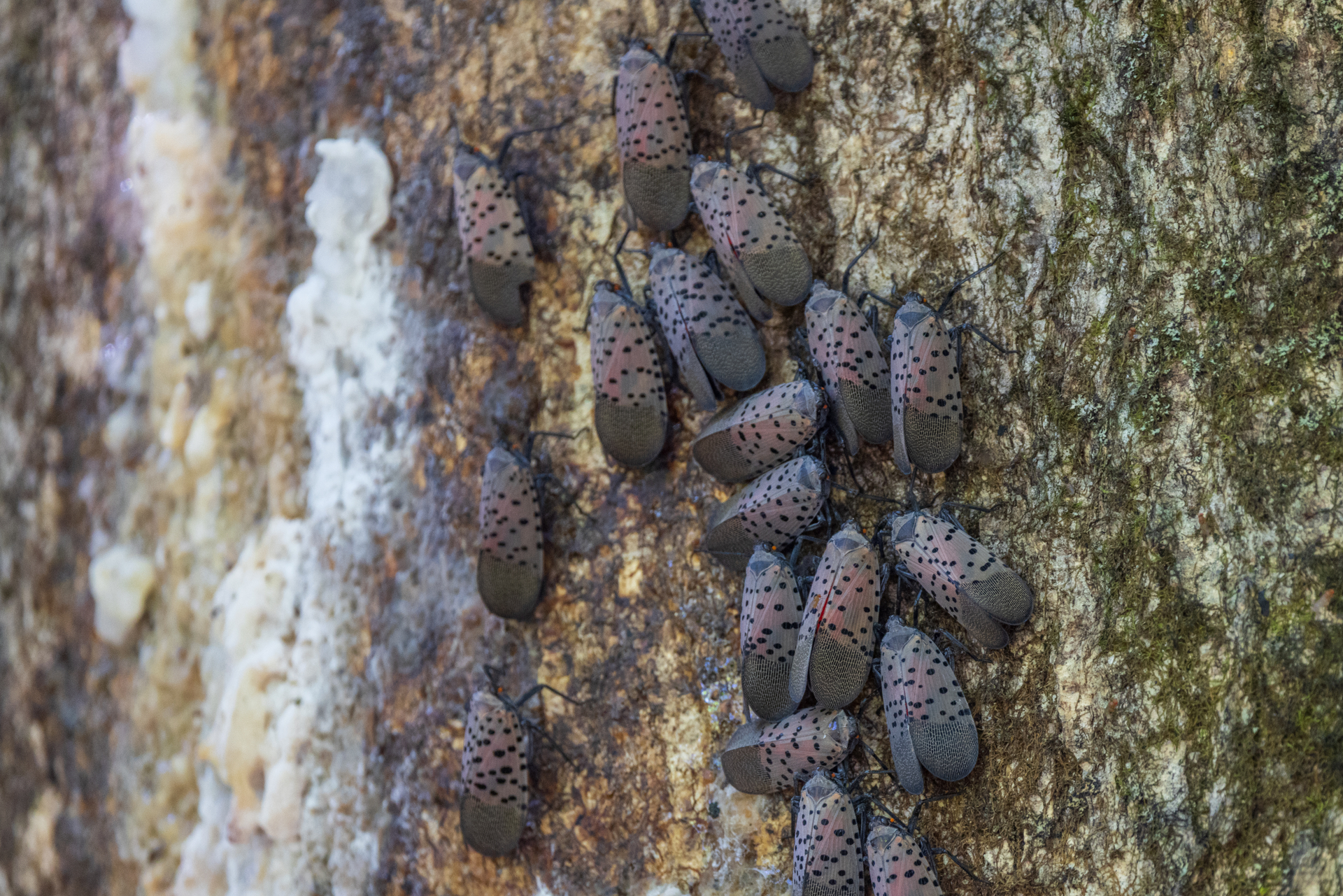
How to Identify Spotted Lanternfly
- Adults have gray forewings with black spots and bright red hind wings
- Young nymphs are black with white spots before turning bright red later in the season
What You Can Do
- Learn to identify and remove invasive tree-of-heaven where appropriate
- Kill Spotted Lanternflies when you find them
- Remove them from your vehicles, trailers, and outdoor equipment before traveling
- Report new sightings to the Massachusetts Department of Agricultural Resources
How Mass Audubon Supports Forest Health
At Mass Audubon, we care for thousands of acres of forests across Massachusetts. Our approach is guided by science, thoughtful planning, and a commitment to protecting native biodiversity over the long term. In some places, that means allowing natural processes to unfold. In others, it may mean removing invasive plants, managing affected trees, or creating conditions that help a healthier and more diverse forest grow in their place.
Why Tree Removal Is Sometimes Part of Conservation
It can feel counterintuitive to remove trees in order to protect forests, but conservation often requires thinking beyond individual trees to the health of the ecosystem as a whole.
When a tree is heavily infested, dying, or helping invasive pests spread, carefully planned removal may reduce future impacts, protect nearby trees, improve habitat conditions, or create opportunities for native forests to regenerate. Similarly, removing invasive host plants, such as tree-of-heaven, can reduce habitat for destructive insects while making room for native species to return.
The right forest management plan is guided by science, site-specific conditions, and long-term ecological goals. Whenever possible, we combine monitoring, restoration, biological controls, habitat management, and public education to build forests that are more resilient to future threats.
How You Can Help
Healthy forests are one of Massachusetts' greatest natural assets, providing wildlife habitat, clean water, carbon storage, recreation, and places for people to connect with nature.
You can make a difference by:
- Learning to recognize invasive tree pests and their signs
- Avoiding the movement of firewood and infested plant material
- Planting diverse native tree species whenever possible
- Supporting research, monitoring, and science-based forest management
- Visiting and caring for the forests that make Massachusetts unique
Protecting forests is a shared responsibility. Together, we can help ensure that the next generation inherits forests that are diverse, resilient, and full of life.

Take Action
We need your curiosity, commitment, and passion to ensure that our lands become more resilient, that more people than ever experience the magic of nature, and that we fight climate change—now and in the future.
Stay Connected
Don't miss a beat on all the ways you can get outdoors, celebrate nature, and get involved.