


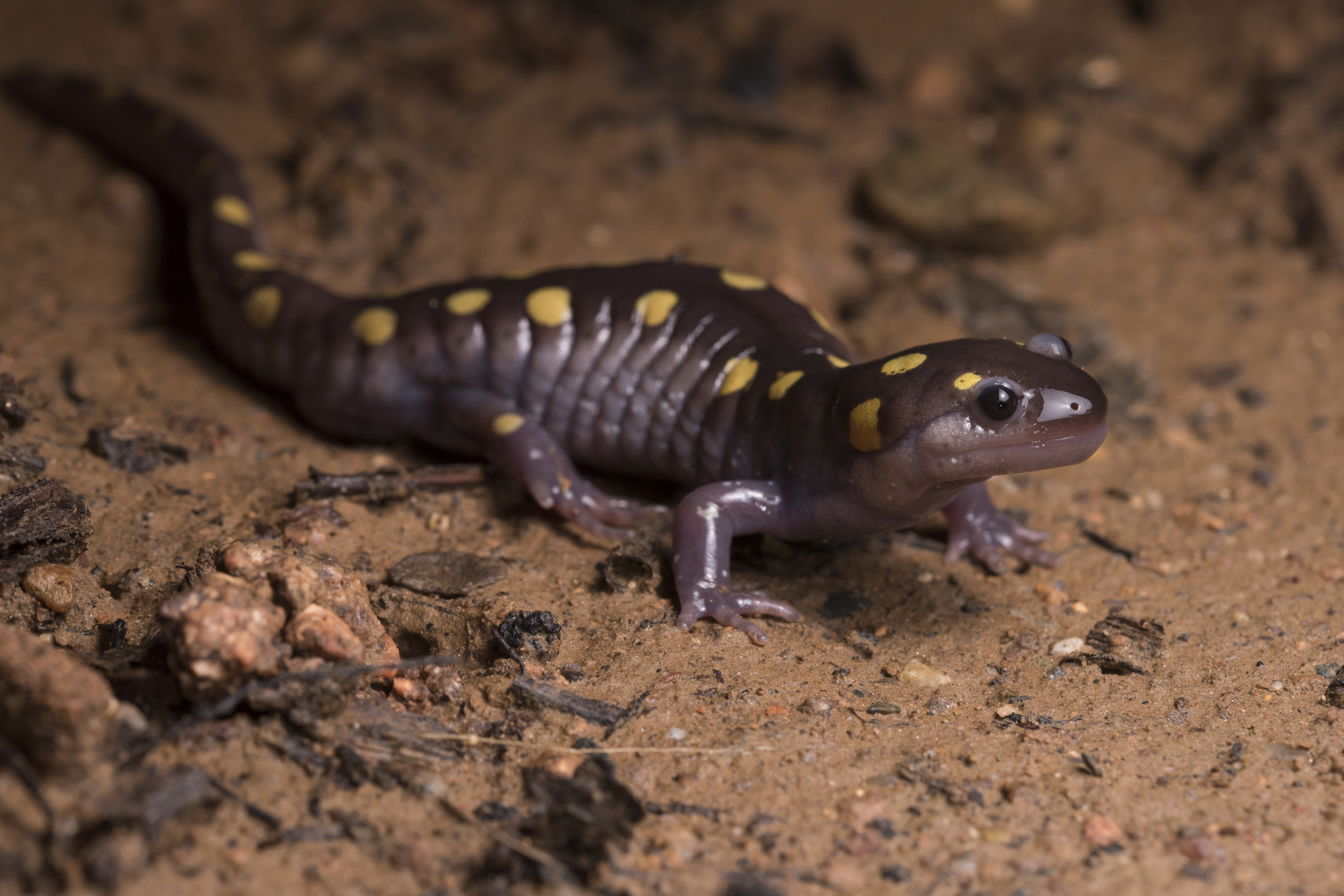
Go Wild for Spotted Salamanders
Celebrate Earth Month with One of Massachusetts’ Most Mysterious Amphibians
Despite being widespread, Spotted Salamanders are so secretive that most people never see them, yet their presence tells us a great deal about the health of our wetlands, forests, and vernal pools.
This April, we’re launching a year of Going Wild, featuring monthly celebrations of a rotating cast of iconic Massachusetts wildlife. We’re kicking things off with Spotted Salamanders because they’re the perfect ambassadors for spring renewal, Earth Month, and the importance of protecting one of our most vulnerable habitats.
What Makes Spotted Salamanders So Special
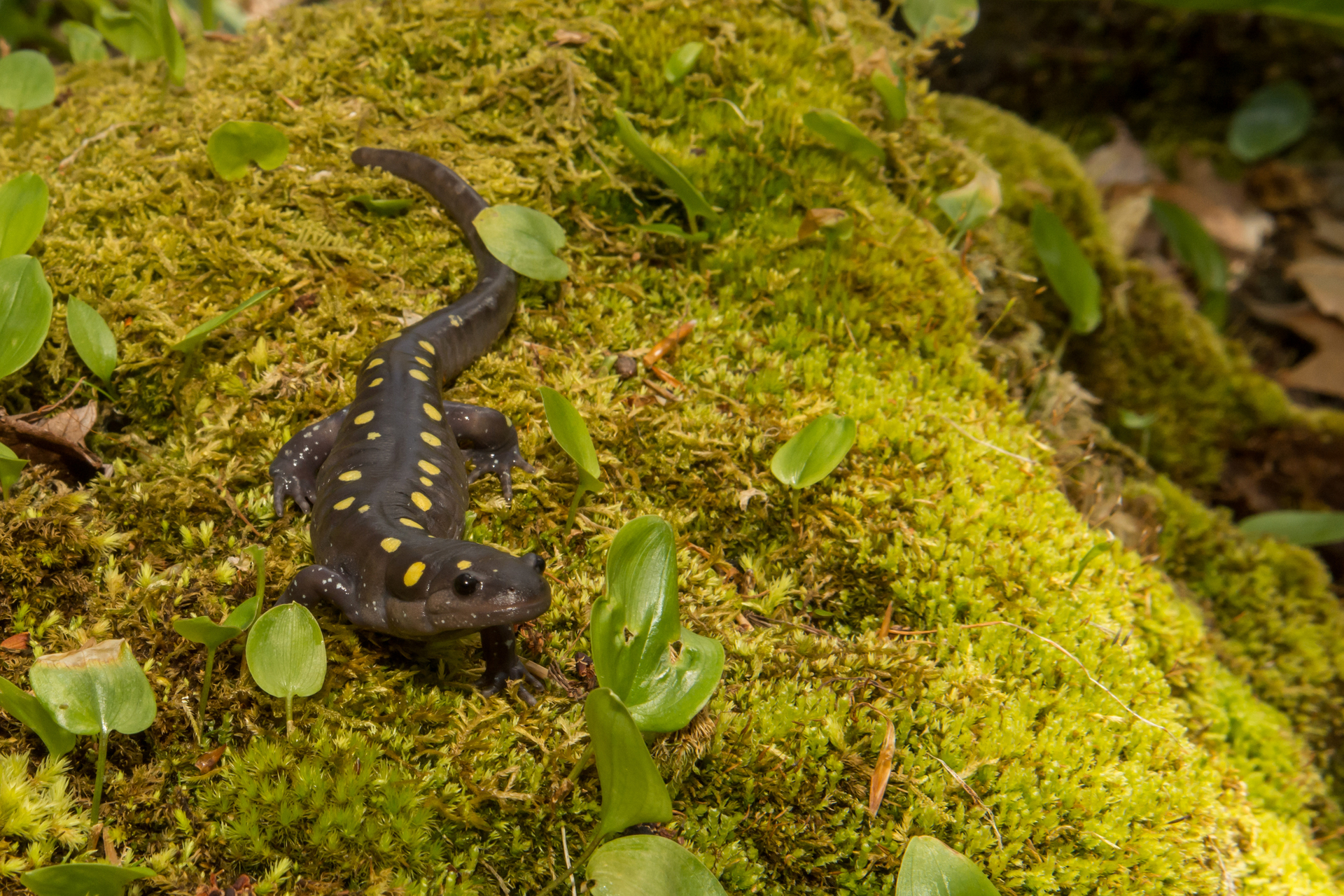
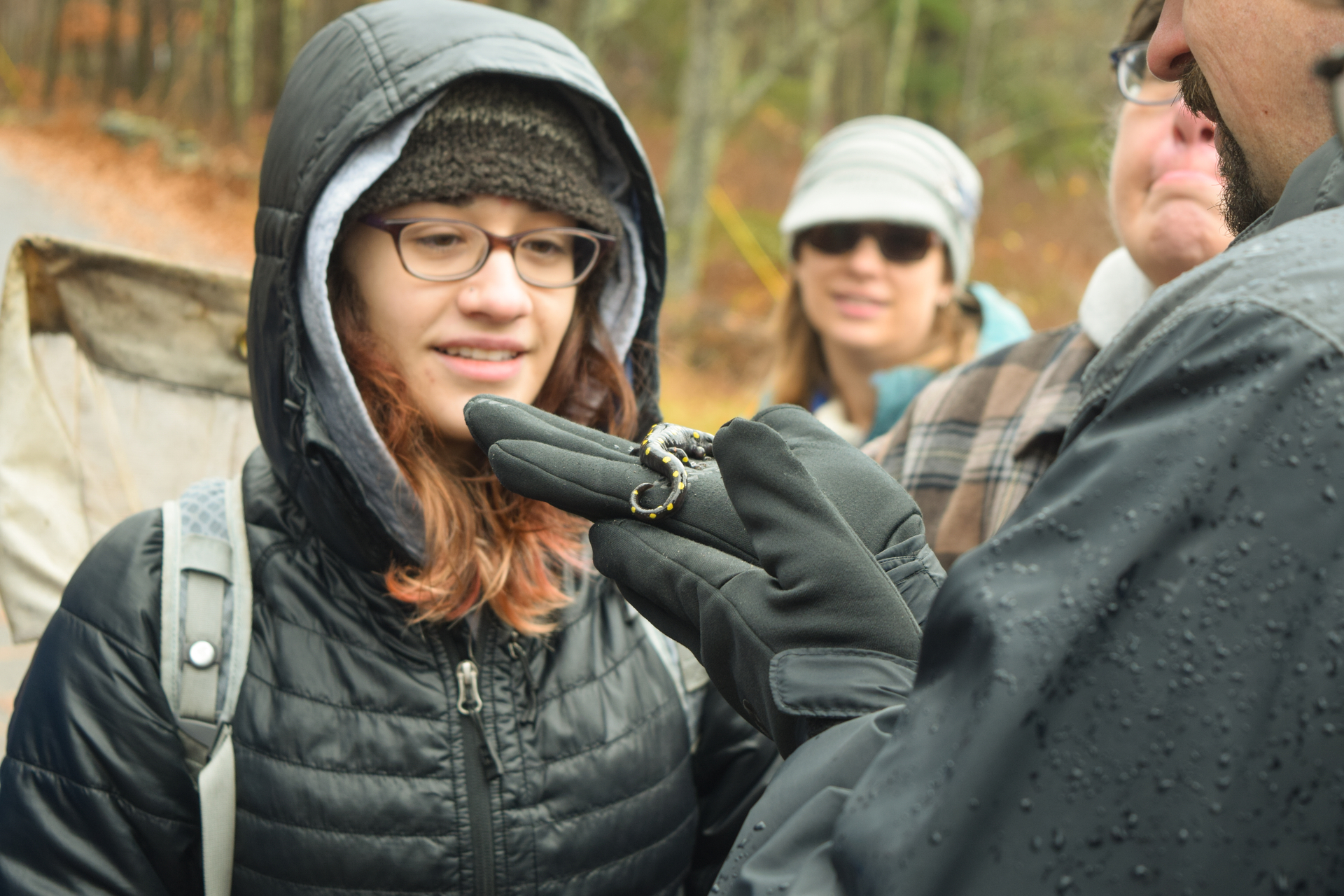
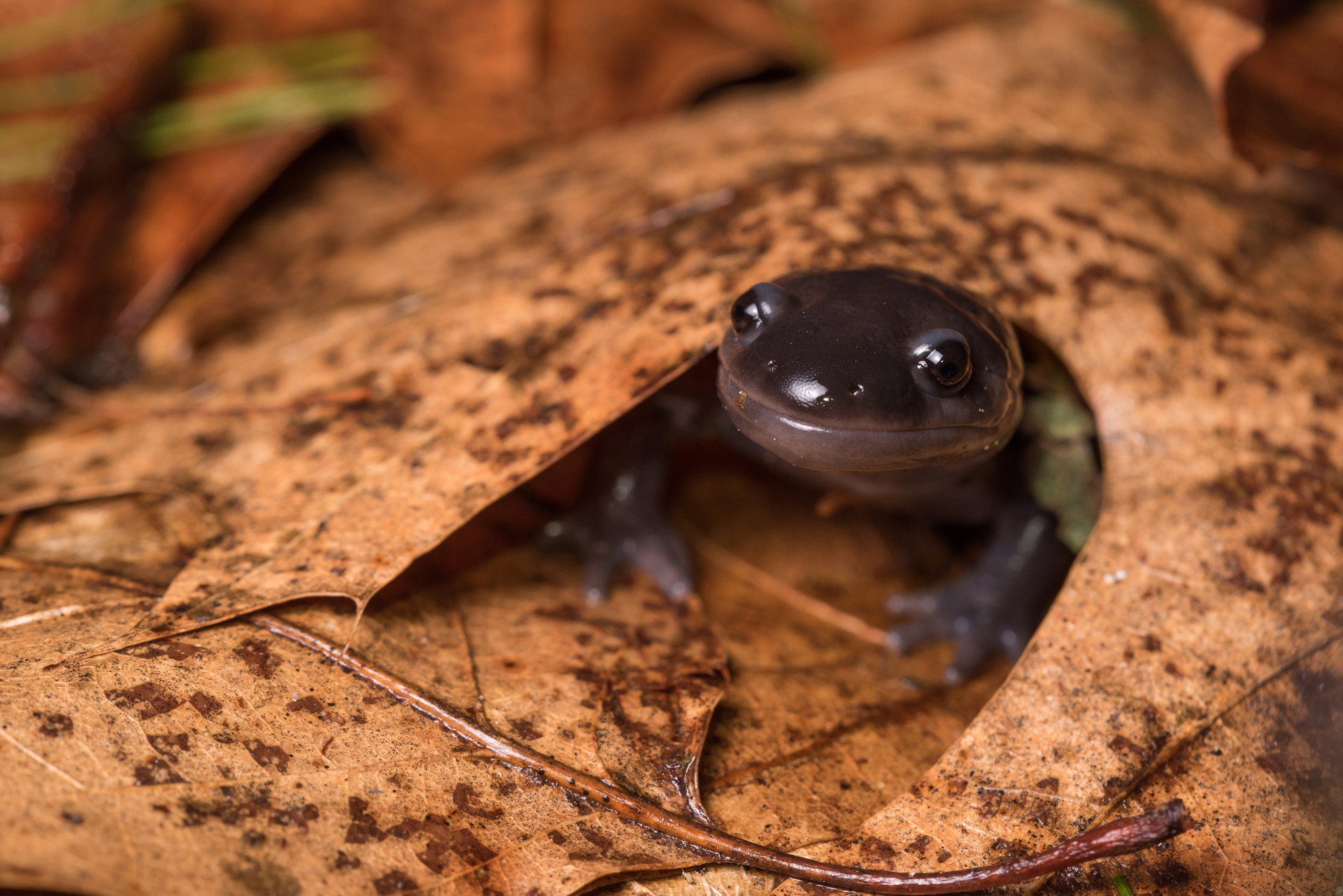
Spotted salamanders can grow up to 9 inches long and live for more than 20 years. No other salamanders in our state have large yellow spots. They spend most of the year hidden beneath logs, under leaf litter, or tucked away in old mammal burrows, emerging only briefly to breed in vernal pools.
Their sensitive, porous skin requires clean water while their forest floor needs aren't found just anywhere, making them powerful indicators of ecosystem health. When salamanders thrive, it usually means the landscape around them is thriving too.
-
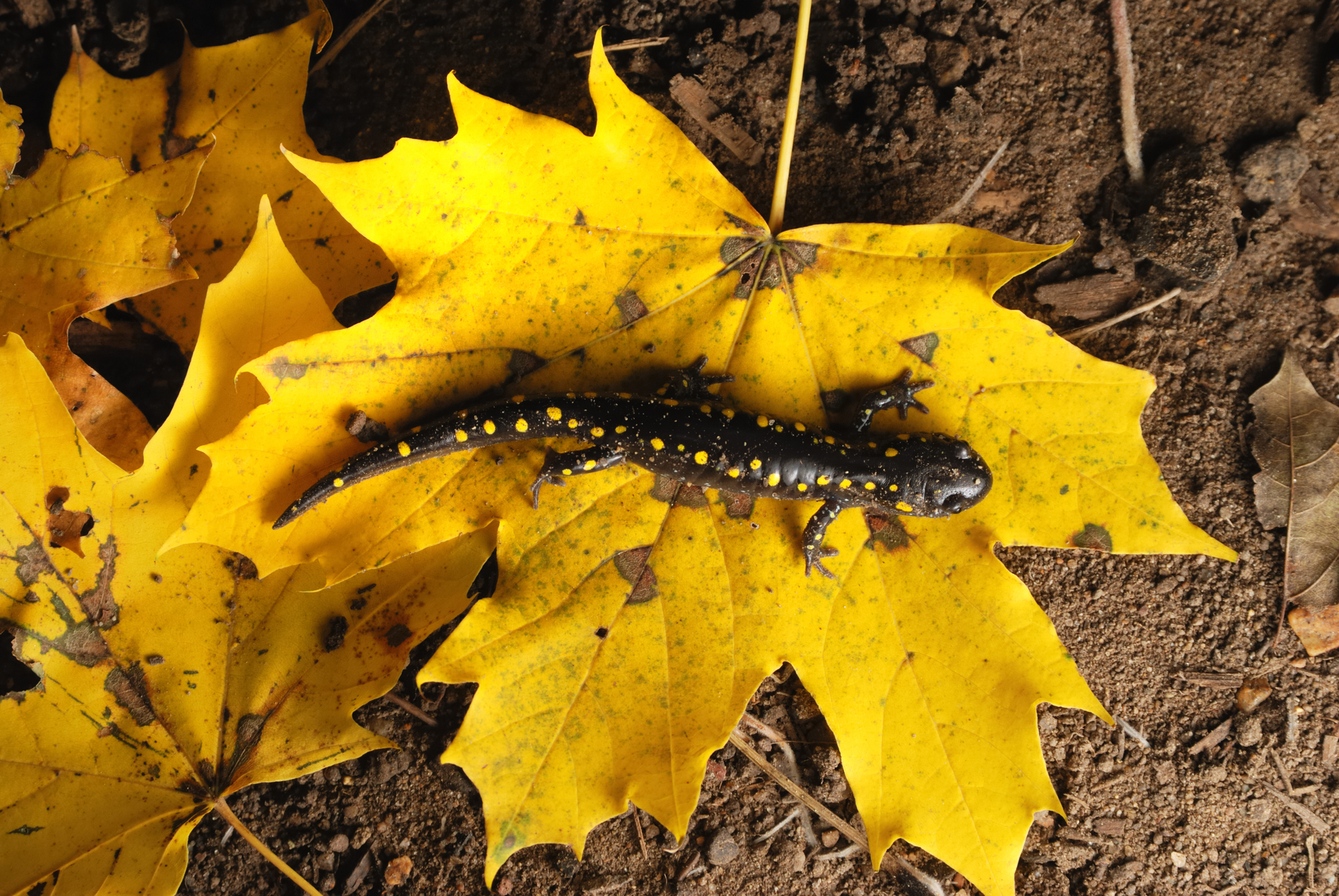 Spotted Salamander
 -
-
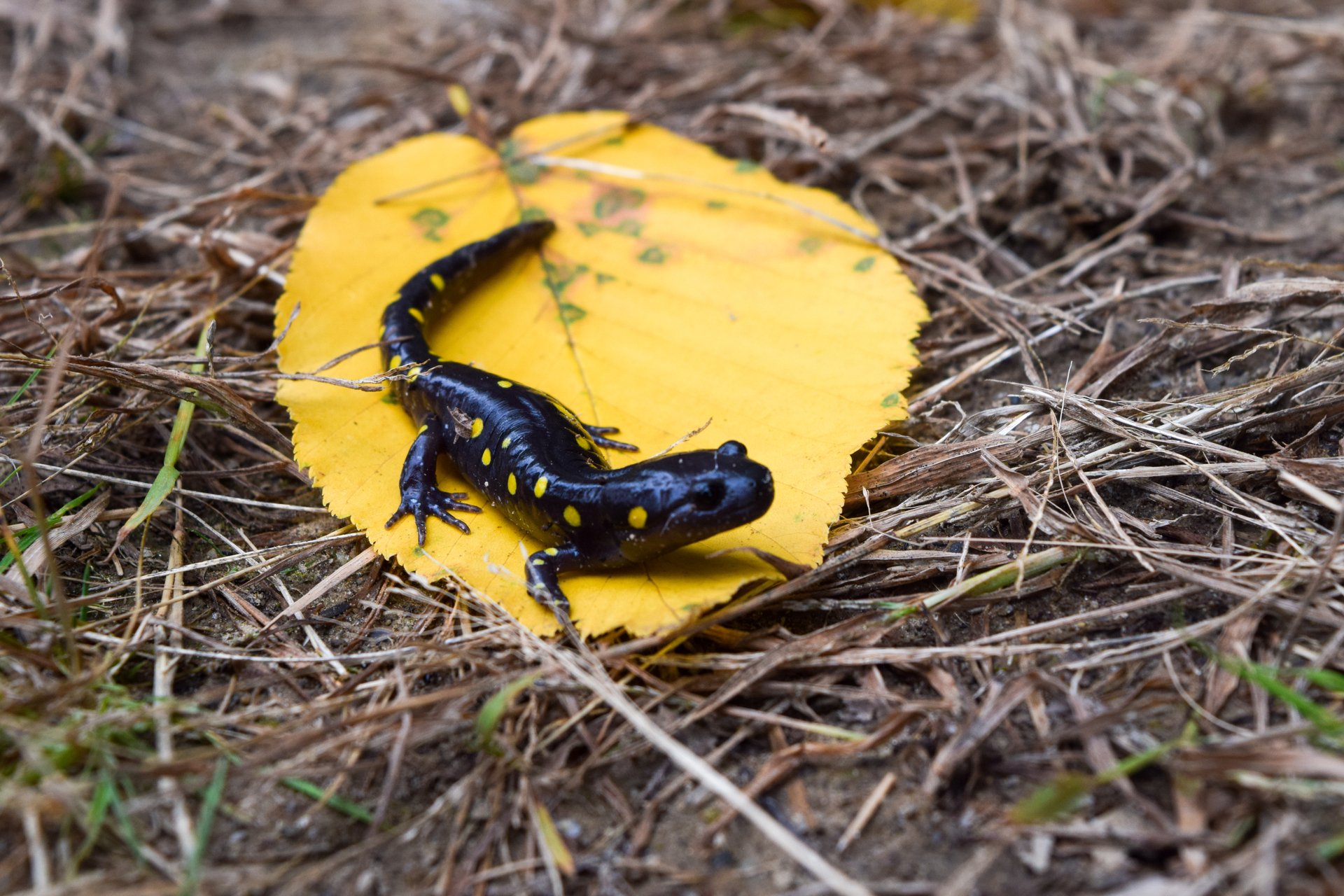 Spotted Salamander
 -
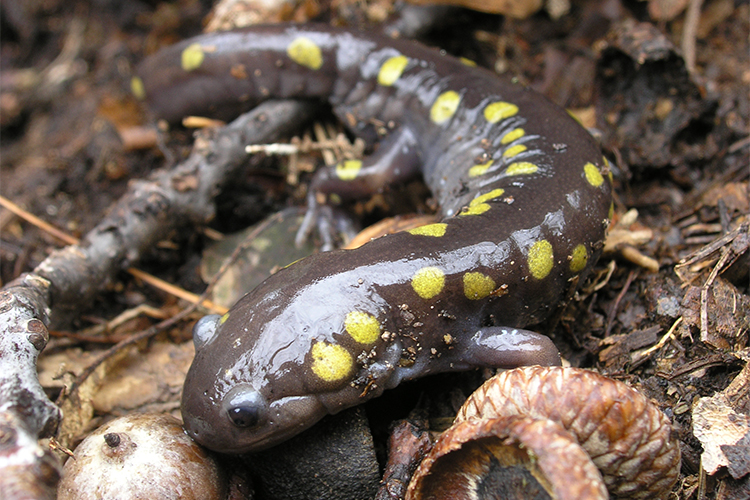
-
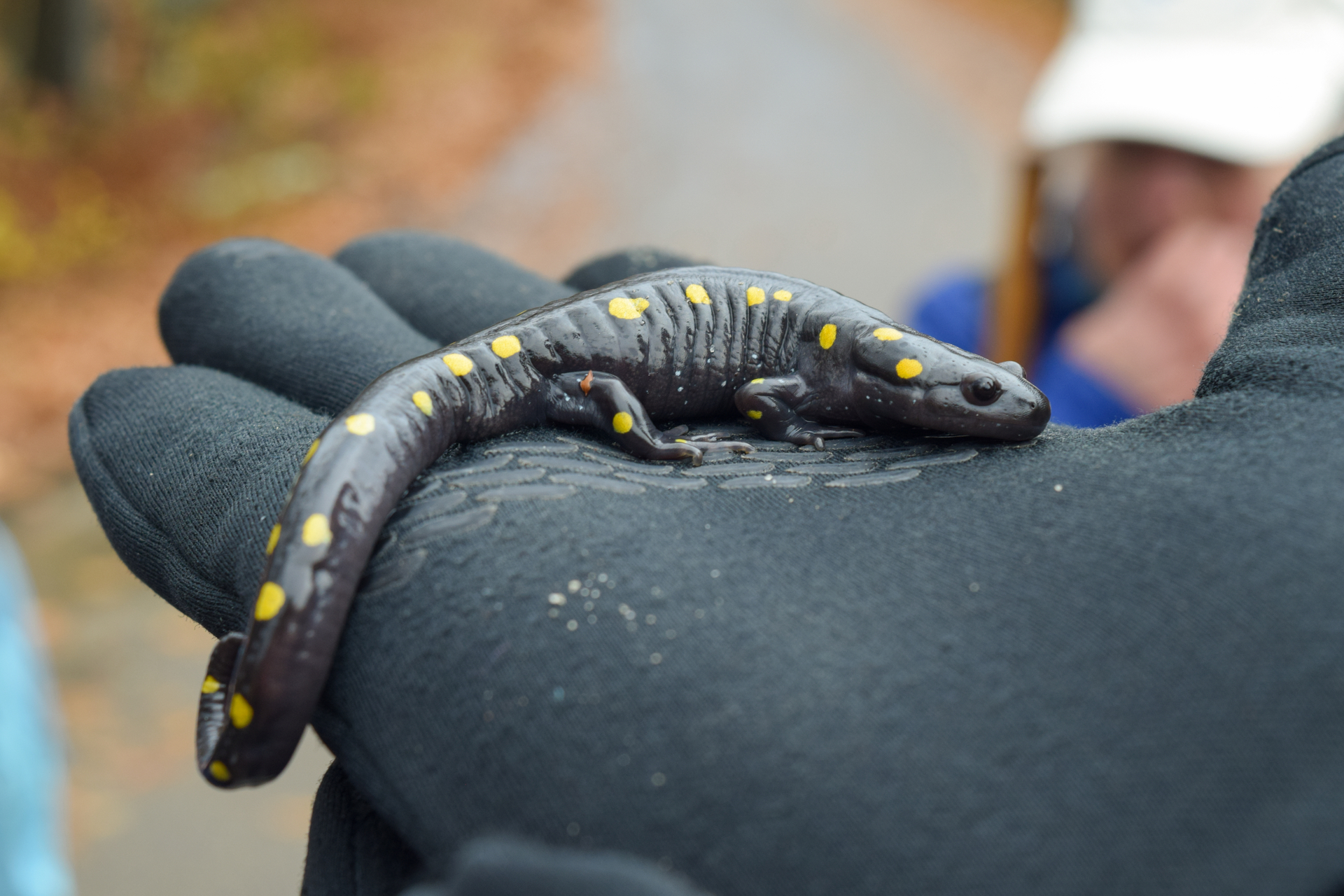 Spotted Salamander
Our Adventure Begins in a Vernal Pool...
Vernal pools are one of Massachusetts’ most fascinating (and threatened) natural features. Formed by snowmelt and spring rains, these temporary wetlands appear in forests and floodplains. Salamanders return each spring to the very vernal pools where they hatched, laying jelly-like egg masses on submerged twigs and vegetation.
These pools—ephemeral, fish-free, and often overlooked—are critical wildlife nurseries for salamanders, frogs, and countless tiny invertebrates. Protecting vernal pools means protecting an entire web of springtime life.
When exploring, look—but don't touch! These sensitive nurseries are best appreciated without disturbance.
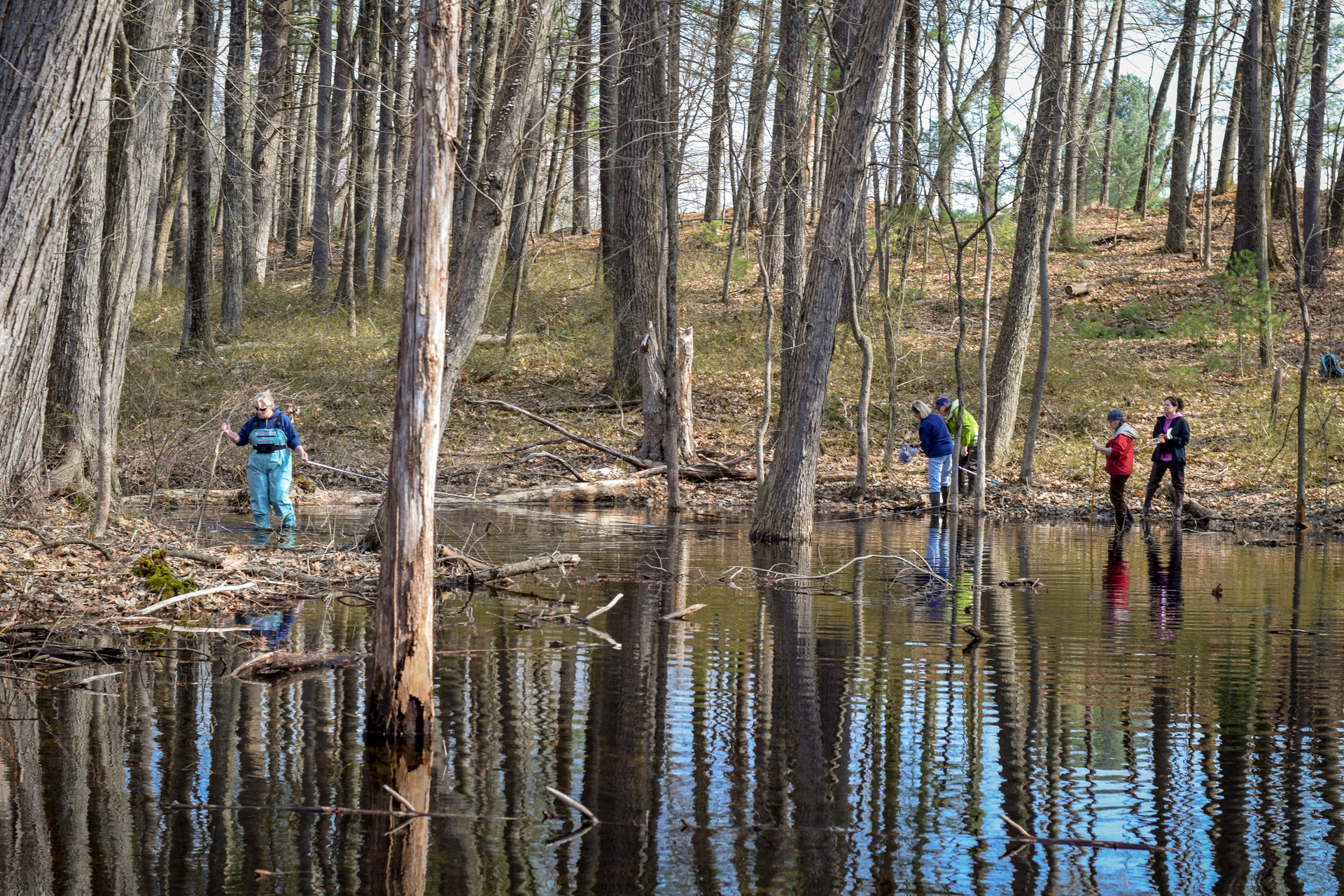
Visit a Sanctuary with Vernal Pools
Arcadia, Drumlin Farm, Ipswich River, Moose Hill, Pleasant Valley, and others offer opportunities to explore these unique habitats in spring.

Spotted Salamander Scavenger Hunt
Bring along this fun, family-friendly scavenger hunt to take a closer look at the cast and setting of a salamander's habitat.
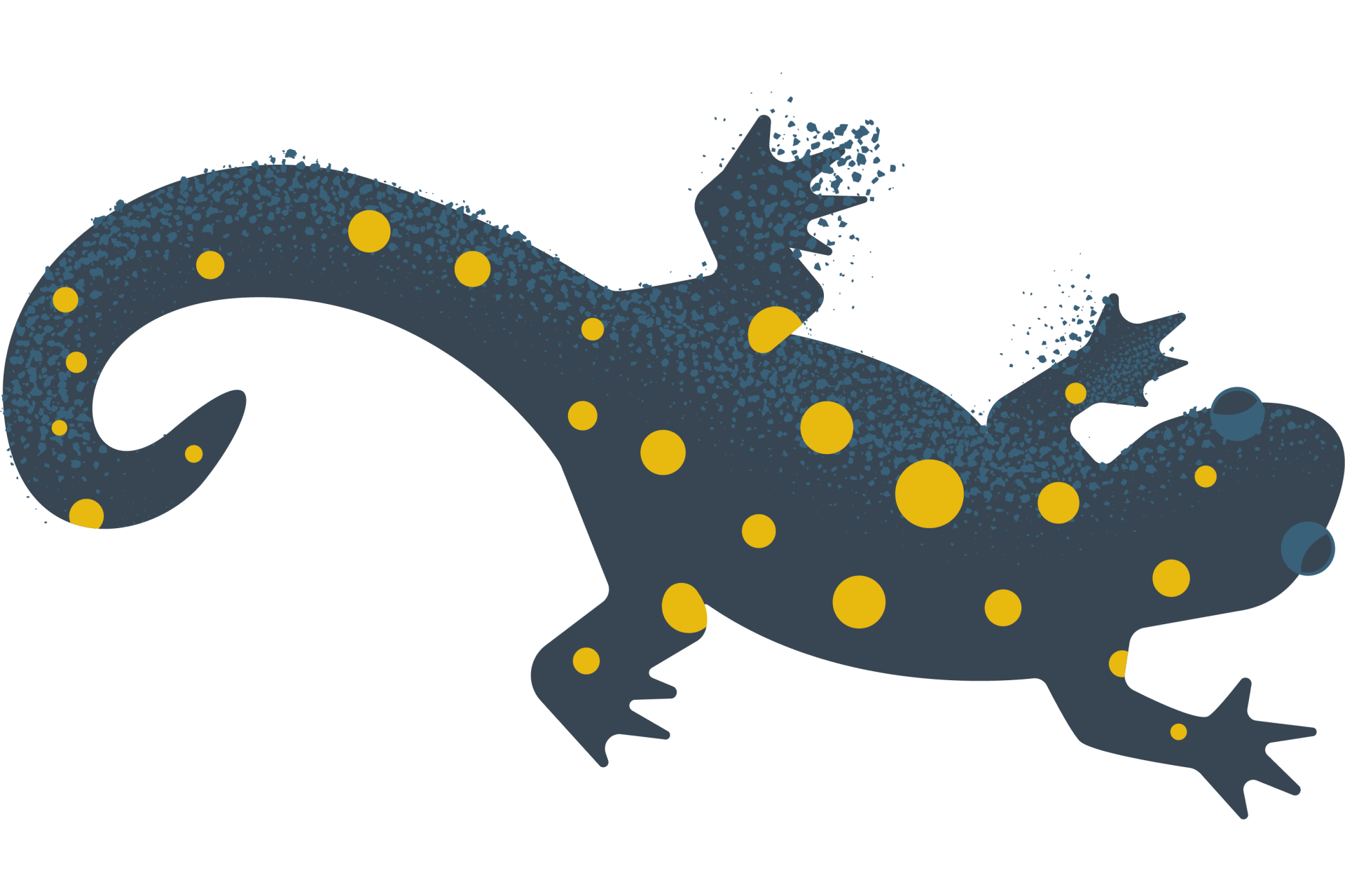
Big Night: Salamanders on the Move
Every spring, on the first few warm, rainy nights over 40°F, salamanders and frogs awaken from their winter shelters and travel to their breeding pools in a remarkable migration known as Big Night
Go Wild at an Upcoming Program
See MoreA Nature Year at Wellfleet Bay
-
Wellfleet Bay Wildlife Sanctuary, South Wellfleet
-
12 classes starting
Saturday, January 23
10:00am-12:00pm
Adults
Spring Migration Walk at Lincoln Woods
-
Lincoln Woods Wildlife Sanctuary, Leominster
-
Saturday, March 13
10:00am-12:00pm
Families with children 6 - 17
Frozen Frogs, Fairy Shrimp, & Jellied Eggs
-
Wompatuck State Park, Hingham
-
Wednesday, April 21
10:00-11:30am
Adults & Families with children 0 - 17
Share Your Wild Story!
Have you found an unexpected salamander under a log? Seen egg masses shimmering beneath the surface of a vernal pool? We want to hear about it!
Every story submission enters you into our Wild for Wildlife tote giveaway.

Show Off Your Spots
Shop limited-edition Spotted Salamander apparel to show your support.
Help Protect Salamanders
Salamanders—and the habitats they rely on—depend on people like you.
Protect Salamander Habitats
Big goals, big impact: we can protect 30% of Massachusetts by 2030.
Keep Going Wild
Spotted Salamanders are just the beginning! Every month, we’ll highlight a new charismatic species with fun facts, programs, free resources, and ways to get involved—join our wild year to stay in the loop.
You May Also Be Interested In
Go Wild for Wildlife
This year, we're highlighting a seasonal star of Massachusetts wildlife every month. Discover fun facts, tips for spotting them in the wild, opportunities to see them up close, ways to protect them, and more.
Frogs
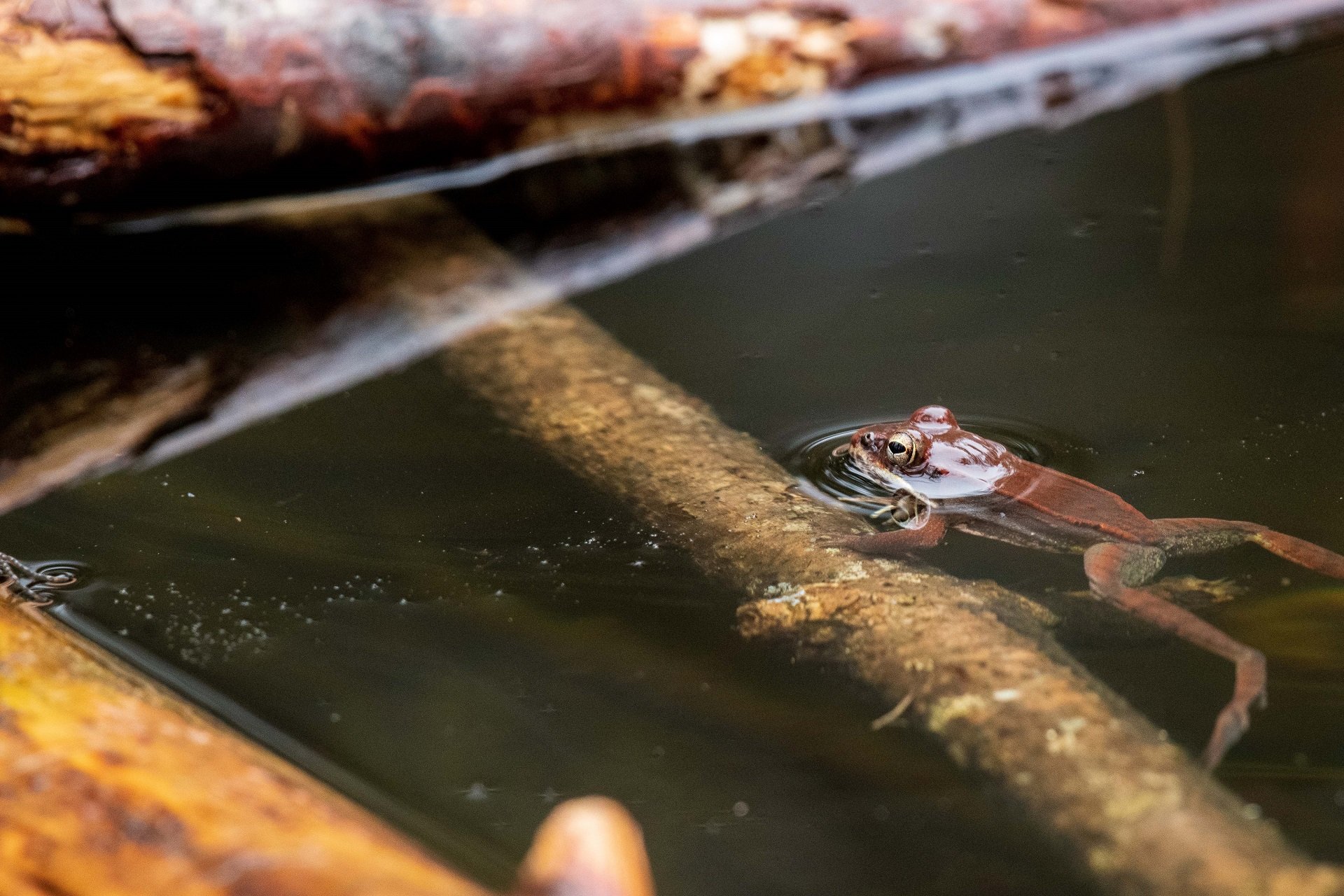
Because of their diverse habitat needs and sensitive skin, frogs are good indicators of the health of our environment.
Reptiles & Amphibians
Although amphibians and reptiles, two ancient groups of vertebrates (animals with backbones), may seem to resemble each other, they differ in a number of important features of physiology, development, and life cycle.