


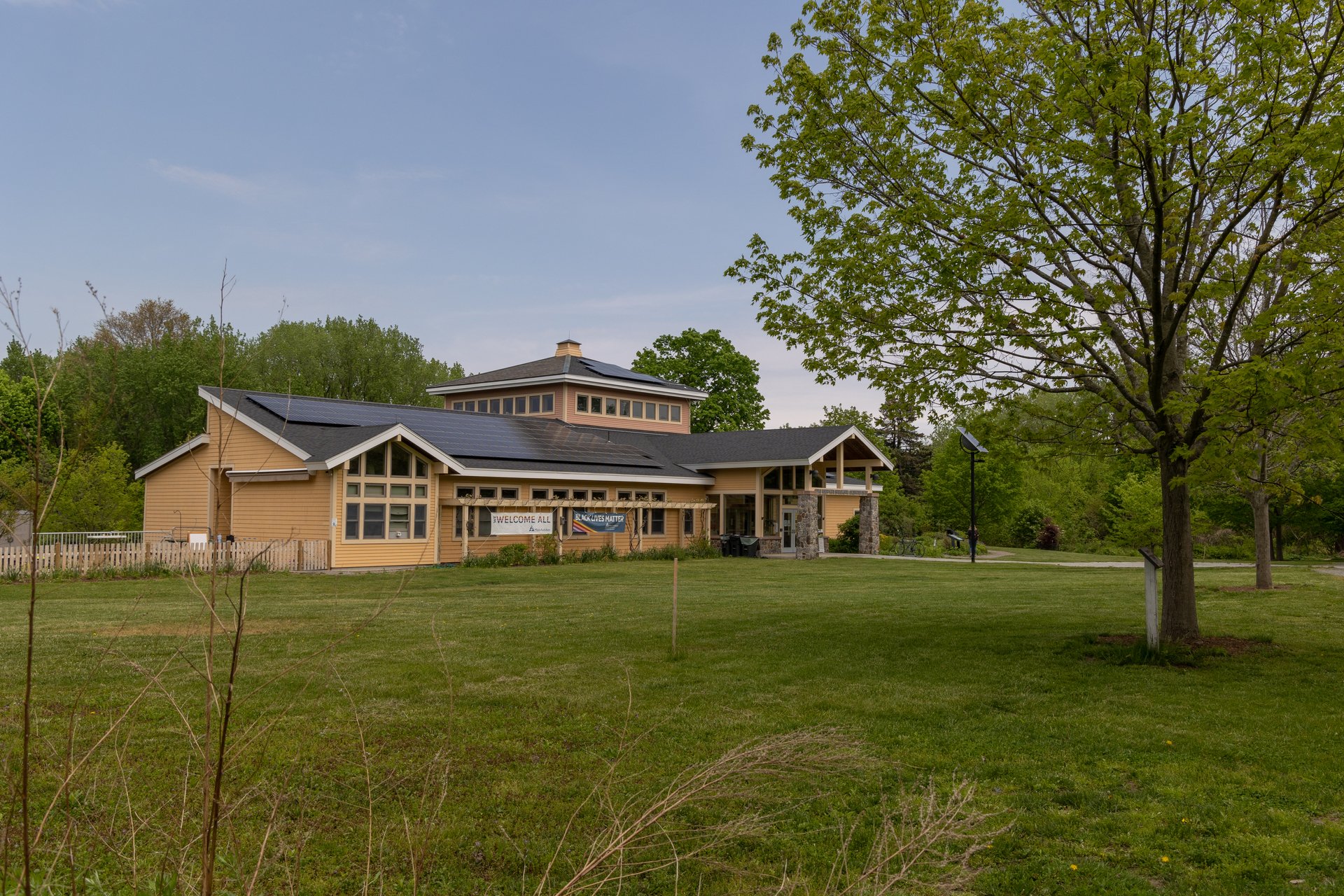
As Mass Audubon’s Nature in the City fellow, I have often found myself reflecting on the question: Who creates cities? Throughout college, I would have answered that urban planners and policy makers are the ones who create cities, but recently I have come to realize that they are only a small (but critical) fraction of the people who contribute to city-building and place-making.
In late-September, I had the incredible privilege to use my fellowship professional development funds to travel to Wrocław, Poland to attend Placemaking Week Europe 2026. Hosted by the non-profit Placemaking Europe, the conference brought more than 600 attendees from 40 countries across six continents to discuss what it means to "create better cities together." Through interactive workshops, engaging panels, and the exploration of public spaces, we shared personal experiences and learned lessons from our respective parts of the world and urban ecosystems. Discussions centered around placemaking themes like incorporating belonging and care principles in public space planning, balancing reliable public services with empowering social cultures, and centering resilience and allyship in times of crisis.
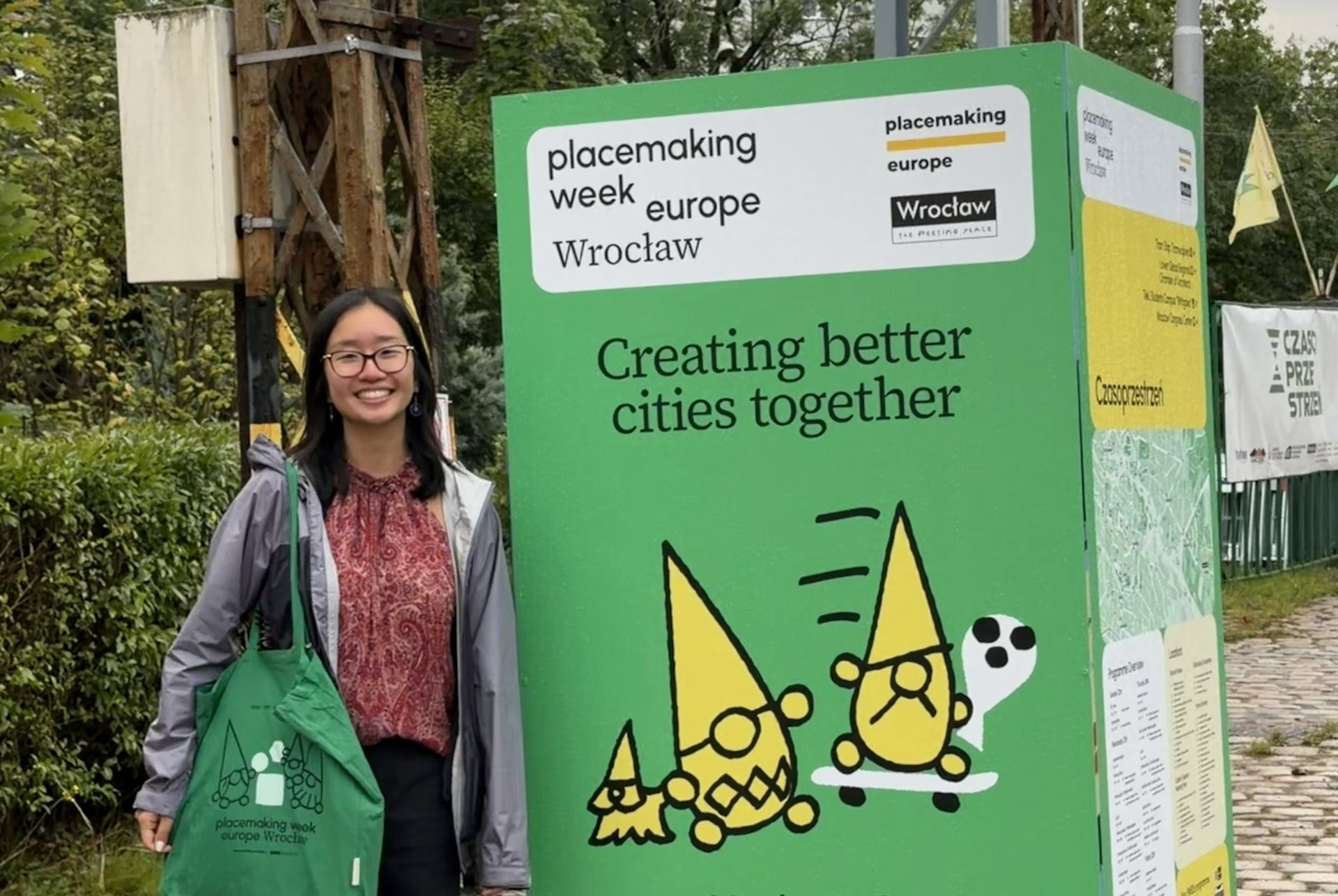
One workshop I found particularly powerful was led by Palestinian placemaker Ons Mahamed, who emphasized that "before we plan for belonging, we need to ask what already makes people feel like they belong." Working with the Nature in the City team for nearly five months now, I have already seen how local organizations utilize Mass Audubon’s resources to create new and support existing nature-based solutions in their communities. Throughout the summer, I had the opportunity to visit sites where community-based organizations utilized Boston Tree Alliance grants to plant fruit and shades trees on private property. These trees serve a dual purpose as both environmental and social infrastructure, helping green the land while supporting community needs, like providing shade and places to gather.
Since Mass Audubon made Equitable Access to Nature an organizational priority five years ago in the first Action Agenda, we have been thinking about what contributes to equity and access in urban areas that go beyond simply building more green spaces. As Mass Audubon undergoes the process of redefining its goal of increasing equitable access to nature for the next Action Agenda, I hope to help the team incorporate global placemaking best practices into the new framework, like utilizing participatory methodologies to co-create urban green spaces with local communities.
Though in its very early stages, my professional project aims to pull from the resources I gained at Placemaking Week—specifically, the Project for Public Spaces' Place Game framework and Placemaking Europe's Place Assessment tool—to create a holistic model for assessing potential urban sanctuary sites for Equitable Access to Nature impact. I plan to develop a framework and tool that pulls together research-based dimensions of quality urban green spaces with place-specific quantitative data and qualitative analysis to help support impactful decision-making. When investing in new sanctuaries, it is important to consider the social impact, as well as the environmental and economic impacts of the project, to engage with the existing knowledge, resources, and needs in the community, in turn, co-creating more meaningful, useful, and welcoming green spaces.
During Placemaking Week, no one directly answered the question I thought was key to the conference: Who creates cities? But through my conversations with the other attendees—architects, sociologists, early childhood educators, feminists, politicians, operations managers, museum curators, actors, real estate agents, brand marketers, cycling enthusiasts, a social inclusion commune entrepreneur, a concerned citizen, the mayor, refugees and immigrants, locals and tourists, and just one urban planner—my answer evolved. Whether you are an urban planner who has lived in the same place your entire life or a tourist exploring the sites for the first time, everyone is part of and contributes to the co-creation of the living system we call the “city.” The diverse community of attendees were brought together not by a shared profession, but by the collective belief in the potential of urban spaces to be inclusive, vibrant, and empowering for all. It takes community to co-create a city.
Taryn Chung (she/her) is is from New York City and graduated from Cornell University, where she majored in Environmental Policy and pursued minors in Urban Studies, Sustainable Business, Law, and Gender Studies. She is passionate about fostering safety and accessibility in public spaces through community development, place-based ecologies, and feminist geography. In her free time, you will probably find her on a 10-mile walk.
Stay Connected
Be the first to know about Early Career Program news, from application deadlines to in-person opportunities and more.