

Home What's New! Advocacy Nature Connection and Sanctuaries Membership Donations Birds & Birding Jobs Camp Audubon Shop
What's New!

What's New!
Advocacy News
Press Room

Media Inquiries:
Jan Kruse
781-259-2134
Press list - sign me up


What\'s New!

print     e-mail    go back    

Published: November 12, 2007

Sea Turtles Wash Ashore on Cape Cod Beaches

Mass Audubon Volunteer Don Lewis treats cold-stunned Kemp's ridley sea turtle at Wellfleet Bay's triage center
Mass Audubon Volunteer Don Lewis treats cold-stunned Kemp's ridley sea turtle at Wellfleet Bay's triage center.
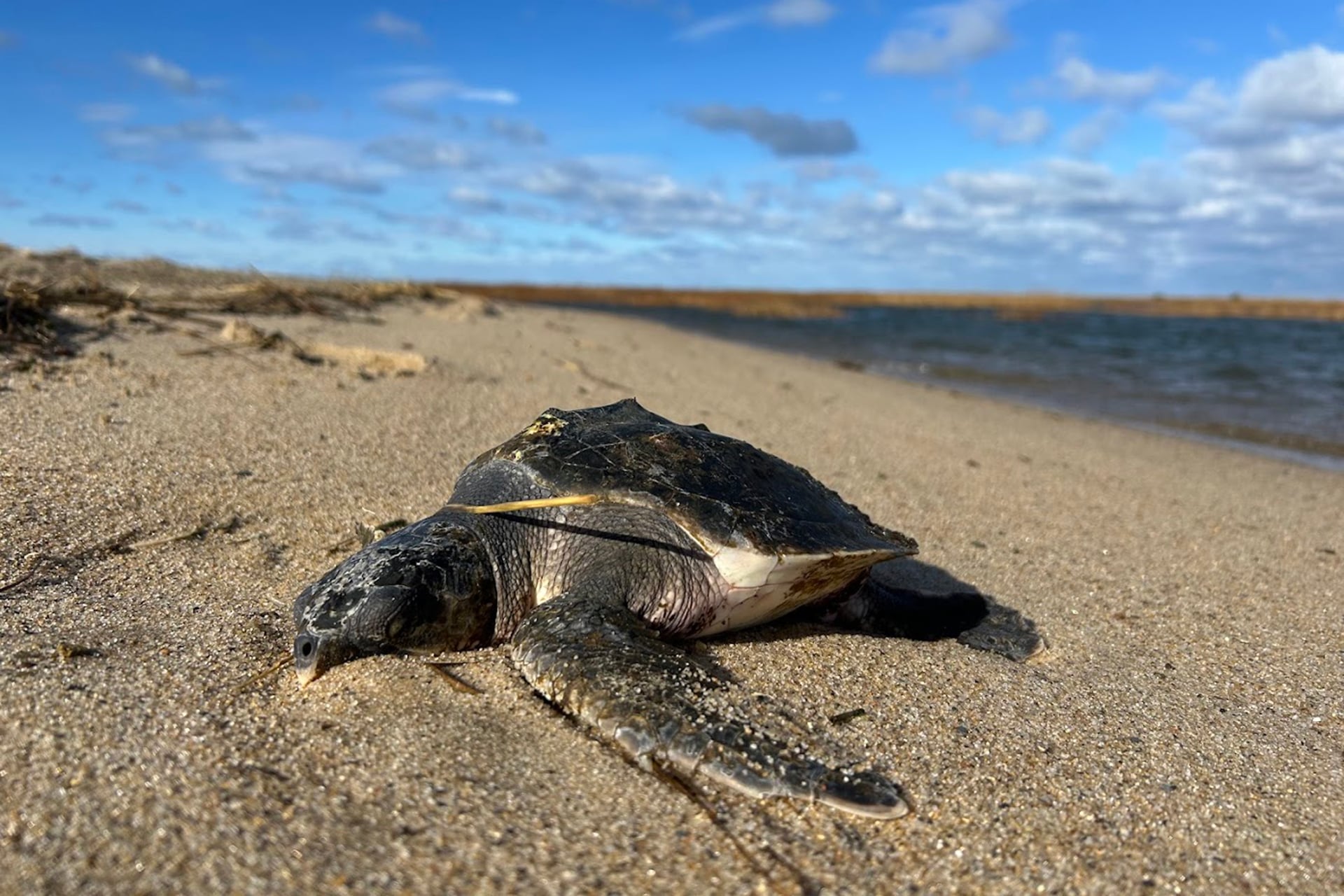
Wellfleet, Mass.- On Sunday, November 11, two Kemp's ridley and one green sea turtle were rescued from beaches in West Brewster and Dennis. Citizens spotted the turtles and notified Mass Audubon's Wellfleet Bay Wildlife Sanctuary and a rescue team was dispatched to the scene. All three turtles were found alive and after stabilizing them at Mass Audubon's Wellfleet Bay, a volunteer transported them to the New England Aquarium Rehabilitation Center in Boston. All are alive and expected to survive, according to Mass Audubon Naturalist Dennis Murley.

"We usually begin to find the sea turtles around Halloween," says Murley. "But the unusually warm waters delayed their arrival this year." According to Murley, last week's nor'easter caused a shift in winds followed by a cold front and the water temperatures dropped to 50 degrees. The turtles, who are migrating south for warmer waters, become "cold-stunned" from the cooler waters. With temperatures now in the high 40s, southern-bound turtles should continue to wash ashore through December.

Last weekend's weather produced consistently northerly winds of 20 to 30 miles per hour through two tides, which kept the turtles in the bay, rather than pushing them out to sea, according to Murley. Both species of turtles are on the United States Endangered Species List.

What causes turtle strandings in Cape Cod Bay? One factor may be the summertime warm-water "bridge" that develops between the inshore waters off of Massachusetts, and the offshore waters east of Cape Cod. The turtles follow the warm water into the bay in search of food, but when the water temperature drops, the cold-blooded turtles' body temperature drops, too. This disoriented the turtles, and the harsh winter winds blow the turtles toward the shore, where they are stranded and are too cold to move.

"The turtles we find have extremely cold internal body temperatures—around 30 degrees," according to Wellfleet Bay Wildlife Sanctuary Director Bob Prescott, "and they should be in the Gulf of Mexico where the water temperature is around 90 degrees."

Wellfleet Bay Naturalist Dennis Murley prepares to transport a cold-stunned turtle to NE Aquarium.
Once a turtle is spotted, Prescott and his staff act quickly to remove it from the beach, and to raise its temperature slowly. Stranded turtles have lost important nutrients while in the cold water, and a quick change in temperature would shock their system. Once back at Wellfleet, the staff works around the clock analyzing blood, and re-hydrating the turtles. Once stabilized, the turtles go to the New England Aquarium in Boston for further evaluation and rehabilitation.

"It's pretty amazing when you bring back a turtle with a body temperature of 30 to 40 degrees, and it starts eating and eventually gets released," says Prescott. With the turtle survival rate between 50 and 60 percent, there have been many touch-and-go situations.

A dedicated group of more than 100 volunteers and Wellfleet Bay staff combs Cape Cod beaches on the lookout for stranded turtles. The most common turtle found is the Atlantic ridley (A/K/A Kemp's ridley), partly because conservation measures have increased its population. The endangered loggerhead is also sometimes found, although their larger size usually insulates them from the cold. The green sea turtle is a more uncommon visitor.

"Fortunately, this time of year, the survival rate is usually quite high for sea turtles that wash ashore because the air temperature is still fairly warm," says Murley. "It was terrific that the citizens who found the turtles called Mass Audubon's Sea Turtle Rescue Hot Line so we could quickly get them stabilized."

The turtles are expected to have a full recovery. With Northwest winds expected later this week, more turtles may be arriving. Mass Audubon is seeking volunteers to help with sea turtle rescues. If interested, call 508-349-2615.

If a sea turtle is found:

  1. Move the turtle above the high tide line, DO NOT PUT IT BACK INTO THE WATER or REMOVE IT FROM THE BEACH
  2. Cover it with seaweed or eelgrass so it is no longer exposed to cold wind
  3. Mark the spot with a piece of beach debris (lobster buoy or driftwood)
  4. Call Mass Audubon's Wellfleet Bay Wildlife Sanctuary Sea Turtle Hot Line at 508-349-2615 ext. 104 and leave exact location as well as distinguishable landmarks; a rescue crew will be promptly dispatched to the location.


Home | Contact Us | About | What's New! | Advocacy | Nature Connection | Membership | Donations
Birds & Birding | Jobs | Camps | Audubon Shop | Search | Program Catalog | Privacy Policy

©2003-2010 Mass Audubon. All rights reserved.