
|
Mass Audubon Plays Key Role in Preserving Old Growth Forest in the Berkshires
900 Acres of Ecologically Significant Land is Permanently Protected
LINCOLN, Mass.- Mass Audubon, working with the Commonwealth's Department of Conservation and Recreation (DCR), has conserved a key property located in Sandisfield, Massachusetts—the center of a long-running property dispute—for public enjoyment and wildlife habitat. The successful outcome is due to the patience and persistence of the public-private partnership, as well as several family members who remained committed to honoring their ancestors' desire to preserve the open landscape for future generations.
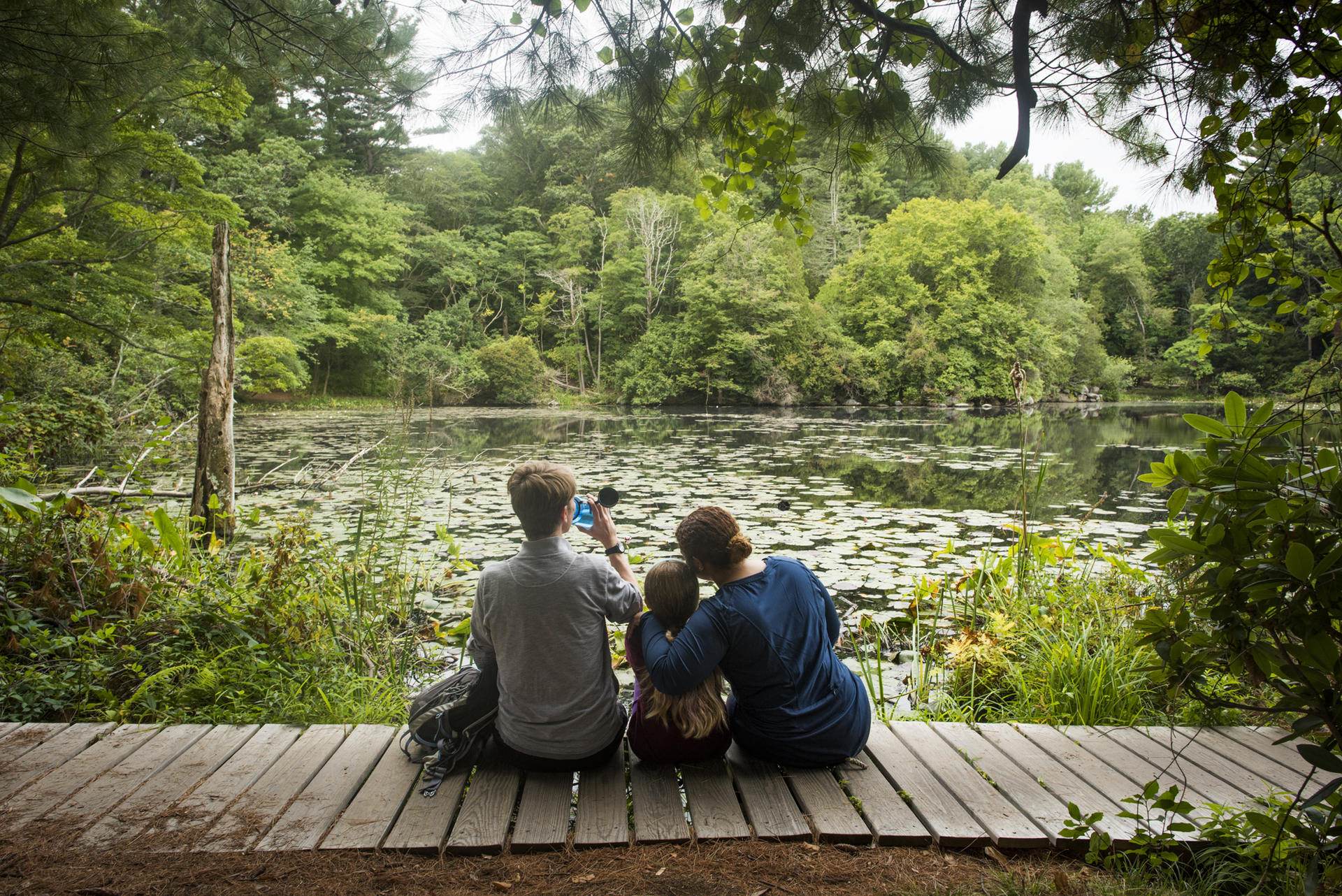
The land had been owned by descendents of the Rowley/Hawley family for nearly two centuries and more recently held in fractional interests by individuals representing two sides of the family. More than 15 years ago, DCR had identified the property as one of the most significant land protection opportunities remaining in the state. The land is included in the state's BioMap and Living Waters plans as being of statewide ecological significance. It is home to diverse habitats, rare plant and animal species, historical sites, and includes mature deciduous woodlands, rolling meadows, a 400-year old hemlock forest, and the 62-acre Lower Spectacle Pond.
Approximately five years ago, family members announced their intent to finally sell the property, and expressed strong interest in exploring a sale for conservation. The 900-acre parcel is adjacent to thousands of acres of existing conserved land, including the Sandisfield State Forest, Flood Control holdings, and land protected by Mass Audubon. Following extensive negotiations between the seven owners and Mass Audubon and DCR, an agreement to protect the land seemed within reach.
But a prospective developer had a different idea. He wanted to purchase the entire parcel and build homes fronting on the property's centerpiece-Lower Spectacle Pond. The families became divided, with one-half committed to pursuing a conservation outcome, and the other half negotiating with the developer, who was now aggressively seeking ownership and control of the entire 900-acre tract. It was clear that conservation interests needed to match the aggressive pursuit of this jewel of the Berkshires. Someone needed to step in immediately and work with the landowners willing to sell their land for conservation. Since the State is unable to by an Option to Purchase and has a policy against acquiring undivided half interest, Mass Audubon took the bold step to first secure the Option, and then, in 2006, to purchase for $1.5 million a one-half, undivided interest in the 900-acre property, aided by a low-interest loan from the Open Space Institute, Inc. The remaining members of the family later sold the other one half-share to the developer.
For more than a year, Mass Audubon sought a mutually agreeable ownership and land use scenario with the developer. This spring, attorneys notified Mass Audubon of the developer's intention to petition the Land Court for a partition of the property, which would compromise the primary conservation goal of protecting this diverse landscape intact. This was an outcome that was unacceptable from a conservation perspective, and so in late June, the Commonwealth negotiated a settlement with both owners to secure the entire property via an eminent domain taking." Protecting this significant treasure has been an extraordinary effort, involving considerable risk and complexity," says Mass Audubon President Laura Johnson. "We're extremely pleased that this wonderful land will remain intact for traditional public uses and wildlife in perpetuity."
The 900-acre scenic and vital habitat will be conserved and managed within the State Forest and Parks system. "This was a true partnership in the sense that we took the somewhat risky, yet essential, step of becoming a part owner when the State could not legally do so," says Mass Audubon Director of Land Protection Robert Wilber. "However, it makes most sense to have one manager of the property, so with the primary goal of protection achieved, Mass Audubon sold our one-half interest in the land at cost and for less than appraised value to the Commonwealth."
Mass Audubon works to protect the nature of Massachusetts for people and wildlife. Together with more than 100,000 members, we care for 32,000 acres of conservation land, provide educational programs for 200,000 children and adults annually, and advocate for sound environmental policies at the local, state, and federal levels. Mass Audubon's mission and actions have expanded since our beginning in 1896 when our founders set out to stop the slaughter of birds for use on women's fashions. Today we are the largest conservation organization in New England. Our statewide network of 44 wildlife sanctuaries welcomes visitors of all ages and serves as the base for our conservation, education, and advocacy work. To support these important efforts, call 800-AUDUBON (283-8266) or visit www.massaudubon.org.
FOR IMMEDIATE RELEASE July 5, 2007 | CONTACT: Jan Kruse 781-259-2134 |
EDITOR’S NOTE: Photos are available; please contact Jan Kruse.
|