
logo
 
Home What's New! Advocacy Nature Connection and Sanctuaries Membership Donations Birds & Birding Jobs Camp Audubon Shop
Living With Wildlife

Common Questions Answered:
   Birds: Attracting
   Birds: Identifying
   Birds: Behavior
   Birds: General Info
   Birds: Nests and Young
   Birds: Species
   Insects
   Mammals
   Miscellaneous
   Reptiles and Amphibians

Didn't Find Your Answer?
   Ask the Wildlife Expert!

Nature Connection
Conservation Science


Birds: Attracting
print     e-mail    go back    

Landscaping for Birds


Learn more!
Participate in a
related program.

Landscaping is defined as the process of improving or changing the features and appearance of a yard, garden, or park. Landscaping for birds means changing the features of one of these areas so that it is more attractive and useful to birds. This is usually accomplished by planting native trees, shrubs, vines, and ground covers, and perhaps adding a water source. Almost any yard can be landscaped so that it is more attractive to birds.

The key to attracting a large variety of birds with plantings is diversity. It is best to plant a variety of plant species and to make sure there is structural heterogeneity, that is, a wide variety of plant types and densities. For example, a few large trees should be balanced with many smaller trees and shrubs, and both evergreen and deciduous plants should be present. A small amount of grass is best accompanied by low shrubs, ground covers, areas of leaf litter, and brush piles. A yard with high plant diversity will have something to offer many songbird species, e.g., large trees for nesting orioles and woodpeckers, fruiting shrubs offering food to many species, and some lawn for robins and flickers.

THE SURVIVAL REQUIREMENTS OF BIRDS
The landscaping process should begin with a consideration of the survival requirements of birds. These requirements can generally be divided into four groups: food, water, cover, and nesting sites. To attract the greatest variety of birds, we should strive to meet as many of these needs as possible.

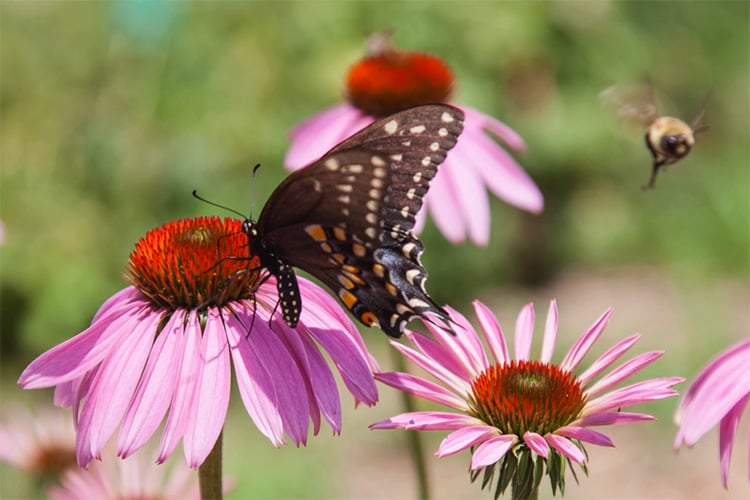
Food - Plants can provide food in the form of buds, fruit, seeds, nectar, and insect life attracted to flowers or foliage. Different food types become important to birds at different times of the year. During the breeding season, most songbirds need insects to raise their young. Some species, such as orioles, supplement their summer diets with nectar from flowers. Many insect eaters switch to fruit during the fall migration, and some residents often subsist on fruit throughout the winter. Seeds make up a major portion of the fall and winter diets of many bird species, and some, such as Evening Grosbeaks and Pine Siskins, will travel long distances to locate food if seed crops fail in one area. Buds become more important to birds in late winter when many fruit and seed supplies are diminished. Plants for the yard should therefore be selected based on their ability to provide food, in one form or another, year-round. Since it is unlikely that a single species of plant can provide food 12 months of the year, a variety of plantings are required so that fruiting, flowering, and seeding times overlap.

Water - Water is very important for birds, both for drinking and for bathing. In the summer, a water source will be heavily used by birds, and parent birds even bring their young to the water. During the spring and fall migrations, a backyard water source is also highly attractive to birds. Water tends to be scarcest in the winter when freezing temperatures keep water locked in the ground. Birds will eat snow and ice if necessary, but winters with little snow can be especially hard on birds. A source of unfrozen water is much appreciated by winter birds.

If space permits, a small in-ground pool in the corner of the yard, with plenty of protective cover around it, is the most attractive to birds. Small pumps can be purchased to circulate the water since moving water has been proven to be especially attractive to birds. Most backyard birdwatchers, however, make do with commercial birdbaths. Baths placed directly on the ground are more attractive to birds, but in areas where cats are a threat, a bath on a pedestal is preferable. Wet birds are poor flyers and extremely vulnerable to ambush.

When choosing a birdbath, keep in mind that many are made too deep. Small birds prefer shallow water (i.e., anything under 2 inches). To rectify this, add gravel to the bath, perhaps sloping it from one side to another, so that there is a shallow end. Or place a branch in the water so that birds can move along the branch to the water depth they prefer.

In the winter, baths can be kept open either by frequent refilling or with a commercial electric heater. There are many thermostatically controlled bath heaters on the market that are effective and inexpensive to operate. Care should be taken that the cord for the heater is well protected (perhaps by running it in electrical tubing) and marked, and out of the way of snow-shovelers and snow-blowers. It may be safer to locate the birdbath close to the house during the winter so that only a short amount of cord is necessary. Never use glycerin in the birdbath to keep water from freezing; it is toxic if ingested and can destroy the insulating properties of feathers!

Cleaning birdbaths
Baths should be cleaned frequently during periods of high use and scrubbed periodically to keep down algal growth. A solution of one part bleach to nine parts water can be used to clean and disinfect the bath. Make sure to rinse the bath thoroughly before refilling.

Cover - In addition to food and water, birds require cover and shelter year-round. Cover provides protection from severe weather and is a safe haven where birds can preen feathers and rest. Plants provide cover in different forms. Dense evergreens are especially valuable to birds during the winter when they provide protection from strong winds, snow, and cold nighttime temperatures. Low shrubs and ground covers provide refuge and safety for ground-feeding species such as sparrows, towhees, and thrushes. Because many species do not venture far from some sort of cover when feeding, having food and cover plants close to one another is beneficial. The availability of cover year-round should be considered when landscaping for birds.

An additional way to provide cover for birds is to construct brush piles.Brush piles are refuges made from tree and shrub clippings and can be placed at the edge of woods, next to existing shrubs, or near bird feeders..

NESTING SITES
A final requirement of birds is the availability of suitable nesting sites. There are two main groups of nesting birds, open nesters and cavity nesters, and each has different requirements for nest sites.

Open Nests - Robins, jays, and catbirds place their nests among the branches of a tree or shrub. Some birds, like robins, require treecrotches or branches, others, like catbirds and cardinals, prefer dense thickets or shrubs, and still others like to nest in vine tangles. Having a variety of different types and sizes of trees, shrubs, and vines in the yard will ensure that the nesting needs of many backyard birds are met.

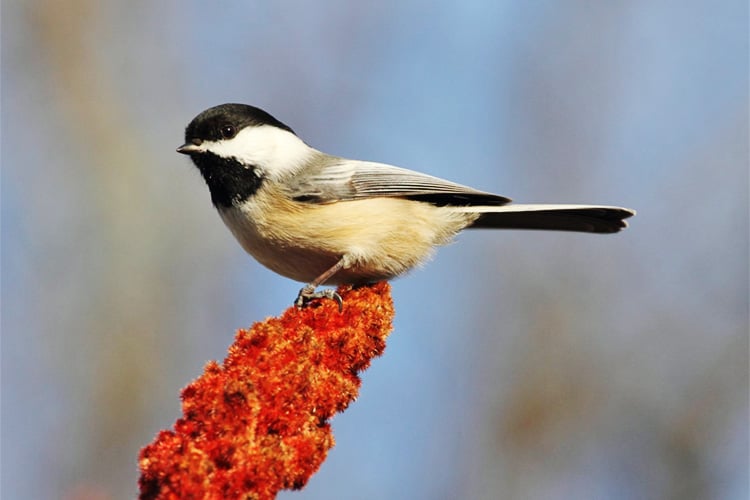
Cavity nests - Such as woodpeckers, chickadees, and bluebirds use tree cavities as their nest sites. When a tree begins to rot due to disease or insect damage, woodpeckers are able to use their bills to excavate dead wood to form a chamber. Most other cavity nesting species cannot excavate wood on their own and must use abandoned woodpecker holes. As a result, cavities are often in short supply, and there is a great deal of competition for them. We can help alleviate the cavity shortage by leaving dead limbs in place and letting dead or dying trees stand (as long as they are not endangering human habitations!). These dead trees, commonly called snags, also provide insect food for bark foraging species and are an important part of any diverse bird habitat.

Birdhouses - An additional way to help cavity nesters is to place birdhouses in the yard. Eastern Bluebirds, for example, respond well to artificial houses if they are placed in relatively open areas. Chickadees and wrens will use houses placed at the edges of woods. Try to locate several different-sized houses around the yard so that you can attract a variety of birds. For non-cavity nesters such as robins and phoebes, nesting shelves can be built and placed on a house or garage. House Finches happily make do with dense hanging plants on porches. To learn more about providing houses for birds, ask for Massachusetts Audubon's "Birdhouses" information sheet.

THE PLAN
The first step in any landscaping project involves developing a plan on paper. Map the yard and label its dimensions (length, width) so that you know how much area is available to work with. Next, inventory (identify and count) the current plantings in the yard and place them on the yard map. Take note of how much sun is available and what the general characteristics of the soil are (i.e., moist/dry, wet/well-drained). It is possible that some of the existing plants will have to be removed in favor of new plants. Or, perhaps you just want to add a few plantings here and there. It really depends on how much landscaping you want to do as well as how much you want to spend.

The accompanying chart contains some recommended plants for attracting birds in the Northeast. It is intended to be an aid in the initial planning of the backyard bird habitat, and it is suggested that you obtain more detailed information about the plants and their requirements from nursery staff and various reference books. It is worth spending some time browsing local nurseries so that you can become more familiar with the plants and their availability. The plants in the chart were selected on the basis of their appeal and usefulness to birds. Only species native to the United States are listed. Although many exotic species, including Multiflora Rose (Rosa multiflora) and Japanese Honeysuckle (Lonicera japonica), are appealing to birds, their use is discouraged since they grow rapidly and can outcompete our native plant species. If you are in doubt about the origin of a plant, write down its scientific name and look it up in a field guide.

D.M.L.


Common Name
Light Tolerance
Flower Dates
Fruit Avail.
Value to Birds
Comments
Eastern Red Cedar sun --- Sep-May food/nest sites/cover alternate host to apple rust
White Oak sun/lt. shade --- Sep-Nov food/nest sites/cover  
Red Oak sun --- Sep-Nov food/nest sites/cover acorns require 2 years to mature
Chestnut Oak sun --- Sep-Nov food/nest sites/cover  
Black Oak sun --- Sep-Nov food/nest sites/cover acorns require 2 years to mature
Eastern White Pine sun --- Aug-Sep food/nest sites/cover  
Sugar Maple sun/pt. shade --- Sep-Nov food/nest sites  
Red Maple sun/shade --- May-Jul food/nest sites  
Spruce spp. sun/lt. shade --- Aug-Sep food/nest sites/cover  
Eastern Hemlock sun/shade --- Aug-Sep food/nest sites/cover  
Black Cherry sun May-Jun Aug-Oct food poisonous to livestock
Birch spp. sun/lt. shade --- Aug-Oct food/nest cavities River Birch (B. nigra) grows rapidly
American Mountain-ash sun May-Jun Aug-March food fruits high in fat
Flowering Dogwood sun/pt. shade May-Jun Aug-Dec food  
Red Mulberry sun May-Jun Jun-Jul food also called serviceberry or shadbush
Downy Junberry sun/lt. shade Apr-Jun? Jun-Aug food not native to New England
Crabapple spp. sun/lt. shade May Sep-March food/nest sites  
Hawthorn spp. sun May-Jun Sep-March food/nest sites poisonous to livestock
Fire Cherry sun/lt. shade May-Jul Jul-Oct food poisonous to livestock
Choke Cherry sun/lt. shade May-Jun Jul-Sep food  
Ironwood sun/pt. shade Apr Aug-Oct food  
Red-panicle Dogwood sun/pt. shade Jun-Jul Aug-Oct food/nest sites  
Silky Dogwood sun/lt. shade May-Jul Aug-Oct food/cover  
Red-osier Dogwood sun May-Jun Jul-Sep food/nest sites  
Alternate-leaf Dogwood part shade May-Jul Jul-Sep food/cover  
Common Highbush Blueberry sun May-Jul Jul-Sep food/nest sites  
Common Elderberry sun/pt. shade Jun-Jul Aug-Sep food/nest sites  
Cranberry Viburnum sun/lt. shade May-Jun Sep-Oct food also known as Highbush Cranberry
Northern Arrowwood sun/lt. shade May-Jul Jul-Sep food/cover  
Nannyberry sun/lt. shade May-Jun Aug-Sep food/cover  
Canada Honeysuckle shade Apr-Jul Jun-Aug food  
Swamp Honeysuckle sun/pt. sun May-Jun Jul-Aug food fruits high in fat
Common Spicebush sun/pt. shade Mar-May Jul-Sep food  
Common Winterberry Holly part shade Jun-Aug Sep-Oct food/nest sites male and fem. plants required for fruit
Smooth Winterberry Holly part shade May-Jul Sep-Jan. food/nest sites male and fem. plants required for fruit
Black Huckleberry sun/lt. shade May-Jun Jul-Sep food  
Staghorn Sumac sun Jun-Jul Aug-spring food fruits persist into winter
Smooth Sumac sun Jun-Jul Aug-spring food fruits persist into winter
Brambles:

Raspberries

sun/pt. shade Apr-Jul Jun.- Oct food/nest sites/cover  

Blackberries

sun/lt. shade May-Jul Jul-Sep food/nest sites/cover  

Dewberries

sun/pt. shade May-Sep Jun.-Oct food/nest sites/cover  
American Bittersweet sun/lt. shade May-Jun Sep-Dec food/cover  
Virginia Creeper sun/shade Jun-Aug Aug-Feb food/cover  
Grape spp. sun/lt. shade May-Jul Sep-Oct food/nest sites/cover bark used for nests
Trumpet Creeper sun Jul-Sep Aug-Oct food (hummingbirds) not native to New England
Evergreen Bearberry sun May-Jul Aug-Dec food/cover  
Black Crowberry sun Jun-Jul Jul-Nov food evergreen
Bunchberry shade May-Jul Aug-Sep food transplants well
Common Strawberry sun/pt. sun Apr-May May-Aug food  
Sources: D. J. Decker and J. W. Kelley; S. W. Kress (1995); L. Martin (1992); J. K. Terres (1994). Common names according to Petrides (1986).

Participate in a Related Program
Beach Tracking, Felix Neck - 5/25/13
Birding By Ear, Arcadia - 5/25/13
Birds of Prey, Boston Nature Center - 5/25/13
Early-Morning Birding, Arcadia - 5/25/13
Get Out & Go Birding, Boston Nature Center - 5/25/13
Owl Prowl, Wachusett Meadow - 5/25/13
Owls for Kids, Felix Neck - 5/25/13
Saturday Morning Bird Walk, Drumlin Farm - 5/25/13
Saturday Morning Birding, Joppa Flats - 5/25/13
Spring Songbird Walk, Wellfleet Bay - 5/25/13
Exploring North Monomoy for Horseshoe Crabs, Wellfleet Bay - 5/26/13
Get Out & Go Birding, Boston Nature Center - 5/26/13
HIP Morning Birding Walks May, Habitat - 5/26/13
Warblers and More at Swan Point Cemetery, Stony Brook - 5/26/13
Beach Ramble, Allens Pond - 5/27/13
Early Birds, Wellfleet Bay - 5/27/13
Memorial Day Canoe, Arcadia - 5/27/13
North Beach Island Birding, Wellfleet Bay - 5/27/13
Birding the South Coast, Wellfleet Bay - 5/28/13
Early Morning Birds, Stony Brook - 5/28/13
Alaska, Drumlin Farm - 5/29/13

Back to top


Home | Contact Us | Your Account | About | News & Media | Advocacy | Nature Connection | Membership
Donations | Birds & Birding | Jobs | Camps | Audubon Shop | Search | Program Catalog | Privacy Policy

©2003-2013 Mass Audubon. All rights reserved.