
Home What's New! Advocacy Nature Connection and Sanctuaries Membership Donations Birds & Birding Jobs Camp Audubon Shop
Living With Wildlife

Common Questions Answered:
   Birds: Attracting
   Birds: Identifying
   Birds: Behavior
   Birds: General Info
   Birds: Nests and Young
   Birds: Species
   Insects
   Mammals
   Miscellaneous
   Reptiles and Amphibians

Didn't Find Your Answer?
   Ask the Wildlife Expert!

Nature Connection
Conservation Science


Birds: Attracting
print     e-mail    go back    

Feeding the Birds


Learn more!
Participate in a
related program.

In the last few decades, feeding birds has become an extremely popular hobby among birdwatchers. Birds readily respond to artificial sources of food, and, with a conscientious feeding program, we can attract a large variety of colorful species to our yards. Feeding birds gives us the unique opportunity to observe interesting behaviors as the birds interact in the quest for food and can make us feel more connected to the natural world.

It should be remembered that bird feeding is a hobby undertaken for the enjoyment of birdwatchers and that birds do not need feeders. Over the course of millions of years, birds have become closely adapted to their environments and instinctively know how to deal with severe weather and natural food shortages. Our bird feeders are only a supplemental source of food. A bird feeding program should only be undertaken for the purpose of attracting a variety of birds to within easy viewing distance of our homes.

A common concern is whether bird feeding is "good" or "bad" for birds. In the broadest sense, it is neither. Bird populations would likely be the same without our supplemental food sources. Some species, such as the Tufted Titmouse and Northern Cardinal, have expanded their ranges northward more rapidly due to the presence of bird feeders. However, range expansion is a natural process, and other factors, including climate, habitat availability, and competition with other species, play a part in range expansion.

Artificial feeding of birds has not been proven to be bad for birds either, at least in the sense that many people think. Birds will not abandon natural food supplies, forget how to fend for themselves, or stop migrating simply because they have access to feeders. Birds have strong, natural instincts that tell them when to migrate and breed, and how to find food. To birds, our feeders are simply localized sources of supplemental food that they take advantage of at appropriate times.

FOOD SELECTION
Seeds: The first consideration in a bird feeding program is the food selection, of which various seeds are the most common type of food offered. Experiments conducted by the Cornell Lab of Ornithology have shown that birds have particular preferences for certain types of seeds. Based on these studies, birds can be divided into two main groups according to their seed preferences and feeding habits.

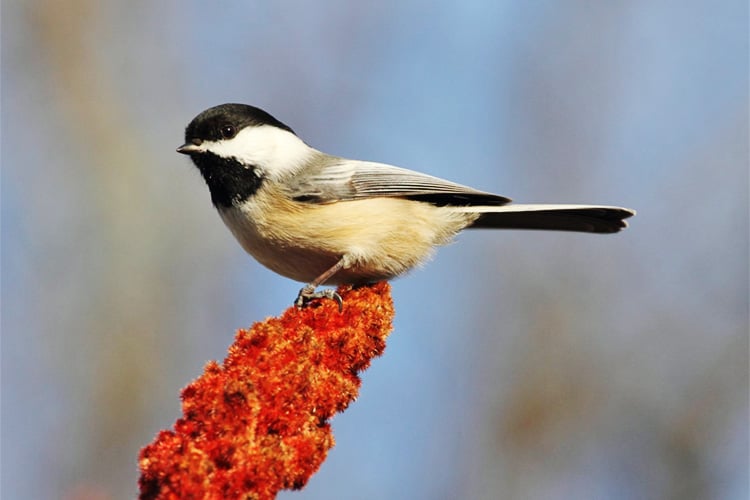
Arboreal, or tree-dwelling, birds such as chickadees, titmice, nuthatches, finches, and jays universally prefer black-oil sunflower seed. This all-black seed has a soft shell and a large oily meat inside, making it an energy rich food source. Black-striped sunflower, a larger seed with a tough shell, is also eaten by these species but only when black-oil sunflower is not available. Sunflower seed is also commonly available hulled (with the shell removed). Although hulled sunflower is more expensive, it is preferred by smaller species such as chickadees and finches, and can be used by species than cannot open sunflower seeds. Sunflower seed is best offered in hanging feeders.

Ground feeding birds, including sparrows, juncos, towhees, and doves, will eat white proso millet, a small, round, cream-colored seed usually found in most birdseed mixes. Cracked corn is also well liked by ground feeders, as well as by blackbirds, starlings, and House Sparrows, species that are sometimes considered pests. Other seeds commonly found in mixes, including milo, wheat, and hemp, are generally not well accepted by the birds. These seeds exist mostly as fillers in cheaper mixes and should be avoided if possible. Seed mixtures containing millet should only be offered on the ground or on low platform feeders and not in hanging feeders. Birds that come to hanging feeders are usually looking for sunflower seed and will drop the other seeds on the ground.

Besides black-oil sunflower and white millet, which are the staples in a bird-feeding program, there are other seeds you may wish to try. Niger seed (erroneously called "thistle") is a small, black, rod-shaped seed imported from Africa and Asia. It is extremely popular with finches such as siskins, goldfinches, and House Finches, as well as Mourning Doves. Niger seed tends to be expensive and sometimes goes unnoticed at feeders where black-oil sunflower is available. Offer it in a separate, specially designed "niger feeder," which has small holes for dispensing the tiny seed, and check uneaten seeds often because they have a tendency to spoil rapidly.

Safflower seed, a triangular, white-shelled seed, is being marketed as "selective" cardinal food because many other species will not eat it. Cardinals will eat safflower seed but only when black-oil sunflower is not available. Chickadees, finches, and doves will also eat safflower seed, but, when given a choice, they also seem to prefer sunflower seed. Some undesirable species such as squirrels, blackbirds, and House Sparrows generally do not like safflower seed and will usually avoid it. Keep in mind, however, that if no other food is offered, they may eat it.

Suet: Beef suet is a hard, white fat that is readily available at supermarkets and is a favorite food of woodpeckers. Other confirmed suet eaters include chickadees, titmice, nuthatches, creepers, and warblers. Suet is rich in heat-producing calories and is particularly valuable to birds in the winter. It is best offered raw in specially designed suet holders that allow birds to peck away a small piece at a time. Suet can also be melted down slowly until liquid and mixed with ingredients such as peanut butter and cornmeal to form cakes. Bird-feeding guides commonly include recipes for various suet cakes (see Reference List). Although often called for in these recipes, whole seeds should not be mixed into suet cakes. Most species that eat suet will not eat whole seeds. In addition, the coating of fat on the seeds makes them impossible to shell. The only exception to this is peanut pieces and hulled sunflower pieces, which are easily eaten and can be included in suet mixes. Commercially made suet cakes are also available, and the "heat-resistant" formulas are convenient to use in the summer when high temperatures can cause raw, unrendered suet to turn rancid.

Peanut Butter: Peanut butter is also a very attractive bird food, although there is concern that it can cause choking when offered straight. While a direct link between straight peanut butter and choking has never been confirmed, it is probably best to offer it mixed with other ingredients to reduce its stickiness. As mentioned above, peanut butter can be added to melted suet and fed to birds in cakes or mixed with yellow cornmeal and flour and fed as a dough. A surprising number of insectivorous birds including bluebirds, warblers, and thrushes have been known to feed on peanut butter mixtures. Recipes for a variety of peanut butter mixtures can be found in many of the bird feeding guides in the Reference List.

Fruit: Halved apples and oranges are a favorite food of thrushes and orioles. House finches, some woodpeckers, and starlings will also eat fresh fruit. Sections can be impaled on branches or offered in specially designed fruit feeders that have spikes to hold the fruit. Some fruit feeders also have small trays for holding jelly or jam. Raisins and currants will be eaten by mockingbirds, catbirds, and thrashers, especially if they are soaked first. These are best offered on open platforms or tray feeders.

Water: Water is very important for birds, both for drinking and for bathing. In the summer, a water source will be heavily used by birds for drinking and bathing, and parent birds will bring their young to the water for their first baths. During the spring and fall migrations, a backyard water source is highly attractive to birds. Sightings of rare and unusual warblers often occur at backyard birdbaths. Water tends to be scarcest in the winter when freezing temperatures keep water locked in the ground. A source of unfrozen water is much appreciated by winter birds.

When choosing a birdbath, keep in mind that many are made too deep. Small birds are afraid to enter deep water (i.e., anything over 2 inches). To rectify this, add aquarium gravel to the bath, perhaps sloping it from on side to the other, so that there is a shallow end. The gravel will provide birds with better footing once in the bath. Baths should be cleaned frequently during periods of high use and scrubbed periodically to keep down algal growth. A solution of one part bleach to nine parts water can be used to clean and disinfect the bath. Make sure to rinse the bath thoroughly before refilling.

In the winter, baths can be kept open either by frequent refilling or with a commercial electric heater. There are many thermostatically controlled bath heaters on the market now that are effective and inexpensive to operate. Care should be taken that the cord for the heater is well protected and marked and out of the way of snow-shovelers and snow-blowers. It may be safer to locate the birdbath close to the house during the winter so that only a short amount of cord is necessary. Never use glycerin in the birdbath to keep water from freezing; it is toxic if ingested and can destroy the insulating properties of feathers!

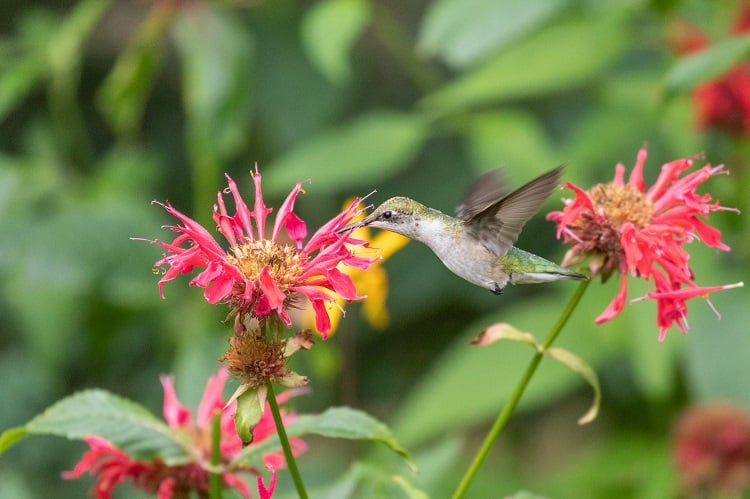
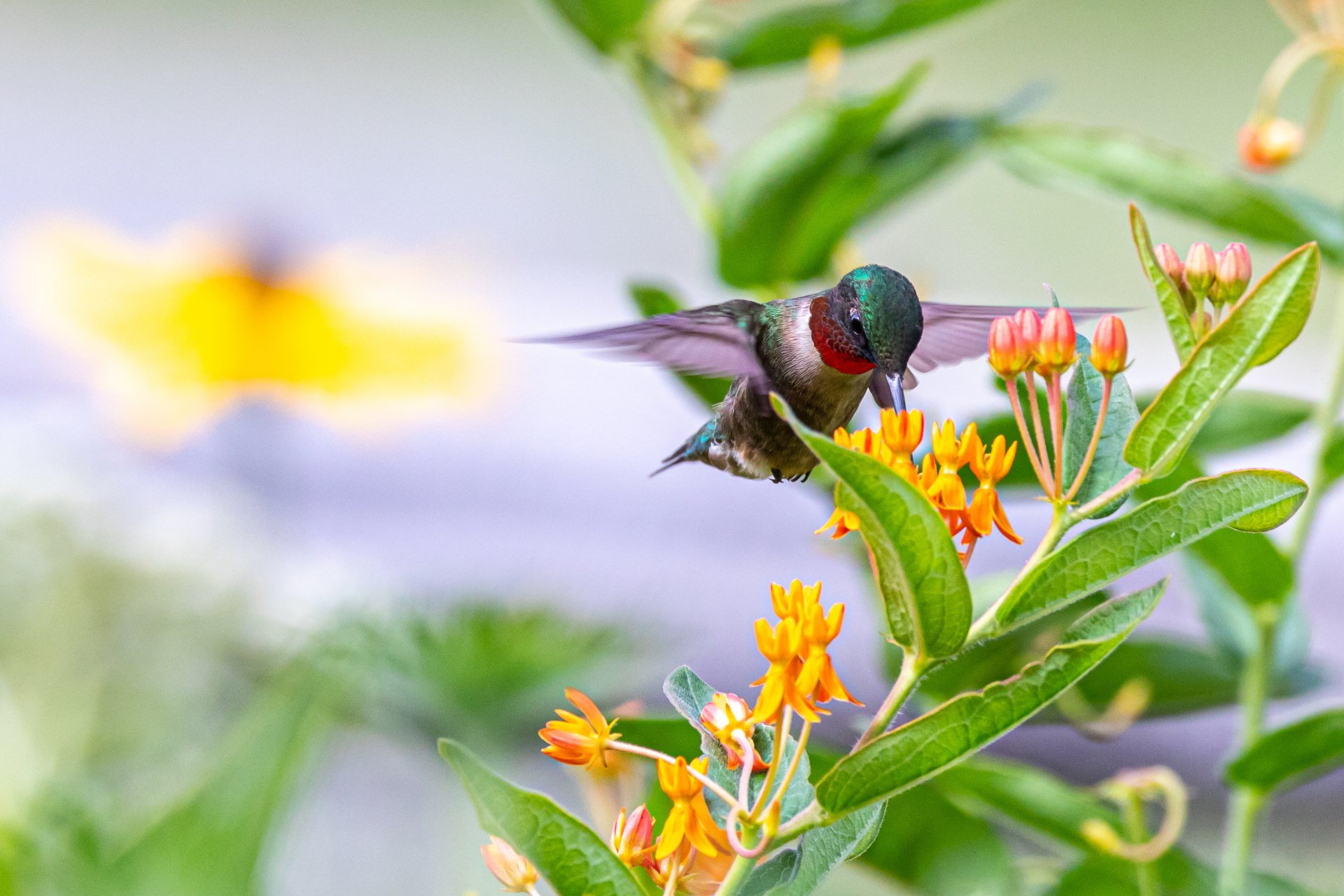
Sugar Solutions: During the summer, sugar solutions can be very popular, especially among hummingbirds. A variety of hummingbird feeders are commercially available, and some have special features such as bee guards and ant traps, as well as perches. Orioles and House Finches will also come to sugar-water feeders, providing these have perches for the birds to land on. Sugar solutions should be prepared in the ratio of one part white table sugar to four parts water. Boil the solution for a few minutes to sterilize it, then allow it to cool completely before filling feeders. Store the unused solution in the refrigerator. Never use honey in place of sugar since it can cause a potentially lethal form of fungus to grow on the tongues of hummingbirds. In addition, it is not necessary to add any red coloring to the solution. Most feeders have some red-colored parts that are attractive to birds. A red ribbon tied to the feeder will also serve the same purpose.

FEEDER SELECTION
Hopper feeders are shaped like small barns, and dispense seed in troughs fed by a central reservoir. They are generally made of wood with glass or plastic panels, and have large perching areas that accommodate all sizes of birds. These feeders can be post mounted or hung.

Tube feeders consist of long plastic tubes which hold seed, and anywhere from 2 to 8 perches made of wood or metal. The feeding ports are usually small holes cut into the tube for seed extraction. These feeders are geared toward the smaller species like finches and titmice, and are good for offering black-oil sunflower (hulled and whole), and niger seed. Tube feeders are usually hung, although some can be mounted on a post.

Globe feeders are plastic balls with an inside funnel to hold seed, and several large holes cut out of the lower half for feeding ports. Birds feed by grabbing onto the edges of the holes and taking out seeds. The lack of perches makes these feeders ideal for small clinging birds like chickadees, titmice, and finches. Large birds like blackbirds and pigeons cannot feed from these feeders, making them useful in urban areas where these species can be pests. Only sunflower seed should be offered in these feeders. Globe feeders are usually hung.

Table feeders are the best type for attracting a large variety of birds because there are no size restrictions and no fancy gadgets for the birds to maneuver. A table is also better than the ground for offering seed, since it is easy to keep clean and protects the food from moisture. These feeders, which are simply raised platforms with a few square feet of area, can easily be fashioned out of scrap lumber (with a few holes for drainage) and can be placed on a sawed-off tree stump, fence post, or pole. This is the best place to spread mixed seed for ground feeders, and sunflower seed for cardinals and grosbeaks. If squirrels are a problem, the table can be mounted on a pole with a squirrel baffle. In urban areas, pigeons and starlings may become a nuisance at table feeders.

Suet feeders come in a variety of styles that are basically variations of a common theme: a wire basket that holds the suet and allows birds to peck away small pieces. Suet feeders usually do not have perches since the tree-clinging birds that feed on suet do not need them. The variations on the "wire-basket theme" generally have to do with making the feeder squirrel proof or starling proof. Squirrel-proof feeders consist of an inner wire basket to hold the suet and an outer layer of wire mesh that allows small birds to fit through but keeps the suet out of the reach of squirrels. Starling-proof feeders are small wooden barns with a wire grid at the bottom only, requiring the birds to perch upside down in order to feed. This feat is easily accomplished by woodpeckers but not by starlings. However, really desperate starlings will repeatedly hover under the feeder to grab small pieces!

Suet can also be presented in a wide variety of homemade feeders, providing they are squirrel proofed adequately. Mesh onion bags, berry baskets attached to boards, and log sections with 1 inch holes drilled in them all make good, short-term suet feeders. Peanut butter doughs can be stuffed into suet logs or large pine cones, or simply smeared onto tree bark. Many of the bird feeding guides listed in the Reference List offer plans for these and other homemade feeders.

FEEDER PLACEMENT
For maximum enjoyment, feeders should be placed in a location that is easily seen from a window, preferably on the south side of the house out of the way of prevailing winter winds. The presence of cover near feeders, such as shrubs and small trees, offers safety from predators and a place for birds to rest between feedings. Chickadees and titmice also appreciate perches nearby where they can hammer open sunflower seeds.

Make sure feeders are at least 10 feet from the closest trees or shrubs and at least 6 feet off the ground to keep squirrels from jumping to them. Feeder poles should also be equipped with baffles (metal or plastic domes or disks) to keep squirrels from climbing them. Baffles should have a large diameter to keep squirrels from reaching around them and be made of a gnaw-resistant material. Hanging feeders can be protected with baffles suspended over the feeders. As an added measure, feeders can be suspended from a horizontal wire strung between two points. Thread the wire through foot-long sections of metal or plastic pipe. These sections will turn unpredictably when a squirrel attempts to walk on them and cause the animal to fall harmlessly to the ground.

Do not be surprised if it takes a little time for birds to find new feeders; birds may not immediately recognize the feeders as sources of food. Since most birds locate food visually, it often helps to spread pieces of white bread on the ground near new feeders as an attractant. Once the birds find the feeders and start coming regularly, the bread will no longer be needed.

WHEN TO OFFER FOOD
Bird feeding can be started at any time of year. However, you'll attract the greatest number and variety of birds if you start in early fall (September or October). At that time of year, birds are actively seeking out reliable food sources in order to establish feeding territories for the winter. Many birds are also migrating in early fall and will take advantage of abundant food supplies at feeders.

Feeders should be kept well stocked at least until the trees have leafed out in spring. Natural food supplies are often at their lowest point just before leafing out occurs. If you have to stop feeding for a period of time before this point, whether it be for a few days or weeks, do not be concerned that the birds will starve. Birds always instinctively know how to find natural food sources. In addition, so many people feed birds these days that it is likely your neighbors have feeders that the birds can go to (in fact, they probably already do!). It may be helpful to taper off the food supply for the week or two before you have to stop so that the birds will have some time to adjust.

Many people feed birds year-round. Summer feeding allows us to observe interesting breeding behaviors such as mate feeding and caring for young. In addition, many colorful species such as hummingbirds, orioles, tanagers, and warblers are only with us in the summer. Sugar-water feeders are a great way to attract many of these species, especially hummingbirds and orioles. Fruit and peanut butter mixtures will also be eaten by these summer species. You may wish to replace some of the seed feeders with sugar-water and fruit feeders.

FEEDER MAINTENANCE AND HYGIENE
All feeders should be cleaned and disinfected on a regular basis (once per season at minimum). During periods of heavy use or extremely wet weather, feeders may need to be cleaned more often. Most feeders are designed to come apart for easy cleaning, and special feeder brushes are available for cleaning hard-to-reach places. Caked seeds and feces should be removed with some mild detergent. Before reassembly, the feeder should be disinfected with a solution of one part bleach to nine parts water. All surfaces should be rinsed well.

Sugar-water feeders should be cleaned more frequently because sugar solutions can spoil rapidly and become moldy in warm weather. Clean feeders with warm, soapy water at least twice a week and refill with fresh solution. In really warm weather and during periods of high use feeders should be cleaned and refilled daily.

Ground-feeding areas should be raked over periodically to remove hulls and uneaten seed. You may wish to rotate feeding areas periodically to allow vegetation to regrow. Brush piles near feeders should be disassembled periodically so that the ground underneath them can be raked.

When purchasing seed, avoid batches in which the seeds appear clumped or webby (sure signs of insect infestation) and do not buy wet or musty seed, which could be moldy. Store seed in a cool, dry place out of the reach of rodents. Aluminum trash cans with tight-fitting lids are ideal rodent-proof containers for seed.

COMMON PROBLEMS
Squirrels: Squirrels are usually at the top of everyone's "bird-feeding problems" list. By placing feeders away from vegetation and utilizing specially designed "squirrel baffles" as described previously, you can cut down on the number of squirrel raids. There are also a number of "squirrel-proof" feeders on the market now, and these usually have such features as an extra large protective dome to cover the food supply, a wire grid to surround the seed reservoir, or a counter-weighted perch that closes when a squirrel steps on it. These feeders are variably successful depending on the persistence and ingenuity of the local squirrel population. If these methods do fail, you may wish to consider setting up a "diversion feeder" to lure squirrels away from your main bird-feeding area. Spread some squirrel favorites such as whole-kernel corn, sunflower seed, and peanuts in the shell right on the ground or on a low platform. When given such a choice, most squirrels will opt for the readily available food and leave the bird feeders alone.

Recently, a new food additive called Squirrel Away has appeared on the market, claiming to repel squirrels without harming the squirrels or birds. The main ingredient is capsaicin, a substance derived from red pepper that reportedly is not detected by birds but is repulsive to mammals such as squirrels. The product usually comes as a powder which is then mixed into seed (it reportedly doesn't stick to sunflower seed because of the shell). Initial reviews of the product have been mixed, with some people reporting that squirrels got used to the substance after a period of adjustment. Other concerns include the possibility of eye irritation in birds and a lack of sufficient research on other possible side effects in birds. It may be best to use other squirrel deterrent methods until further research on the effectiveness and safety of Squirrel Away have been conducted.

Problem Birds: Problem birds at feeders include pigeons, starlings, and House Sparrows. Pigeons will eat almost any food offered and are usually difficult to discourage. Pigeon problems can be reduced by using only small, hanging feeders designed for agile clinging birds (especially globe and tube feeders) and by keeping food off of the ground. A brush pile placed under hanging feeders is an effective way of preventing pigeons from gaining access to spilled seed.

Starlings are a problem mostly at suet feeders, where their aggressiveness can drive away the shier woodpeckers and chickadees. If starlings take over a suet feeder, try taking down the feeder for a week. The brief interruption in food supply often causes starlings to leave the area. You may also wish to try one of the new anti-starling suet feeders (described previously), but keep in mind that really determined starlings will still be able to feed from these. Finally, some suet recipes produce cakes that are quite hard and resistant to starling attack. See the Reference List for bird-feeding manuals that include suet recipes. Starlings will also not eat sunflower seed in the shell.

House Sparrows sometimes descend on feeders in such numbers that they drive away many of the other species. Sparrows will eat almost anything (including black-oil sunflower) and are small enough to fit on most feeders, although they prefer to feed on the ground. If sparrows become a problem, try using several globe-type feeders filled with sunflower seed to prevent birds from monopolizing all the feeding sites and avoid spreading seed on the ground. Sparrows will not eat plain suet, although they will eat peanut butter mixtures.

Sick Birds: High concentrations of birds in close proximity to one another can contribute to the spread of disease at bird feeders. Disease is usually spread from one bird to another by contaminated droppings and sometimes by direct contact between birds. Bacterial infections such as salmonella are common in sparrows, resulting in weak, listless birds that appear puffed up and sit under feeders for long periods of time. In House Finches, a recent, widespread epidemic causes conjunctivitis-like symptoms, often resulting in blindness, and affected birds sometimes show up at feeders in high numbers. In most cases, there is nothing we can do for sick birds. Most incidence of disease are usually isolated cases, and affected individuals succumb quickly.

When sick birds do appear at feeders, it is best to take down the feeders for a period of a week or two so that no other birds become contaminated. Disinfect feeders with a weak bleach solution of one part bleach to nine parts water, and remove hulls and uneaten seeds from ground-feeding areas. Make sure to clean and disinfect feeders on a regular basis, and only use fresh, insect-free seed.

FEEDING WATERFOWL
One group of birds for which artificial feeding can be detrimental is waterfowl. Ducks and geese will congregate in unusually large numbers where artificial food is supplied, and areas where these congregations occur can become contaminated with the birds' droppings, possibly leading to disease in the birds and a potential health hazard for humans. In addition, bread and other bakery products commonly fed to waterfowl have little nutritional value and may actually contribute to starvation among these birds. For these reasons, artificial feeding of waterfowl is not recommended.

DHL


Participate in a Related Program
Birding Nahant, Drumlin Farm - 11/21/09
Saturday Birding: What's That Bird?, Joppa Flats - 11/21/09
Birding from Nahant to East Boston, Joppa Flats - 11/21/09
Birding For Fun, Drumlin Farm - 11/23/09
Wednesday Morning Birding - Cape Ann, Joppa Flats - 11/25/09
Holly-Days Walk, Long Pasture - 11/27/09
Birding Cape Cod, Wellfleet Bay - 11/27/09
Friday Morning Bird Walk, North River - South Shore - 11/27/09
Saturday Birding: What's That Bird?, Joppa Flats - 11/28/09
Junior Bird Club, Allens Pond - 12/2/09
Wednesday Morning Birding, Joppa Flats - 12/2/09
Friday Morning Bird Walk, North River - South Shore - 12/4/09
Birding Cape Cod, Wellfleet Bay - 12/4/09
Holiday Open House, North River - South Shore - 12/5/09
Saturday-Morning Bird Walk for Adults, Broad Meadow Brook - 12/5/09
Birding the Upper Cape, Drumlin Farm - 12/5/09
Owling at Wellfleet Bay, Wellfleet Bay - 12/5/09
Early Winter Birds of Ipswich River, Ipswich River - 12/6/09
Birding The South Shore, Pleasant Valley - 12/6/09
Little Naturalists-Feeder Birds, North River - South Shore - 12/9/09
Wednesday Morning Birding, Joppa Flats - 12/9/09
Oldsquaw Overnight on Nantucket, Wellfleet Bay - 12/10/09
Friday Morning Bird Walk, North River - South Shore - 12/11/09
Birding Cape Cod, Wellfleet Bay - 12/11/09
Saturday Birding: What's That Bird?, Joppa Flats - 12/12/09
HIP Morning Bird Walks, Habitat - 12/12/09
Owling at Wellfleet Bay, Wellfleet Bay - 12/12/09
Wednesday Morning Birding - Cape Ann, Joppa Flats - 12/16/09
Seabirds & Seafood, Wellfleet Bay - 12/17/09
Friday Morning Bird Walk, North River - South Shore - 12/18/09
Birding Cape Cod, Wellfleet Bay - 12/18/09
Saturday Birding: What's That Bird?, Joppa Flats - 12/19/09
Owling at Wellfleet Bay, Wellfleet Bay - 12/19/09
Wednesday Morning Birding, Joppa Flats - 12/23/09
Saturday Birding: What's That Bird?, Joppa Flats - 12/26/09
Wednesday Morning Birding, Joppa Flats - 12/30/09
New Year’s Madness, Joppa Flats - 1/1/10
Wednesday Morning Birding, Joppa Flats - 1/6/10
Birding Cape Cod, Wellfleet Bay - 1/8/10
Hoot and Howl, North River - South Shore - 1/9/10
First Birds at Daniel Webster, North River - South Shore - 1/9/10
Wednesday Morning Birding, Joppa Flats - 1/13/10
Birding Cape Cod, Wellfleet Bay - 1/15/10
Owls and Omelets, North River - South Shore - 1/16/10
Birding the Winter Beach, Wellfleet Bay - 1/16/10
In Search of Winter Raptors, Drumlin Farm - 1/16/10
Cool Birds of Essex County, Joppa Flats - 1/16/10
Fireside Tea, Visual Arts Center - 1/17/10
Birding Cape Cod, Wellfleet Bay - 1/22/10
Snowy Owl Prowl, North River - South Shore - 1/23/10
Rhode Island Birding Weekend, Joppa Flats - 1/23/10
Wednesday Morning Birding, Joppa Flats - 1/27/10
Birding Cape Cod, Wellfleet Bay - 1/29/10
Siskins, Grosbeaks and Ravens, Drumlin Farm - 1/30/10
Superbowl of Birding VII, Joppa Flats - 1/30/10
Bald Eagles of the Merrimack River, Joppa Flats - 1/31/10
Birding Cape Cod, Wellfleet Bay - 2/5/10
Hoot and Howl, North River - South Shore - 2/6/10
Snowy Owl Prowl, North River - South Shore - 2/6/10
Winter Raptors, Blue Hills Trailside Museum - 2/6/10
Backyard Sugaring, Drumlin Farm - 2/6/10
Photographing Birds and Wildlife, Visual Arts Center - 2/11/10
Birding Cape Cod, Wellfleet Bay - 2/12/10
Sundown Owl Prowl, North River - South Shore - 2/13/10
Birding the Winter Beach, Wellfleet Bay - 2/13/10
Winter Raptors, Blue Hills Trailside Museum - 2/13/10
February Vacation-Avian Architects, North River - South Shore - 2/19/10
Birding Cape Cod, Wellfleet Bay - 2/19/10
Mission Possible, Drumlin Farm - 2/20/10
The Birds of Duxbury Beach, Wellfleet Bay - 2/20/10
Birding Cape Cod, Wellfleet Bay - 2/26/10
Wildlife Photography in Florida, Broadmoor - 2/27/10
Belize Optimal Birding program, Mass Audubon Tours - 2/27/10
South Shore Duck Run, North River - South Shore - 3/20/10
Botswana: Birding and Big Game, Mass Audubon Tours - 3/21/10
Bhutan: Birding and Beyond, Mass Audubon Tours - 3/23/10
Woodcock Walk, North River - South Shore - 4/1/10
Timberdoodles and Tapas, North River - South Shore - 4/3/10
Woodcock Walk, North River - South Shore - 4/8/10
Birding in Big Bend National Park, Mass Audubon Tours - 4/21/10
South Florida Specialties, Drumlin Farm - 4/23/10
Mongolia: Natural History Exploration, Mass Audubon Tours - 5/22/10
Maine: Spring on Monhegan Island, Wellfleet Bay - 6/2/10
Montana Grasslands and Prairie Spring, Mass Audubon Tours - 6/5/10
Guyana Birding, Mass Audubon Tours - 10/1/10
Kenya Birding and Big Game, Mass Audubon Tours - 10/30/10

Back to top


Home | Contact Us | About | What's New! | Advocacy | Nature Connection | Membership | Donations
Birds & Birding | Jobs | Camps | Audubon Shop | Search | Program Catalog | Privacy Policy

©2003-2009 Mass Audubon. All rights reserved.