
logo
 
Home What's New! Advocacy Nature Connection and Sanctuaries Membership Donations Birds & Birding Jobs Camp Audubon Shop
Living With Wildlife

Common Questions Answered:
   Birds: Attracting
   Birds: Identifying
   Birds: Behavior
   Birds: General Info
   Birds: Nests and Young
   Birds: Species
   Insects
   Mammals
   Miscellaneous
   Reptiles and Amphibians

Didn't Find Your Answer?
   Ask the Wildlife Expert!

Nature Connection
Conservation Science


Common Backyard Birds in Summer and Winter

These are some of the common birds you might see around your home in Massachusetts.
Some are here year-round, some are only here in the summer to nest, and a few are here only in winter.

- Common birds you might see in:
      cities
      other Massachusetts habitats.

- For more information about birds, visit:
      Mass Audubon's Breeding Bird Atlas
      Cornell School of Ornithology's All About Birds website

- For more information on identifying and attracting birds, ask the Mass Audubon Wildlife Expert.

The Backyard in Summer

1. The Eastern Phoebe feeds almost entirely on insects, and so it must withdraw southward, out of the Northeast, in the coldest months of the year, when this food becomes scarce.
More:
Mass Audubon's Breeding Bird Atlas

2. The Baltimore Oriole builds a distinctive pendulum-shaped nest in the tips of tree branches.
More:
Mass Audubon's Breeding Bird Atlas

3. High-flying, insect-eating, summer residents of towns and villages, Chimney Swifts are so named because they use their own saliva to cement their twig nests to the inside walls of chimneys.
More:
Mass Audubon's Breeding Bird Atlas

4. The ubiquitous and aggressive European Starling has become a threat to native, cavity-nesting birds because it usurps their nest sites.
More:
Mass Audubon's Breeding Bird Atlas

5. A cavity nester, the House Wren announces its return each spring with its boisterous, bubbly song, which it often sings from atop an artificial nest box.
More:
Mass Audubon's Breeding Bird Atlas

6. True to their name, House Finches often build their nests around houses, on such things as exterior light fixtures or hanging plants. They are native to western North America but, in 1940, were introduced to the eastern US, where they are now common.
More:
Mass Audubon's Breeding Bird Atlas

7. The Song Sparrow's habit of singing its loud song from a conspicuous perch makes it one of the more easily identified species in its family.
More:
Mass Audubon's Breeding Bird Atlas

8. The Carolina Wren has expanded its range northward in recent years. like many spedes of dense habitats, it sings a song that is loud and penetrating.
More:
Mass Audubon's Breeding Bird Atlas

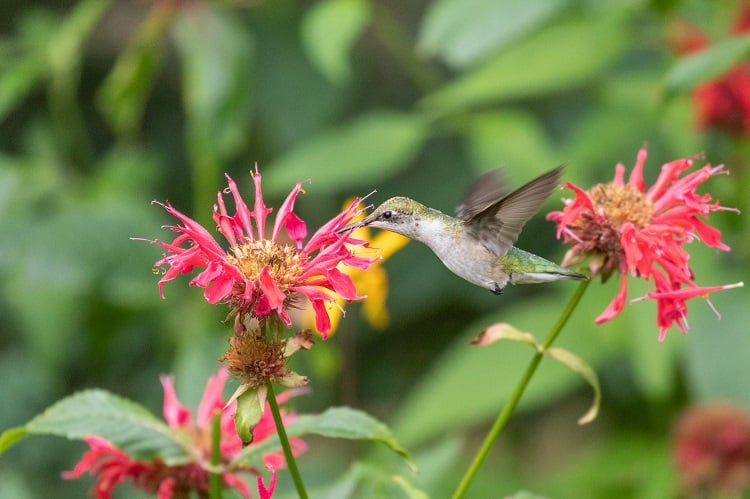
9. The Ruby-throated Hummingbird, the smallest bird in the northeastern region of North America, is particularly attracted to red flowers from which it drinks nectar.
More:
Mass Audubon's Breeding Bird Atlas

10. Named for its long, rapidly trilling song, the Chipping Sparrow is a slightly smaller, spotless version of the American Tree Sparrow. The Chipping Sparrow returns to the Northeast at about the time that the tree sparrow departs in the spring.
More:
Mass Audubon's Breeding Bird Atlas

11. The Gray Catbird is not as accomplished a mimic as its close relative the Northern Mockingbird, and it prefers to remain concealed in thickets.
More:
Mass Audubon's Breeding Bird Atlas

12. Though often regarded as harbingers of spring, some American Robins actually remain in the Northeast all winter wherever they can find an ample supply of wild fruits, such as crab apples and cedar berries.
More:
Mass Audubon's Breeding Bird Atlas

13. Common Grackle. This handsome member of the blackbird family forms immense communal roosts after the breeding season.
More:
Mass Audubon's Breeding Bird Atlas

14. The omnivorous Blue Jay eats everything from nuts, grains, and fruits to insects, amphibians, small mammals, and birds and their eggs and young. It also stores nuts and seeds for the winter under leaf litter and in crevices, a behavior known as caching.
More:
Mass Audubon's Breeding Bird Atlas


Attracting Birds in Summer

In summer, most birds feed on insects. Flowering plants attract insects, which, in turn, attract certain birds. like the insects, "nectivorous" birds are also attracted to the nectar of certain flowers. For example, hummingbirds prefer red or orange tubular flowers, and orioles favor flowering fruit trees.

Cavity-nesting birds such as chickadees and wrens readily take to artifidal nest boxes. Placement (e.g., height, proximity to buildings or vegetation, and direction toward which it faces) and predse spedfications (e.g., hole size and cavity depth) can be critical to a box's attractiveness. Short lengths of woolen yam hung in a yard are often collected by various spedes for use as nesting material.

The Backyard in Winter

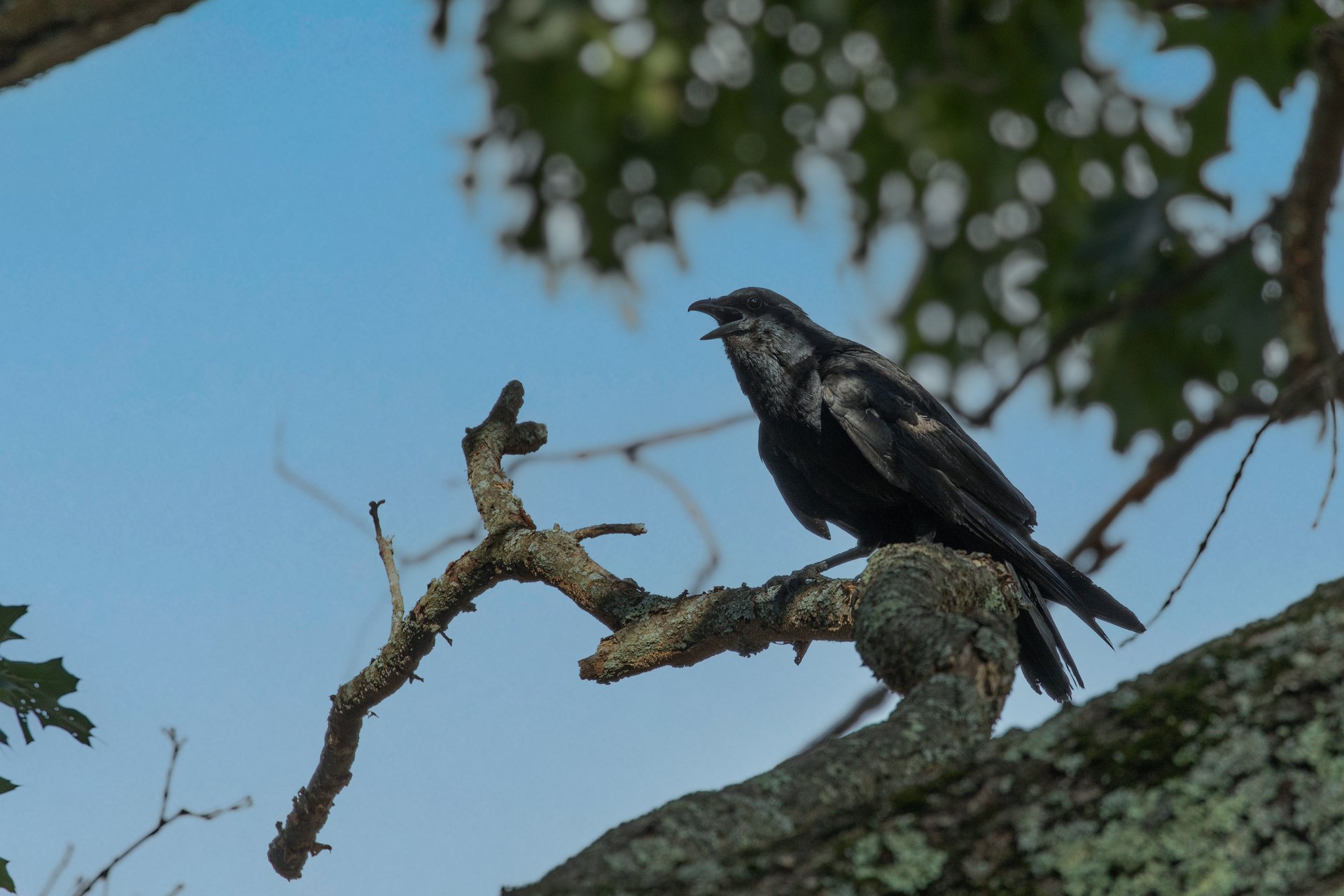
15. Considered by many ornithologists to be among the most intelligent of all birds, the American Crow has a highly varied vocal repertoire and an equally varied diet.
More:
Mass Audubon's Breeding Bird Atlas

16. Sharp-shinned Hawk. This agile, little predator has learned that feeders attract their favorite prey: small birds. Hunters such as this are natural and necessary.
More:
Mass Audubon's Breeding Bird Atlas

17. The Downy Woodpecker is the most common woodpecker in the eastern US and frequently visits suet offered at winter feeding stations. listen for its territorial drumming beginning in late winter.
More:
Mass Audubon's Breeding Bird Atlas

18. Given a choice at a feeding station, American Goldfinches prefer the seeds from thistle, the plant they also rely on for nesting material. In the winter, the male's bright yellow plumage, for which the species is named, assumes a more subdued, greenish yellow cast.
More:
Mass Audubon's Breeding Bird Atlas

19. Northern visitors that appear in the Northeast only sporadically from one winter to the next, Evening Grosbeaks are voracious eaters that can empty a feeder of sunflower seeds in minutes.
More:
Mass Audubon's Breeding Bird Atlas

20. Nomadic flocks of Cedar Waxwings appear suddenly to feed on energy-rich fruits and berries, and depart just as suddenly once they have depleted the food source.
More:
Mass Audubon's Breeding Bird Atlas

21, 22, 23. The Northern Mockingbird (21), Northern Cardinal (22), and Tufted Titmouse (23) were all rare in New England prior to the 1950s, after which they staged a dramatic, northward, range expansion. They are now very common and widespread virtually throughout the Northeast. During the nesting season, the mockingbird often sings its highly varied song in the middle of the night.
More:
Mass Audubon's Breeding Bird Atlas:
Northern Mockingbird
Northern Cardinal
Tufted Titmouse

24. Dark-eyed Juncos are also known colloquially as snow birds because they become common at feeders after the snow starts to fly.
More:
Mass Audubon's Breeding Bird Atlas

25. Named for its plaintive call, the strong-flying Mourning Dove flushes explosively into the air with a loud whistling of its wings as a way of startling predators.
More:
Mass Audubon's Breeding Bird Atlas

26. The haunting song of the White-throated Sparrow is heard throughout cool, boreal forests. The species frequents yards in winter only where it finds dense thickets in which to hide.
More:
Mass Audubon's Breeding Bird Atlas

27. The White-breasted Nuthatch, and other members of this family, are among the few birds that typically orient themselves head downward on a tree trunk.
More:
Mass Audubon's Breeding Bird Atlas

28. The American Tree Sparrow nests far to the north of the Canadian border and visits the US only in the winter.
More:

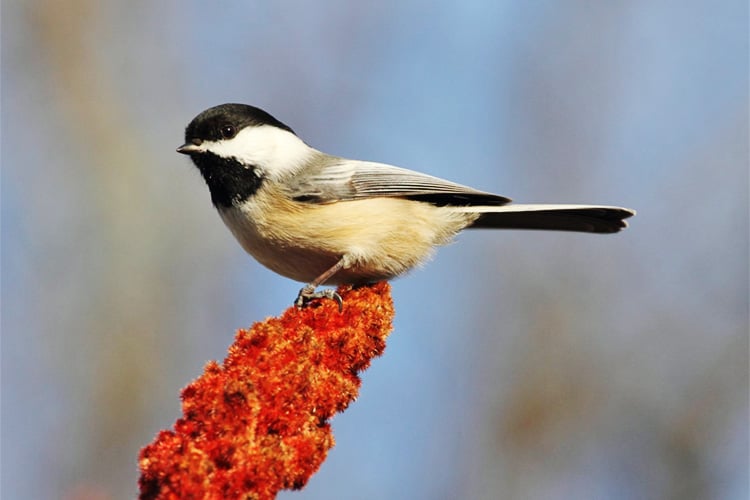
29. The Black-capped Chickadee, the Massachusetts state bird, is named for its distinctive call.
More:
Mass Audubon's Breeding Bird Atlas

Attracting Birds in Winter
The best method for attracting a variety of birds to a yard in any season is to offer an assortment of different types of food presented in several ways. Feeding is particularly effective in winter when natural food is less abundant. A mixture of millet, sunflower seed, and cracked corn, spread directly onto the ground, may attract ground feeders, such as Mourning Doves, Northern Cardinals, and Dark-eyed Juncos; sunflower and safflower seeds, offered in a tubular feeder above the ground, attract chickadees, Tufted TItmice, and White­breasted Nuthatches; niger thistle seed is favored by American Goldfinches and Pine Siskins; and beef suet offered in a wire mesh dispenser is especially effective in attracting woodpeckers.

Some of the same types of fruit trees whose blossoms attract nectar-drinking birds in the summer produce fruits that persist into the winter. These become important food sources for a variety of birds including mockingbirds and overwintering robins. Dense shrubs provide birds with cover in which they find shelter from the elements and cover from predators.

Birdbaths rigged with specially designed heating elements are particularly attractive to birds in winter when many natural water sources are frozen.

For further information on identifying and attracting birds, contact the Mass Audubon's Wildlife Information line at 781-259-2151.


Home | Contact Us | Your Account | About | News & Media | Advocacy | Nature Connection | Membership
Donations | Birds & Birding | Jobs | Camps | Audubon Shop | Search | Program Catalog | Privacy Policy

©2003-2013 Mass Audubon. All rights reserved.

Eastern Phoebe Chimney Swifts Eurpean Starling European Starling House Wren House Finch (female) House Finch House Finch (male) Song Sparrow Carolina Wren Ruby-throated Hummingbird Chipping Sparrow Gray Catbird American Robin Common Grackle Blue Jay American Crow Sharp-shinned Hawk Downy Woodpecker American Goldfinches Evening Grosbeak (male) Evening Grosbeaks (female) Cedar Waxwings Northern Mockingbird Northern Mockingbird Northern Cardinal Tufted Titmouse Dark-eyed Junco Mourning Dove White-throated Sparrow White-breasted Nuthatch American Tree Sparrow Black-capped Chickadee